








Choosing the best Mechanic Tool Box in 2026 requires more than counting drawers or comparing glossy finishes. Global buyers face different workshop sizes, climate conditions, shipping costs, and service requirements. A toolbox used in a humid coastal garage needs stronger corrosion protection than one kept in a dry warehouse. Small details matter.
Industry data supports this wider view. Grand View Research’s Hand Tools Market report identifies professional maintenance, automotive repair, and industrial use as important demand areas. Its findings also point to continued market growth through the decade. Meanwhile, the U.S. Bureau of Labor Statistics projects steady demand for automotive service technicians, keeping organized tool storage relevant for workshops and mobile technicians. These reports do not automatically identify one perfect product. They provide useful context.
Real-world experience remains essential. A 72-inch steel cabinet may offer impressive capacity, yet its weight can increase freight costs and complicate delivery. A compact modular Mechanic Tool Box may fit a small repair bay better, especially when drawers, wheels, and detachable sections are planned carefully. Check the drawer load rating. Test the caster locks. Inspect the powder coating.
Not every manufacturer publishes complete specifications. That is a problem. Buyers should question unclear steel thickness, misleading capacity claims, and vague warranty language. A reliable 2026 buying guide must compare security, ergonomics, corrosion resistance, replacement parts, and after-sales support. Price matters, but downtime costs more. The best choice is practical, documented, and suitable for the buyer’s actual working environment.
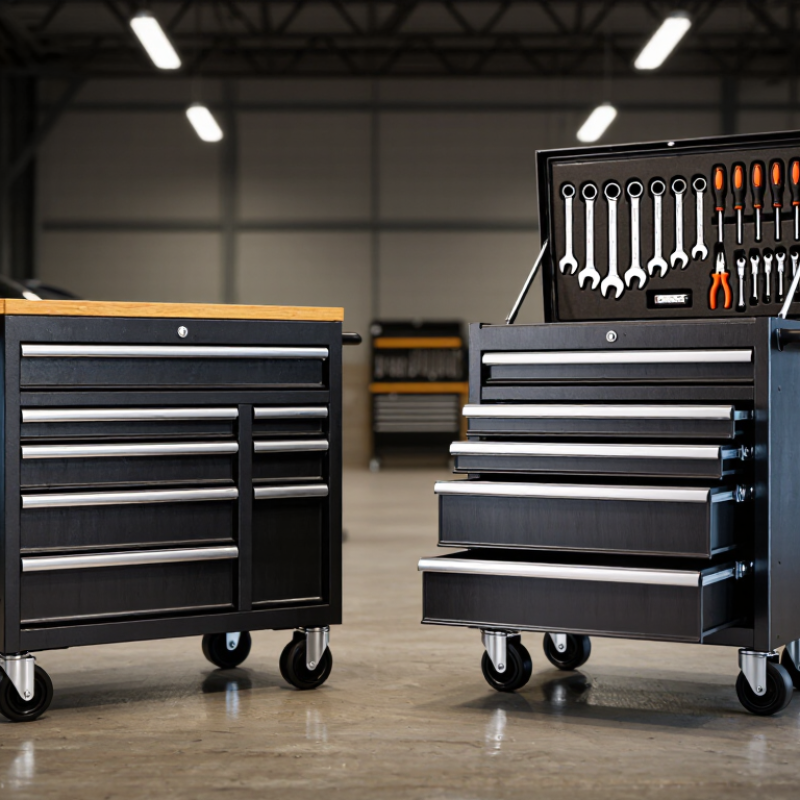
What Defines the Best Mechanic Tool Box in 2026?
The best mechanic tool box is not simply the largest or most expensive. It should protect tools, support daily work, and fit the mechanic’s actual workspace. In a busy workshop, smooth drawers matter because repeated opening exposes weak slides quickly. A box with reinforced corners, thick steel, and a stable frame should handle heavy sockets without twisting. That sounds basic. It is often overlooked.
Practical testing reveals more than product descriptions. Load each drawer gradually, then check whether it remains level. Roll the box across concrete, thresholds, and small floor gaps. Locking wheels should hold firmly, while handles should remain comfortable after several minutes of movement. Corrosion resistance also matters in humid regions. Powder-coated surfaces help, but damaged areas still need prompt attention. Metric and imperial tool storage should be considered for international users. Clear dimensions, net weight, packaging details, and replacement-part access make purchasing more reliable.
Modern buyers may also value modular storage, removable trays, and built-in power access. Yet extra features can reduce usable space or increase maintenance. My own preference changed after a drawer jammed under a heavy load. I began valuing repairable slides over decorative lighting. No box fits every mechanic. A mobile technician needs compact strength, while a fixed workshop may prefer deeper drawers and greater capacity. The best choice depends on tools, movement, climate, and the honest limits of the budget.
Global buyer benchmark by workshop use, storage capacity, mobility, durability, safety and total ownership value
| Evaluation Dimension | Compact Workshop Box | Professional Rolling Box | Heavy-Duty Workshop System | Mobile Service Box |
|---|---|---|---|---|
| Recommended User | Home mechanics, hobby users and small repair areas | Independent mechanics and general repair shops | High-volume workshops, industrial maintenance and fleet service | Field technicians, roadside service and mobile maintenance teams |
| Typical Storage Capacity | Approximately 80–160 L | Approximately 180–350 L | Approximately 350–700 L, often with upper cabinets | Approximately 100–250 L |
| Drawer Configuration | 4–6 drawers; suitable for hand tools and small accessories | 6–10 drawers with mixed shallow and deep storage | 10–18 drawers plus cabinets, trays or side compartments | 4–8 drawers or modular removable cases |
| Common Overall Size | Approximately 600–900 mm wide and 350–500 mm deep | Approximately 900–1,300 mm wide and 450–600 mm deep | Approximately 1,200–2,000 mm wide and 500–750 mm deep | Approximately 700–1,100 mm wide and 350–550 mm deep |
| Loaded Weight Capacity | Approximately 150–300 kg total | Approximately 400–800 kg total | Approximately 800–1,500 kg total, depending on frame and casters | Approximately 200–500 kg total |
| Drawer Load Rating | Approximately 25–45 kg per drawer | Approximately 45–90 kg per drawer | Approximately 70–120 kg per drawer | Approximately 30–70 kg per drawer |
| Construction Material | Painted or powder-coated steel; lighter panels may be used | Powder-coated steel with reinforced drawer frames | Heavy-gauge steel, reinforced corners and stronger structural bracing | Steel, aluminum or impact-resistant polymer depending on transport needs |
| Typical Steel Thickness | Approximately 0.7–1.0 mm for main panels | Approximately 0.9–1.5 mm for main panels and drawer structures | Approximately 1.2–2.0 mm in load-bearing areas | Approximately 0.8–1.5 mm, balanced against transport weight |
| Caster and Mobility Design | Small fixed or swivel casters; best on smooth floors | Four heavy-duty casters, usually with two locking swivel casters | Large industrial casters with high load ratings and reliable wheel brakes | Lockable casters, transport handles or vehicle-mounting points |
| Drawer Movement | Ball-bearing slides are preferred for regular use | Full-extension ball-bearing slides with positive retention | Heavy-duty full-extension slides with reinforced mounting points | Locking slides or vibration-resistant drawer retention |
| Security Features | Central key lock or basic drawer locking bar | Central locking system with anti-tilt protection | Reinforced locking system, anti-tilt interlock and optional anchoring | Vehicle tie-down points, lockable compartments and transport restraints |
| Environmental Protection | Suitable for clean, dry indoor environments | Powder coating and corrosion-resistant hardware for normal workshops | Enhanced coating, sealed drawer liners and corrosion-resistant fittings for demanding use | Weather-resistant construction recommended for temporary outdoor service |
| Temperature and Climate Considerations | Check coating and slide performance for humid or cold regions | Use corrosion-resistant hardware in coastal, tropical or high-humidity regions | Prioritize sealed storage and stainless or treated components in harsh climates | Choose weather-resistant seals and materials where frequent outdoor exposure is expected |
| Interior Organization | Removable trays, drawer liners and basic dividers | Non-slip liners, adjustable dividers, socket organizers and side storage | Modular partitions, vertical tool panels, cabinets and dedicated power-tool storage | Removable cases, labeled compartments and quick-access tool panels |
| Ergonomic Features | Basic pull handle and comfortable drawer grips | Full-width handle, smooth slides and drawers that open without excessive force | Ergonomic height, balanced weight distribution and reinforced handles | Telescopic handle, compact footprint and easy loading into service vehicles |
| Assembly and Delivery | Usually easy to assemble and economical to ship | May require caster, handle or upper-module installation | Often shipped in multiple sections or on a pallet because of size and weight | Should include secure packaging and transport protection for frequent movement |
| Best Value Indicator | Low purchase cost, compact footprint and adequate organization | Balanced capacity, durability, mobility and serviceability | High structural strength, maximum storage and long operating life | Low transport weight, secure mobility and rapid tool access |
| Key Buying Check for Global Buyers | Verify internal dimensions, wheel quality, packaging and import shipping cost | Confirm load ratings, locking design, spare parts availability and assembly instructions | Confirm pallet dimensions, unloading requirements, floor loading and replacement component supply | Confirm vehicle compatibility, tie-down points, weather resistance and local service support |
| Overall 2026 Recommendation | Best for buyers who need essential storage in limited space | Best all-round choice for most professional mechanical workshops | Best for demanding operations where capacity and long-term durability outweigh purchase cost | Best for technicians who transport tools between locations |
Note: Figures are practical 2026 market benchmark ranges for comparison purposes. Actual capacity, load ratings, dimensions and material specifications vary by configuration and should be verified against the product technical sheet before purchase.