2026 Best WiFi Communication Modules for Global Buyers
Choosing the 2026 Best WiFi Communication Module requires more than comparing advertised speeds. Global buyers need stable performance, regional compatibility, secure firmware, and dependable supply. A module that performs well in a quiet laboratory may struggle inside a metal cabinet, crowded apartment, or factory with dozens of active devices.
This guide evaluates leading WiFi Communication Module options through practical buying criteria. Testing should include throughput, latency, roaming, power consumption, antenna flexibility, operating temperature, and long-term software support. Certification matters too. Buyers should verify regional approvals, supported frequency bands, and the manufacturer’s update policy before placing large orders. Small details can create expensive delays.
Kevin Robinson, President and CEO of Wi-Fi Alliance, has said, “Wi-Fi is the connectivity fabric of our lives.” That observation remains relevant for connected appliances, industrial gateways, medical equipment, and smart energy systems. However, fabric quality depends on every thread. No module wins in every environment. That assumption deserves challenge.
Some products offer impressive peak rates but limited documentation. Others provide strong developer tools but higher unit costs. This guide weighs those trade-offs openly. It also considers vendor experience, reference designs, technical support, and production consistency. Results can vary with antennas, enclosure materials, firmware settings, and local interference. Therefore, buyers should treat this overview as a decision framework, not a substitute for field testing. A short pilot run may reveal weaknesses that a polished data sheet hides.
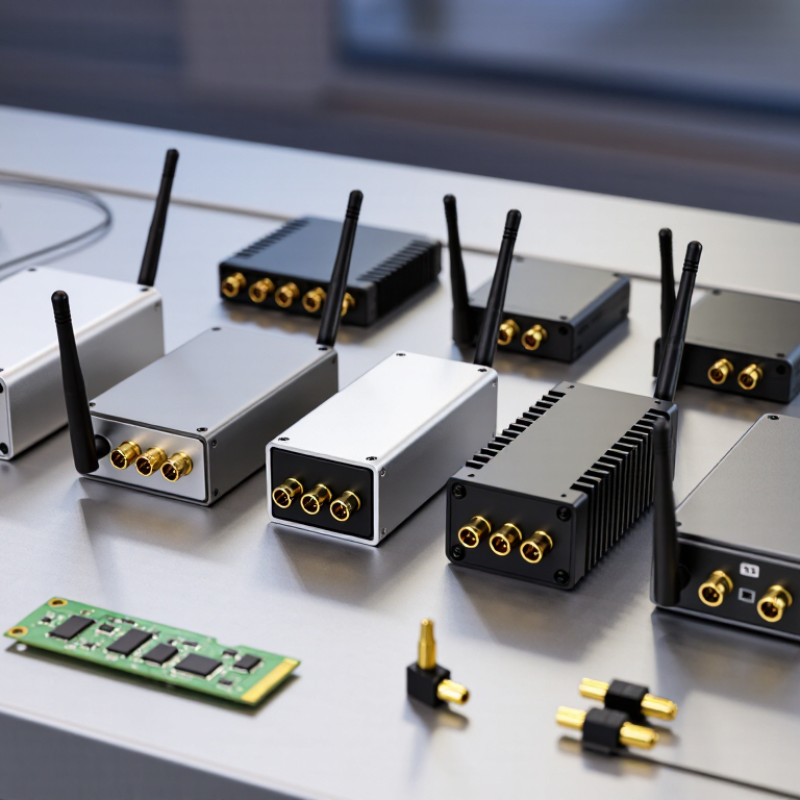
WiFi Communication Module Basics and Key Functions
A WiFi communication module is a compact radio system for wireless data exchange. It usually combines a WiFi chipset, processor, memory, antenna interface, and security functions. The host device connects through UART, SPI, USB, or SDIO. This structure reduces development time and board space.
The IEEE 802.11 standard defines core wireless behavior, while newer generations improve speed, efficiency, and crowded-network performance. Wi-Fi Alliance’s 2024 Global Economic Value of Wi-Fi report estimated WiFi supported 4.9 trillion US dollars in global economic value during 2024. That figure shows why module selection affects more than connectivity. It can influence service quality, maintenance costs, and product lifespan.
Key functions include TCP/IP support, WPA3 security, TLS encryption, Bluetooth coexistence, power-saving modes, and secure over-the-air updates. A practical module should also provide stable drivers and clear certification documents. Market research from IoT Analytics reported 18.8 billion connected IoT devices worldwide at the end of 2024, increasing pressure on reliable wireless design. Still, higher speed is not always better. A factory sensor may need long uptime, not maximum throughput. A consumer gateway may need stronger memory and faster recovery. I have seen low-cost modules fail because their antennas were poorly matched. That mistake is easy to underestimate. Buyers should test range, heat, roaming, firmware support, and regional compliance before approving a 2026 design.
2026 Best WiFi Communication Modules for Global Buyers - WiFi Communication Module Basics and Key Functions
Generic comparison of WiFi communication module categories for embedded products and connected devices. Performance varies by antenna design, regulatory region, firmware, host processor, and environmental conditions. | Module Category | WiFi Standard | Supported Bands | Maximum Channel Width | Typical Spatial Streams | Indicative Peak PHY Rate | Typical Host Interface | Typical TX Power Range | Suitable Applications |
| Low-Power 2.4 GHz Module | 802.11 b/g/n | 2.4 GHz | 20/40 MHz | 1 × 1 | Up to 72.2 Mbps | SDIO, SPI, UART, USB | Approximately 15–20 dBm | Sensors, meters, appliances, basic gateways |
| Dual-Band WiFi 5 Module | 802.11 a/b/g/n/ac | 2.4 GHz and 5 GHz | 20/40/80 MHz | 1 × 1 or 2 × 2 | Up to approximately 867 Mbps | SDIO, PCIe, USB | Approximately 15–23 dBm | Displays, cameras, industrial terminals, smart home hubs |
| Dual-Band WiFi 6 Module | 802.11 a/b/g/n/ac/ax | 2.4 GHz and 5 GHz | 20/40/80 MHz | 1 × 1 or 2 × 2 | Up to approximately 1.2 Gbps | SDIO, PCIe, USB | Approximately 15–23 dBm | High-density IoT, video devices, routers, enterprise endpoints |
| WiFi 6E Module | 802.11 a/b/g/n/ac/ax | 2.4 GHz, 5 GHz, and 6 GHz | 20/40/80/160 MHz | 1 × 1 or 2 × 2 | Up to approximately 2.4 Gbps | PCIe, USB, SDIO | Region-dependent; commonly up to approximately 23 dBm | Low-latency enterprise devices, AR/VR, premium PCs, wireless docking |
| WiFi 7 Module | 802.11 a/b/g/n/ac/ax/be | 2.4 GHz, 5 GHz, and 6 GHz | 20/40/80/160/320 MHz | 1 × 1, 2 × 2, or higher | Up to approximately 5.8 Gbps for a 2 × 2, 320 MHz link | PCIe, USB, SDIO | Region- and platform-dependent | Premium routers, industrial vision, cloud gaming, high-throughput gateways |
| WiFi + Bluetooth Combo Module | WiFi 4/5/6 plus Bluetooth Classic and BLE | WiFi: 2.4 GHz; optional 5 GHz | 20/40/80 MHz, depending on WiFi generation | Usually 1 × 1 or 2 × 2 | Depends on the integrated WiFi generation | SDIO or PCIe for WiFi; UART, USB, or PCM for Bluetooth | Approximately 10–23 dBm for WiFi | Wearables, medical devices, POS terminals, smart appliances |
| Industrial-Temperature Module | Typically 802.11 n/ac/ax | 2.4 GHz and/or 5 GHz | 20/40/80 MHz | 1 × 1 or 2 × 2 | Approximately 72 Mbps to 1.2 Gbps | PCIe, SDIO, USB, or UART | Approximately 15–23 dBm | Robotics, transportation, factory automation, outdoor controllers |
| Long-Range IoT WiFi Module | 802.11ah or low-power 802.11n variants | Sub-1 GHz or 2.4 GHz, depending on implementation | Narrow channels or 20 MHz | Typically 1 × 1 | Usually below conventional broadband WiFi rates | SPI, UART, SDIO, or USB | Country- and band-dependent | Smart agriculture, utility monitoring, warehouses, distributed sensors |
Key Functions
Wireless data transmission, network scanning, station and access-point operation, roaming, power management, packet encryption, antenna diversity, and coexistence control.
Security Functions
Common capabilities include WPA2-Personal, WPA3-Personal, enterprise authentication support, AES encryption, secure boot, protected firmware updates, and hardware-assisted cryptography.
Global Buyer Checklist
Confirm regional frequency rules, channel availability, transmit-power limits, certification requirements, antenna approval, operating temperature, host-driver support, lifecycle status, and long-term software maintenance.
Note: PHY rates are theoretical maximum link rates rather than guaranteed application throughput. Actual performance depends on channel width, modulation, signal strength, interference, antenna configuration, protocol overhead, and local regulations.
WiFi Standards, Frequencies, and Global Compatibility
Choosing a WiFi communication module for global markets starts with standards, not packaging. WiFi 4 remains useful for simple sensors and low-data equipment. WiFi 5 supports faster links through the 5 GHz band. WiFi 6 improves efficiency in crowded offices and apartments. WiFi 6E adds 6 GHz channels, where local approval is essential. WiFi 7 can deliver advanced performance, but its value depends on the product and network.
Frequency planning needs practical testing. The 2.4 GHz band travels farther and passes through walls more effectively. However, it often suffers from congestion near routers, Bluetooth devices, and household appliances. The 5 GHz band usually offers cleaner connections, but its range is shorter. Some channels require radar detection and dynamic frequency selection. The 6 GHz band provides wide channels, yet availability varies sharply between countries.
Global compatibility is more than supporting several protocols. Check regional channel rules, transmit-power limits, antenna requirements, and certification records. The module should also match the host processor, operating system, and security method. Field tests matter. A specification sheet cannot show every concrete wall or crowded apartment. I have seen a module perform well in a laboratory, then lose stability inside a metal enclosure. That result is easy to overlook. A careful buyer should test multiple regions, temperatures, antennas, and access points before committing to volume production.
How to Compare WiFi Modules for Different Applications
Choosing a WiFi module in 2026 requires more than checking peak data rates. Global buyers should compare the radio, software support, certification path, and supply stability together. For a battery sensor, sleep current and wake-up time often matter more than throughput. A module drawing extra milliamps can shorten field service intervals. Small details matter.
Industrial gateways need stable connections, wide temperature tolerance, and reliable recovery after signal loss. For cameras or data-heavy equipment, memory, processor capacity, and sustained throughput deserve closer testing. A module may advertise high speed, yet performance can drop inside a metal enclosure. Test with the final antenna, housing, power supply, and router. Bench results alone can mislead.
Software support also changes the comparison. Check driver maturity, update methods, encryption features, debugging tools, and documented security practices. Regional channel support and certification records can reduce deployment delays for international products. Review the supplier’s production history and long-term availability, not only the sample price. I have seen teams choose a low-cost module, then spend weeks correcting unstable firmware. That mistake is avoidable, though not always obvious at the purchasing stage. A clear test plan should measure reconnection time, standby power, heat, range, and performance through walls. One weakness can outweigh several attractive specifications.
Top Module Features for Performance, Security, and Reliability
For global buyers, a WiFi communication module must deliver stable performance, strong security, and predictable operation. IoT Analytics estimated 18.8 billion connected IoT devices worldwide in 2024. That scale increases pressure on every wireless link.
Performance starts with WiFi 6 or newer support, OFDMA, MU-MIMO, and efficient Target Wake Time scheduling. Dual-band operation helps avoid crowded 2.4 GHz channels. Six-gigahertz support can reduce congestion, but regional spectrum rules require careful planning.
A module should also provide accurate antenna guidance, low-latency roaming, and a tested coexistence design. Faster is not always better.
Security needs more than password protection. NIST guidance recommends secure device identity, protected updates, and lifecycle management. Look for WPA3, TLS 1.3 support, secure boot, signed firmware, hardware-backed key storage, and disabled debug ports.
Reliability depends on details buyers often overlook: industrial temperature ratings, watchdog recovery, brownout protection, and long-term firmware maintenance. The 2024 ENISA threat landscape shows that exposed and poorly maintained connected systems remain attractive attack targets. Certification helps, but it cannot replace real stress testing.
In field evaluations, weak antenna placement and unstable power often create more failures than the wireless chipset itself. That is an uncomfortable lesson.
Global Buying Factors: Certifications, Supply, and Support
For global buyers, WiFi module selection begins with certification, not peak throughput. The Wi-Fi Alliance’s Global Economic Value of Wi-Fi 2024 report estimates that Wi-Fi will create nearly 4.9 trillion dollars in economic value during 2025. That scale raises compliance expectations. A module may require FCC approval for the United States, CE and RED compliance for the European Union, and additional testing in Japan, Korea, or China. Check whether certification covers the final antenna, enclosure, and firmware. It often does not.
Supply reliability needs evidence. Request production capacity, approved component lists, typical lead times, and a formal change-notification process. Industry supply-chain reports from Deloitte and IPC continue to highlight shortages, geopolitical disruption, and longer component qualification cycles. A low quoted price can hide expensive redesign work. Ask for at least two approved chipset or memory sources, when technically possible. Keep a buffer.
Tips: Request complete test reports before sampling. Confirm support for DFS channels and regional power limits. Require five years of firmware security maintenance in writing. Verify the module’s thermal behavior inside your enclosure, not only on a laboratory board. A practical pilot should test weak signals, roaming, crowded 2.4 GHz environments, and recovery after power loss. Documentation quality is a buying signal. Still, no checklist removes every risk; regional rules and component availability can change after approval.
Radio certification is market-specific: CE/RED covers the EU market, while the United States, Canada, Japan, South Korea, Great Britain, and China use their own approval routes. Global buyers should verify certification status, regional frequency support, supply continuity, and technical support before selecting a WiFi communication module.
Reference framework: EU Radio Equipment Directive, US FCC, Canada ISED, Japan MIC, Korea KC, Great Britain Radio Equipment Regulations, and China SRRC.