







A Paper Box Glue Spraying Machine helps apply adhesive to cartons, folding boxes, and other paper packaging. Yet “machine type” can mean more than one thing. Buyers may compare equipment by operating level—manual, semi-automatic, or automatic—or by its glue delivery system, such as spray nozzles or metered applicators. These categories overlap, so a product label alone rarely tells the whole story.
Manual and semi-automatic machines can suit short runs, frequent changes, or smaller workshops. Automatic systems are designed for steadier production and integration with conveying or folding equipment. Spray application can cover selected areas quickly, while precision applicators may offer more controlled lines or dots. The right choice depends on box dimensions, board weight, adhesive properties, required output, and the accuracy of glue placement. Small details matter. A nozzle that performs well on one board may need adjustment for another.
This guide outlines common machine types and the practical differences between them. It also highlights questions to ask about speed, setup, cleaning, glue consumption, and maintenance. Request a test using your own box samples and adhesive when possible; a polished demonstration may not reflect daily production. Even then, one trial is not proof of long-term reliability. That point is easy to overlook. Specifications help narrow the options, but actual packaging requirements should guide the final comparison.
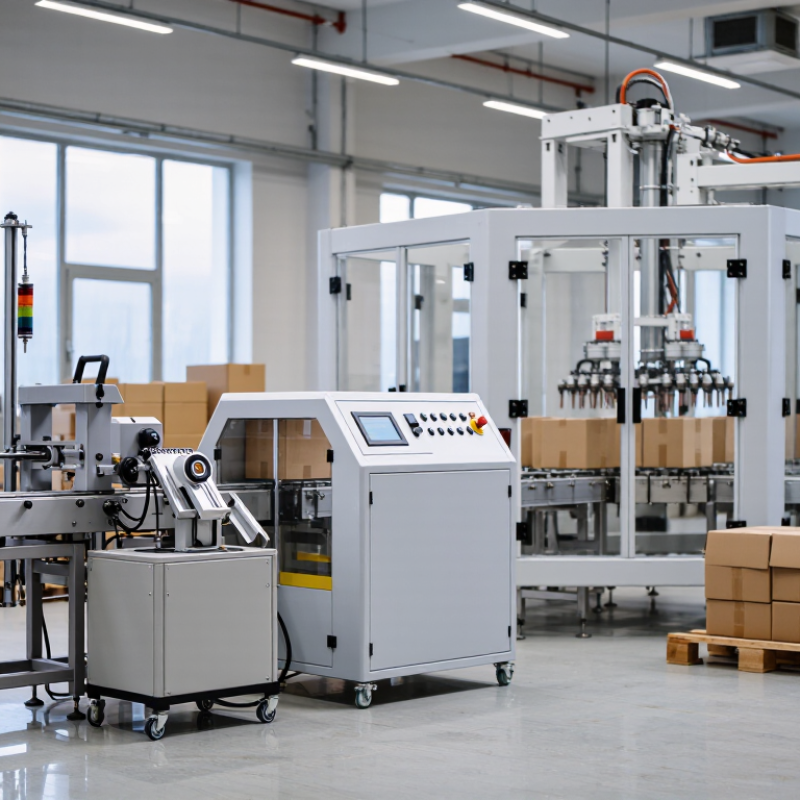
A paper box glue sprayer applies a controlled adhesive pattern where carton panels meet. Its job is not simply to add more glue. It must place the right amount in the right location, at line speed. Water-based adhesives are common for porous paperboard; hot-melt formulations set quickly and suit fast-moving lines. The choice depends on board coating, folding pressure, temperature, and the time available before compression. Small details matter. A glossy coating may resist wetting, while dusty board can weaken contact.
The nozzle shapes the deposit: a narrow bead, several fine lines, or a broader spray pattern. Operators check for clogging, uneven output, and overspray on real cartons, not only on a clean test sheet. The bond line should be continuous enough to hold, but not so heavy that glue squeezes into the box or slows setting. AF&PA’s 2023 paper-recycling-rate report estimated that 65–69% of U.S. paper was recycled, about 46 million tons. That figure makes adhesive choice relevant to packaging recovery, though it does not prove any single glue is recyclable. One imperfect point: a pattern that looks neat can still fail after folding. Check bond strength after the carton has rested, and adjust viscosity, nozzle distance, or compression gradually. Small trials help.
| Machine or Application Type | How It Applies Adhesive | Common Adhesive | Nozzle and Pattern | Bond-Line Basics | Typical Uses and Considerations |
|---|---|---|---|---|---|
| Cold-Glue Spray System | Applies water-based adhesive through a spray head, either continuously or in timed sections. | Water-based PVA or other formulated cold glue suitable for the paperboard and converting process. | Non-contact spray nozzle; pattern and output are adjusted to the adhesive, board, and machine speed. | Use an even, controlled deposit. The adhesive must remain within the intended overlap and have enough contact time to develop a bond. | Common for paperboard cartons and folding-box operations. Check viscosity, drying conditions, and compatibility with coatings or inks. |
| Hot-Melt Spray System | Melts adhesive and applies it while hot, often as a bead, line, or intermittent spray pattern. | Hot-melt adhesive, commonly EVA or another grade selected for the substrate and required setting behavior. | Heated spray gun or slot-style applicator; the pattern must stay consistent without stringing or overspray. | A narrow, continuous deposit or designed pattern should land on the joining area. Bond performance depends on open time, pressure, and cooling. | Useful where fast handling is required, including some carton and case-forming tasks. Follow the adhesive supplier’s temperature and safety guidance. |
| Bead-Dispensing Gluer | Dispenses one or more controlled adhesive lines rather than a broad spray pattern. | Cold glue or hot melt, depending on the equipment and packaging specification. | Bead nozzle sized for the required line width and flow; the applicator may be fixed or electronically controlled. | Place the bead inside the flap or joint area. Avoid gaps, excess squeeze-out, and adhesive beyond the overlap. | Suitable for straight seams, carton flaps, and repeatable glue tracks. Line placement must match the blank geometry. |
| Multi-Nozzle Pattern System | Uses several independently controlled outlets to apply multiple lines or spots in one pass. | Usually water-based cold glue or hot melt, as specified for the installed application system. | Multiple nozzles can be arranged across the work path; each outlet requires consistent flow and alignment. | Parallel lines or spots should provide adequate coverage across the joint without creating unnecessary adhesive buildup. | Useful for wider panels or several glue points per blank. Regularly inspect nozzle spacing, blockage, and pattern uniformity. |
| Intermittent or Spot-Pattern Applicator | Switches adhesive flow on and off to produce dots, dashes, or separated segments. | Cold glue or hot melt compatible with the applicator and the required setting time. | Timed nozzle pulses create a programmed pattern; timing must be synchronized with product movement. | Segments should overlap or be spaced according to the joint design so the finished bond does not have weak unglued gaps. | Can reduce adhesive use where a full line is unnecessary. Validate the pattern on the actual board and production speed. |
| Automatic Folder-Gluer Application Unit | Applies adhesive to moving, folded carton blanks as part of a synchronized converting line. | Typically a cold-glue system for paperboard folding cartons; the exact adhesive depends on the material and process. | Contact wheel, nozzle, or other metered applicator selected for the machine configuration and glue location. | Apply glue to the specified seam, then maintain registration and compression long enough for the joint to set. | Designed for continuous production. Accurate blank feeding, glue detection, and clean applicators help maintain consistent bonds. |
| Robotic or Programmable Glue Applicator | Moves a controlled applicator along a programmed path on stationary or indexed packaging parts. | Cold glue or hot melt chosen according to the applicator hardware and bonding requirements. | Programmable spray head or bead nozzle; path, speed, and dispensing output are set for the part geometry. | Keep the application path aligned with the joint and maintain a repeatable deposit from part to part. | Helpful for varied layouts or complex paths. Requires setup validation, reliable part positioning, and routine nozzle checks. |
Selection note: The right system depends on the paperboard, surface coating, joint design, production speed, adhesive specification, and required setting time. Confirm nozzle settings and bond quality with production trials; adhesive and equipment instructions take precedence over general guidance.