


The 2026 Top Oem Steel Pipe Manufacturers for Global Buyers guide examines a market shaped by infrastructure growth, energy projects, and stricter procurement expectations. OEM Steel Pipe suppliers now compete on more than price. Their real value appears in steel chemistry, dimensional control, welding consistency, and dependable documentation.
A serious buyer should inspect mill certificates, hydrostatic test records, coating specifications, and production capacity. Factory audits can reveal practical details that brochures often hide. Look at storage yards, marking systems, weld repairs, and how workers protect pipe ends during loading. These small details matter.
Edwin Basson, Director General of the World Steel Association, has described steel as “a permanent material.” That idea supports a careful purchasing approach. Durable pipe should serve its application for decades, not merely pass a pre-shipment inspection. However, no manufacturer ranking is flawless. Capacity changes, raw material costs shift, and an excellent supplier for structural pipe may not suit a high-pressure project.
This introduction focuses on manufacturers with credible production systems, relevant certifications, export experience, and transparent quality controls. It also considers communication speed, customization, packaging, and after-sales support. Global buyers should still verify every claim independently. A polished website is not proof. A traceable test report is stronger evidence. The best OEM Steel Pipe partner combines engineering discipline with honest limitations, because admitting what a factory cannot produce may prevent expensive failures later.
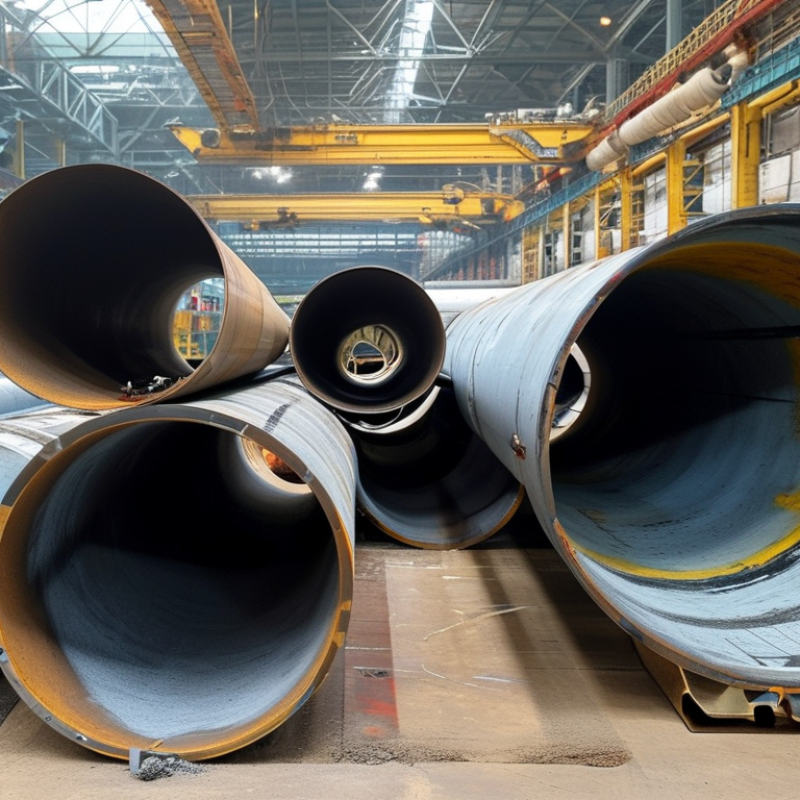
2026 Top OEM Steel Pipe Manufacturers for Global Buyers
OEM steel pipe manufacturing means producing pipes to a buyer’s drawings, specifications, and market requirements. The supplier does not simply sell standard stock. It adjusts steel grade, outside diameter, wall thickness, length, end finish, coating, and packaging.
For global buyers, technical communication matters as much as production capacity. A reliable manufacturer should review drawings before quoting. It should confirm applicable standards, dimensional tolerances, welding procedures, and inspection methods. Each production batch needs traceable heat numbers and material certificates. Hydrostatic testing, ultrasonic inspection, and visual checks may also be required.
Details become visible at the loading stage. Pipe ends need protective caps. Bundles should carry clear labels, including size, grade, quantity, and heat number. Moisture control inside containers can reduce corrosion during long sea transport. Poor packaging creates expensive problems.
The uncomfortable truth is that an attractive sample proves very little. Mass production may reveal ovality, uneven coating, or inconsistent wall thickness. Buyers should request process records, inspection plans, and independent verification when risk is high. A factory may meet a drawing but misunderstand the destination market’s documentation rules. That gap deserves attention.
OEM work also requires realistic planning. Custom tooling, small production runs, and special coatings can increase costs and lead times. A strong supplier explains these limits early, rather than promising everything. That honesty is not perfect, but it is safer for long-term procurement.
For global buyers, evaluating a steel pipe manufacturer requires more than comparing quotations. The World Steel Association’s October 2024 Short Range Outlook forecast global finished steel demand at about 1.8 billion tonnes in 2025. This scale increases pressure on mills to deliver consistent quality, not merely high volume. Review furnace capacity, rolling equipment, pipe-forming methods, and heat-treatment control. Ask whether production supports seamless, welded, galvanized, or specialized structural pipes. A credible OEM should provide recent mill certificates, heat numbers, inspection records, and production photographs.
Production capability must match the purchase specification. Check wall-thickness tolerance, outside-diameter accuracy, length control, and allowable defect limits. Confirm whether ultrasonic, radiographic, hydrostatic, and visual testing occur in-house or through qualified independent laboratories. ISO 9001 certification helps, but it does not prove every batch is reliable. The OECD Steel Outlook highlights continuing pressure on steel producers from overcapacity and weak margins. That pressure can affect maintenance and inspection budgets. A low offer deserves harder questions. A shiny mill tour can still mislead.
Tips: Request three sample inspection files before signing. Compare test dates, heat numbers, standards, and signatures. Conduct a live video inspection of storage yards and marking areas. Verify bundle labels against the mill certificate. Consider a pre-shipment inspection for critical orders. I have seen paperwork look perfect while the pipe markings were incomplete. That detail matters. Ask for corrective-action records, too. A manufacturer that openly discusses past defects may be more dependable than one claiming a flawless history.
For global buyers, steel pipe selection starts with the service environment, not the catalog. Carbon steel suits water, structural, and general industrial lines. Low-alloy grades support higher temperature and pressure. Stainless steel resists chloride exposure, but costs more. The World Steel Association reported global crude steel production at about 1.89 billion tonnes in 2023, showing the scale of available material and the need for disciplined verification.
Standards define more than dimensions. ASTM A53 commonly covers general-purpose welded and seamless pipe, while ASTM A106 addresses seamless carbon steel for high-temperature service. API 5L applies to line pipe, with grade and PSL requirements affecting strength and inspection. EN 10216 and EN 10217 distinguish seamless and welded pressure applications. ISO 3183 also supports pipeline specifications. Standards can overlap. They should not be mixed casually.
Customization may include outside diameter, wall thickness, length, bevel angle, coating, threading, and heat treatment. A buyer should request a material test certificate, heat number traceability, hydrostatic results, and non-destructive testing records. ISO 9001-based quality systems help structure this process, but certification alone proves little. The International Organization for Standardization notes that documented processes improve consistency, not guaranteed performance. A drawing can still be wrong. In practical procurement, tolerances, end protection, and packaging often cause costly delays. Recheck them against loading, welding, and site conditions.
For international buyers, choosing an OEM steel pipe manufacturer requires more than comparing quoted prices. A capable supplier should translate drawings into stable production specifications. Ask about steel grades, outside diameter tolerance, wall thickness, weld control, and surface treatment. Request recent mill certificates and traceability records for each heat number. These documents reveal more than polished sales language. On-site or independent audits can confirm forming capacity, testing equipment, and packing methods. Small details matter. I look for labeled bundles, dry storage, and end protectors that survive long sea routes.
Experienced sourcing teams also examine how a manufacturer handles customization. Can it produce trial samples before a full order? Does its engineering team review pressure, temperature, connection, and installation conditions? Clear answers usually indicate practical competence. Production inspection should cover chemical composition, tensile strength, hydrostatic testing, dimensions, and coating adhesion. Photos help, but witnessed inspections provide stronger evidence. Some factories promise every tolerance. That claim deserves careful questioning, because real production includes variation.
Reliability also depends on communication after the purchase order. Confirm lead times, packaging drawings, inspection points, and document formats in writing. A responsive manufacturer reports delays early and proposes workable corrections. Payment terms and warranty language should match the actual risk. No supplier is flawless. I would still compare corrective-action records, not just impressive equipment. International buyers need a partner that can repeat quality across batches, ports, and seasons.
When comparing OEM steel pipe manufacturers in 2026, start with measurable quality. Request the material test certificate, heat number, dimensional report, and applicable inspection records. Check outside diameter, wall thickness, straightness, and surface condition against the purchase standard. A polished sample can mislead. Production consistency matters more.
Pricing needs a landed-cost view, not only a factory quotation. Compare steel grade, coating, end finishing, packing, inspection fees, freight terms, and destination charges. Ask whether the price is fixed or linked to raw material changes. A low offer may hide thinner walls or costly port handling. I have seen attractive quotes become expensive after small exclusions. That deserves careful review.
Lead time should include production, testing, packing, and document preparation. Ask for a realistic schedule with inspection points and a response plan for delays. Export support shows in practical details: clear invoices, packing lists, certificates of origin, compliant labels, and experienced freight coordination. Confirm communication hours and escalation contacts before payment. Still, no supplier performs perfectly every time. My own comparisons can overvalue delivery speed and undervalue corrective support. A manufacturer that explains problems early may be safer than one promising everything. Check the evidence.
Hein Minnie
Cell nr: +27 (0) 82 564 6501
Email: sale@thecirclemachine.com
Hein Minnie Jnr
Cell nr: +27 (0) 84 284 7234
Email: sale@thecirclemachine.com
Address:
10 Apsey Street,
Heidelberg,
Gauteng,
1441
Bendet Engineering Services (PTY) LTD was established in 1987. Our team of engineers and draughtsman are ready to deliver a complete turnkey solution, from the design phase to commissioning. A dedicated team that consists of electrical, mechanical and industrial engineers, we are able to offer a comprehensive service to our clients.