






Top 10 Benefits of Continuous Screw Pyrolysis Plant for Buyers?

The Continuous screw pyrolysis plant stands out as a transformative technology in waste management. This innovative system utilizes high temperatures to convert various waste materials into useful byproducts. It promotes sustainability by minimizing waste while generating energy.

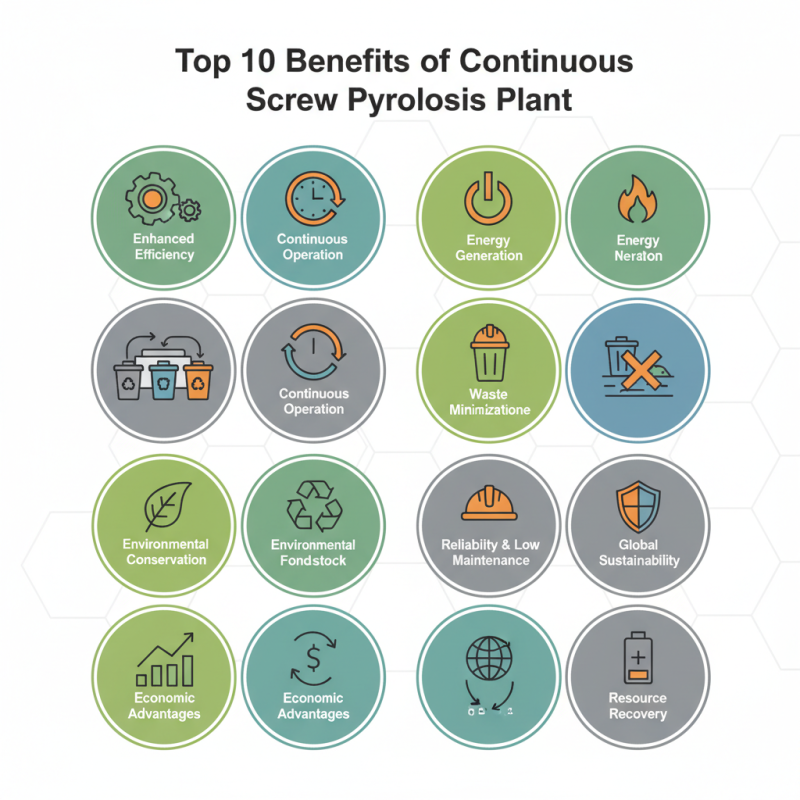
Investors and environmental enthusiasts alike recognize the numerous benefits of adopting a continuous screw pyrolysis plant. Enhanced efficiency and continuous operation are key advantages, allowing for higher output without extensive downtime. Additionally, the plant's design accommodates a variety of feedstock, making it a versatile solution for different types of waste.

In an ever-evolving market, understanding these benefits is crucial. The continuous screw pyrolysis plant not only contributes to environmental conservation but also offers significant economic advantages. Potential buyers need to reflect on these factors to make informed decisions that align with global sustainability goals.
Top 10 Benefits of Continuous Screw Pyrolysis Plant for Buyers?

Benefits of Higher Efficiency in Continuous Screw Pyrolysis Plants

Continuous screw pyrolysis plants offer significant efficiency improvements for waste management. Recent industry reports indicate that these systems can achieve thermal efficiencies exceeding 80%. This higher efficiency translates to more effective energy recovery from waste materials, making it an attractive option for buyers.

One key benefit of these plants is their ability to process a variety of feedstocks. Continuous operation enhances throughput, reducing idle times often found in batch systems. For instance, a well-designed continuous screw pyrolysis unit can process up to 1 tonne of biomass per hour. This increased processing rate results in lower operational costs per unit of output.

However, not all continuous screw pyrolysis plants are created equal. Buyers must carefully consider factors like technology maturity and operational stability. Some systems may struggle with the variability of feedstock quality, impacting overall efficiency. Understanding these nuances can lead to better deployment strategies. Being aware of both advantages and potential challenges is essential for maximizing the benefits of investing in such technology.

Cost-Effectiveness of Continuous Screw Pyrolysis Operations for Buyers

Continuous screw pyrolysis plants provide significant cost-effectiveness for buyers. These systems convert waste into energy efficiently. This transformation helps reduce disposal costs. It also generates valuable byproducts, such as biochar and oils. This added value enhances revenue potential for operators.

Moreover, continuous operations minimize labor costs as they require less manual intervention. Automation plays a vital role here. With fewer workers, buyers save on wages and training. Additionally, the energy output is stable and reliable, ensuring consistent returns. However, initial investments can be high, and financial planning is essential.

Buyers may face challenges in understanding technical specifications. Inadequate knowledge can lead to poor decision-making. Partnering with experts can improve project feasibility. Also, ongoing maintenance costs should be anticipated. Addressing these issues upfront can yield better long-term profitability.

Top 10 Benefits of Continuous Screw Pyrolysis Plant for Buyers

This chart illustrates the cost-effectiveness of continuous screw pyrolysis operations based on various factors that affect buyers' decisions. The benefits include operational cost savings, efficiency improvements, environmental impact, and revenue generation potential.

Reduction of Waste through Continuous Screw Pyrolysis Technology

Continuous screw pyrolysis plants play a significant role in waste management. They use advanced technology to efficiently convert waste into useful products. This process reduces the volume of waste significantly. According to a recent industry report by the Waste Management Association, pyrolysis can reduce waste by up to 90%. This transformation is crucial in controlling the growing waste crisis affecting our environment.

The continuous nature of these plants allows for uninterrupted processing. This means less downtime and higher efficiency. As materials are fed into the system, they are consistently converted into oil, gas, and char, which can be reused. Studies indicate that around 60% of the input waste can be transformed into valuable outputs. This not only cuts down on landfill usage but also promotes a circular economy, creating sustainable solutions for future generations.

Tip: Regular maintenance of pyrolysis equipment enhances efficiency. Ensure that all components are in optimal condition. Monitoring the input material is also vital for improved output quality. Consider conducting routine checks to maximize performance.

Environmental Impact and Sustainability of Continuous Screw Pyrolysis Systems

Continuous screw pyrolysis systems significantly enhance environmental sustainability. These systems convert waste into valuable resources while minimizing harmful emissions. By using advanced thermal decomposition, they process organic material efficiently. This approach not only reduces landfill waste but also generates energy and biochar. Biochar can improve soil health, fostering agricultural sustainability.

Moreover, continuous screw pyrolysis plants can operate at lower temperatures. This reduces energy consumption compared to batch processes. However, operators must ensure proper feedstock preparation. Inconsistent feedstock can lead to suboptimal results. Regular maintenance is crucial for optimal functioning, which can be challenging for some facilities.

The technology offers economic benefits as well. It creates local jobs in waste management and energy production. However, its initial setup cost may deter some investors. Communities need guidance and education to understand its long-term advantages. Overall, while continuous screw pyrolysis systems present challenges, their potential to promote environmental health is undeniable.

Scalability and Flexibility of Continuous Screw Pyrolysis for Diverse Feedstocks

The scalability and flexibility of continuous screw pyrolysis plants make them an attractive option for various industries. These plants can handle a wide range of feedstocks, from agricultural waste to plastics. Buyers appreciate the ability to customize their feedstock inputs, which enhances process efficiency and output quality. This adaptability enables businesses to maximize resource use and minimize waste effectively.

Tips: Always assess your feedstock characteristics. Even slight variations can impact the pyrolysis process. Selecting the right mix is crucial for optimal production.

Moreover, continuous screw pyrolysis allows for real-time adjustments in operational parameters. This ensures consistent quality while adapting to changing feedstock types. Buyers can experiment with different materials without significant downtime. The ability to pivot quickly to meet market demands is invaluable in today’s fast-paced economy.

Tips: Regularly monitor the system's performance data. Analyze patterns to understand which feedstocks yield the best results. This will aid in making informed decisions.

Investing in this technology can yield significant returns. Flexibility in feedstock sourcing leads to lower costs and higher profit margins. However, buyers should also consider potential challenges, such as equipment maintenance and feedstock availability. Addressing these concerns early on can optimize the implementation of continuous screw pyrolysis.

Open chat
Scan the code
Bendet Sales Assistant
Hi There👋,
Thank you for visiting our website, How can I help you?