What Are the Best Lorry Mechanic Tools in 2026?
Choosing the best Lorry Mechanic Tools in 2026 starts with the work a technician actually performs. A roadside repair kit has different demands from a fully equipped workshop. Heavy-duty sockets, calibrated torque wrenches, diagnostic scanners, and reliable lifting equipment can all matter, but no single kit suits every lorry.
Details count. A socket that fits poorly can damage a fastener; a torque wrench used outside its calibration interval may give misleading results. Technicians should check tool ratings, compatibility with vehicle systems, manufacturer guidance, and maintenance requirements before buying. For electronic diagnostics, confirm that a scanner supports the lorry’s make, model, and relevant systems. Features alone are not proof of usefulness.
Good tools save time. They also help make repairs more consistent and safer when used correctly. Still, the most expensive option is not automatically the best one. A lower-cost set may cover common tasks, but its weak case or limited size range could become frustrating in daily use. That trade-off deserves honest attention. This guide compares practical Lorry Mechanic Tools by purpose, durability, accuracy, and value, while noting where needs vary by workshop and vehicle. The recommendations are a starting point, not a substitute for training, service information, or careful inspection. Even a well-planned toolbox can have gaps. That is worth admitting.
What Lorry Mechanic Tools Are and How They Are Used
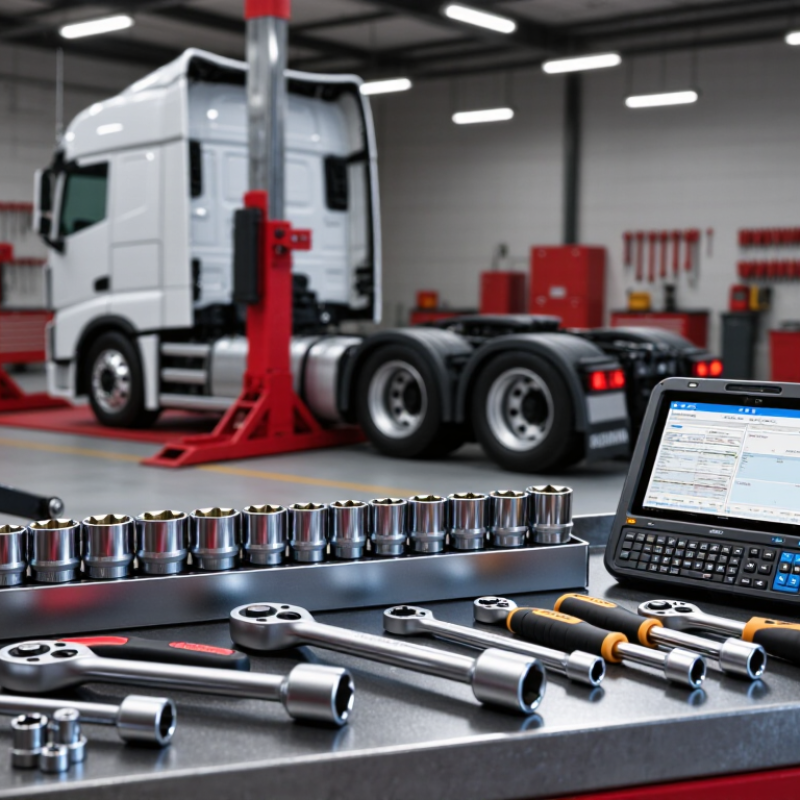
Lorry mechanic tools are the instruments used to inspect, diagnose, adjust, and repair heavy vehicles. A typical toolbox includes sockets, impact tools, torque wrenches, pry bars, and inspection lamps. These handle routine work, such as removing a wheel or checking a belt in a dim service bay. For lifting, mechanics use equipment rated for the vehicle’s weight and support it securely. No shortcut there.
Electronic faults need a different approach. A diagnostic scanner reads fault codes, while a multimeter checks voltage and circuit continuity. Pressure gauges can help assess air or hydraulic systems; a brake-measuring tool can reveal uneven wear. The U.S. Bureau of Labor Statistics describes diagnostic equipment and hand tools as part of diesel technicians’ work, and projects 3% employment growth from 2023 to 2033. That outlook reflects the continuing need for skilled inspection, not a promise that every fault has a quick fix. A clean scan is only a clue. Mechanics still compare readings with service specifications, inspect connectors, and verify repairs. I’d be wary of replacing a part based on one code alone; experience helps, but even experienced technicians can miss a loose connection.
Diagnostic Equipment for Modern Lorry Systems in 2026
Modern lorry diagnostics need more than a fault-code reader. A heavy-duty scan tool should access engine, transmission, braking, and body-control systems. Live data helps compare sensor readings under real operating conditions. For example, check coolant temperature during warm-up, not only with the engine cold. Useful equipment also supports guided tests and clear fault reports. Short codes are not enough.
A quality digital multimeter can reveal voltage drops, poor grounds, and intermittent connections. Add suitable pressure gauges for air and fuel checks, plus temperature measurement for hot components. Many newer lorries use complex aftertreatment and driver-assistance systems, so the right adapters and current technical information matter. Check tool compatibility before relying on a reading. A scan result is a clue, not a verdict. I would confirm suspicious values with a second test, though time pressure can make that easy to overlook. Keep diagnostic equipment calibrated, record test conditions, and compare results with service data. Small details matter.
What Are the Best Lorry Mechanic Tools in 2026?
Diagnostic Equipment for Modern Lorry Systems in 2026
A digital multimeter helps check battery voltage before deeper electrical diagnostics. This chart shows approximate state of charge for a rested 12-volt lead-acid battery at about 25°C. Readings vary with battery type, temperature and condition. Many lorries use 24-volt systems, typically made from two 12-volt batteries in series.
Lifting, Workshop Safety, and Personal Protective Equipment
A lorry workshop can look safe until a wheel shifts or a raised chassis settles. Choose lifting equipment rated for the vehicle’s actual load, and check the lift points against service information before raising it. Keep the floor clear and use correctly positioned stands when the job requires support beneath the vehicle. Never rely on a jack alone. A small mistake can have heavy consequences.
The U.S. Bureau of Labor Statistics recorded 5,283 fatal work injuries in 2023; transportation incidents were the largest event category, at 1,942 deaths.
These figures cover all industries, not lorry workshops, but they underline why vehicle movement and secure work areas deserve attention.
For PPE, match protection to the task: safety footwear for dropped parts, eye protection for grinding or fluid work, and suitable gloves where they will not create an entanglement risk.
The UK Health and Safety Executive reported 138 worker deaths and 604,000 self-reported non-fatal workplace injuries in 2023/24. PPE helps, but it cannot compensate for poor lifting practice.
Check it before each shift. A cracked visor or worn glove may seem usable; pause and inspect it anyway.
How to Select and Maintain a Professional Lorry Tool Kit
What Are the Best Lorry Mechanic Tools in 2026?
A professional lorry tool kit should match the vehicles and repairs handled every day. Start with dependable socket sets, combination spanners, pry bars, and a calibrated torque wrench. Heavy-duty fasteners may need longer handles, but extra leverage can damage threads if used carelessly. Include a multimeter and suitable diagnostic equipment for electrical checks. No kit fits every job.
Before buying, check socket sizes, drive compatibility, and rated working loads. Choose tools with clear measurement markings and sturdy cases that protect them from dust and moisture. Keep frequently used items within easy reach. A common mistake is buying a large set before reviewing actual workshop needs. The unused tools take up space; the missing one still stops the repair. Reassess the kit after demanding jobs.
Tips: Wipe tools clean after use, then inspect handles, sockets, and cables for cracks or wear. Store torque wrenches as instructed by their manufacturer, and arrange periodic calibration. Replace damaged tools rather than relying on a quick fix. Keep an inventory, though it may not stay perfectly up to date. Check it anyway.