








Finding the best Pos Machine Battery supplier in China requires more than comparing prices. It demands evidence, testing, and practical experience. The global POS terminal market continues to expand as retailers adopt mobile checkout, self-service kiosks, and handheld payment devices. Grand View Research estimated the POS terminals market at more than USD 90 billion in 2022, with strong growth expected through 2030. Mordor Intelligence also reports continued demand for portable and wireless POS systems. These figures suggest a larger battery opportunity, but they do not guarantee supplier quality.
Battery performance remains the hidden factor. A terminal may look reliable in a showroom, then shut down during a busy lunch period. Dr. M. Stanley Whittingham, a Nobel Prize-winning battery scientist, has said, “The battery is a very complex device.” His warning applies directly to Pos Machine Battery purchasing. Capacity, cycle life, charging temperature, connector design, and battery management software must work together.
Look beyond catalog claims. Request UN 38.3 test evidence, IEC-related documentation, cell brand details, protection-circuit specifications, and sample test results. Ask how the supplier manages swelling, aging, and inconsistent batches. Small details matter. A loose connector can stop an entire checkout lane.
Price alone is a weak filter. Experience matters more.
Still, supplier audits are not perfect. Reports may use different market definitions, and laboratory results may not reflect retail conditions. A careful buyer should test batteries inside the actual POS machine, under repeated charging and realistic daily workloads. That approach is slower, but it creates a more reliable basis for selecting a long-term Chinese supplier.
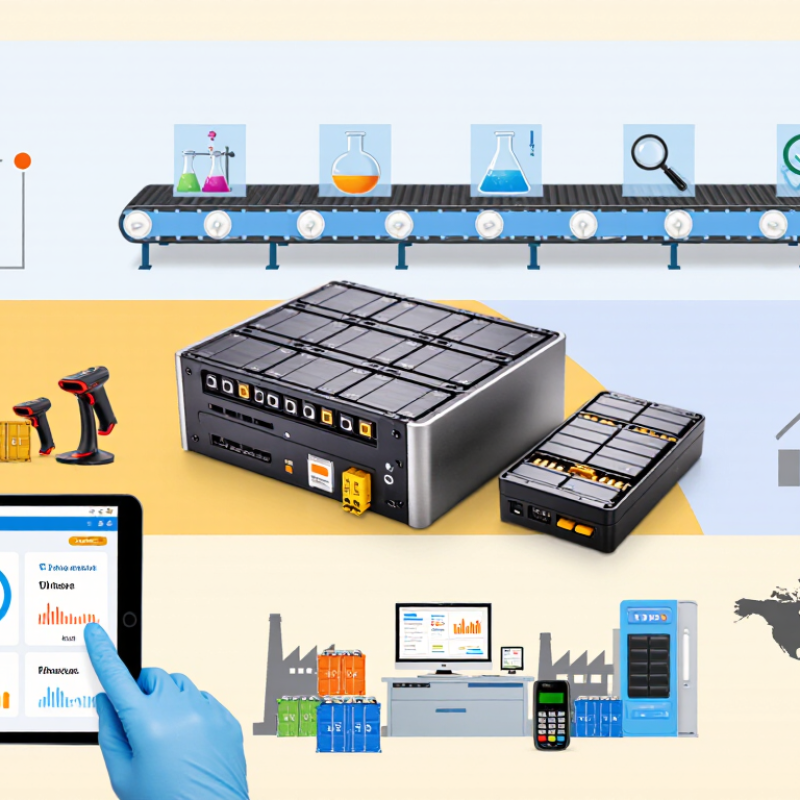
Before contacting a supplier, define the battery’s working conditions clearly. Identify the POS model, battery dimensions, connector type, voltage, capacity, and cell chemistry. Check the original label carefully. Small differences can cause poor fitting or charging faults.
Consider daily usage. A terminal operating eight hours in a busy store needs different capacity from a backup device. Record charging frequency, standby time, operating temperature, and expected cycle life. Also specify protection needs, including overcharge, over-discharge, short-circuit, and temperature protection. Do not estimate these details.
Ask suppliers for drawings, sample approvals, and test reports. Relevant documents should support capacity, safety performance, transport requirements, and production consistency. A reliable supplier should explain how cells are matched and how each battery pack is inspected. Request traceability information for samples and mass production.
Practical testing is essential. Install samples in real POS machines, then check charging time, heat, runtime, and connector stability. Test them during busy periods, not only on a clean workbench. A higher capacity is not always better if it increases weight or charging stress. No specification is perfect on the first draft. Review failed tests honestly, adjust the requirements, and confirm the revised version before discussing price, minimum order quantity, warranty terms, and delivery schedules.
Choosing a POS machine battery supplier in China requires more than comparing quoted prices. The battery must match the terminal’s voltage, connector, dimensions, and charging control. I have seen low-cost samples fail because the plug fitted, but the protection board did not. That small mismatch caused random shutdowns during busy checkout periods. Ask suppliers for datasheets, sample units, and traceable test records before placing volume orders.
Lithium-ion polymer batteries are common when a slim, shaped pack is needed. Standard lithium-ion cells may offer stronger capacity options, but they can require more internal space. Compare nominal voltage, full-charge voltage, capacity, cycle life, discharge rate, and operating temperature. Capacity alone misleads. A 2,000 mAh pack may perform poorly if the device draws high current. Check whether the supplier states measured capacity, not only a theoretical value.
Compatibility testing should include charging, scanning, wireless communication, and standby performance. Run samples through repeated charge cycles and test them near the machine’s temperature limits. Confirm connector polarity, battery dimensions, protection functions, and communication requirements. Reliable suppliers explain their inspection process and accept reasonable engineering questions. Ask how they control cell consistency, weld quality, and aging inventory. I would not rely on a polished certificate alone. Documents can be correct, while the delivered batch still varies. A pre-shipment inspection and retained sample provide useful evidence.
| Battery Type | Typical Nominal Voltage | Typical Capacity Range for POS Devices | Approximate Specific Energy | Cycle Life Characteristics | Main Advantages | Important Limitations | Best-Fit POS Applications |
|---|---|---|---|---|---|---|---|
| Lithium-ion (Li-ion) | 3.6–3.7 V per cell | 1,500–5,000 mAh per cell or battery pack | Approximately 150–250 Wh/kg | Typically about 300–800 full cycles, depending on cell chemistry, depth of discharge, temperature, and charging profile | High energy density, compact size, low self-discharge, and good support for portable terminals | Requires protection circuitry; vulnerable to overcharge, over-discharge, heat, and physical damage | Handheld POS terminals, mobile payment devices, barcode scanners, and portable receipt printers |
| Lithium-polymer (Li-Po) | 3.7 V nominal; 4.2 V when fully charged for many single-cell designs | 800–6,000 mAh, depending on enclosure size and product design | Approximately 130–220 Wh/kg | Typically about 300–600 full cycles when properly charged and stored | Flexible pouch shapes, thin profiles, and efficient use of limited internal space | Pouch cells need mechanical protection; swelling, puncture, high temperature, or incorrect charging can create safety risks | Thin handheld POS devices, smart payment terminals, and custom-shaped battery compartments |
| Lithium iron phosphate (LiFePO4) | 3.2 V per cell | 1,000–10,000 mAh, usually in larger or specialized packs | Approximately 90–160 Wh/kg | Often about 2,000–5,000 cycles, with strong thermal and chemical stability | Long service life, improved thermal stability, and lower risk of thermal runaway than many cobalt-based lithium chemistries | Lower energy density and a different voltage curve; may not be electrically compatible with a Li-ion POS device | High-duty-cycle equipment, payment kiosks, and applications where long service life is more important than minimum size |
| Nickel-metal hydride (Ni-MH) | 1.2 V per cell | 800–3,000 mAh per cell or pack | Approximately 60–120 Wh/kg | Typically about 300–500 cycles; performance depends on charge control and operating temperature | Lower material toxicity than nickel-cadmium and relatively robust in moderate operating conditions | Heavier and larger for the same energy; higher self-discharge and usually less suitable for thin modern POS terminals | Legacy POS equipment, specific battery bays, and devices designed for multi-cell Ni-MH packs |
| Sealed lead-acid (SLA) | 6 V or 12 V per battery | 1,200–9,000 mAh or higher | Approximately 30–50 Wh/kg | Often about 200–500 cycles, depending on discharge depth and maintenance | Low cost, widely available, and suitable for backup power systems | Very heavy and bulky; unsuitable for most handheld POS products and sensitive to deep discharge | Stationary POS backup systems, kiosk power supplies, and uninterruptible power applications |
| Rechargeable lithium battery pack with BMS | Commonly 3.7 V, 7.4 V, or 11.1 V nominal, depending on cell count | 2,000–10,000 mAh, depending on voltage and enclosure volume | Depends on the selected cell chemistry | Depends on cell quality, BMS settings, charging current, and operating temperature | Can integrate overcharge, over-discharge, overcurrent, short-circuit, and temperature protection | Battery-management settings, connector wiring, communication protocol, and charger parameters must match the POS device | Most modern portable POS terminals requiring a custom replacement or original-equipment-compatible pack |
| Selection note: The battery chemistry alone does not determine compatibility. Confirm the device's original voltage, capacity, dimensions, connector, polarity, protection circuit, charging method, operating temperature range, and communication requirements before placing a supplier order. | |||||||
| Evaluation Dimension | What to Verify with the Supplier | Practical Acceptance Criteria | Why It Matters for POS Equipment |
|---|---|---|---|
| Electrical compatibility | Nominal voltage, charge voltage, rated capacity, discharge current, connector pinout, and polarity | Values match the POS manufacturer's original battery specifications and charging system | Incorrect voltage or wiring can cause malfunction, charging failure, permanent damage, or safety hazards |
| Physical compatibility | Length, width, thickness, mounting method, cable exit position, connector orientation, and tolerance | Battery fits without pressure, movement, cable bending, or interference with the enclosure | Proper fit protects the pouch or cells and supports reliable assembly during high-volume production |
| Protection and control | Protection against overcharge, over-discharge, overcurrent, short circuit, and abnormal temperature | A documented protection circuit or BMS is included and tested for the intended device | Portable payment equipment is frequently charged, transported, and used by different operators |
| Cell consistency | Cell model, batch traceability, matching method, internal resistance, and capacity grading | Supplier provides batch records and consistent test results for voltage, capacity, and resistance | Consistent cells improve runtime, pack balance, service life, and production yield |
| Charging performance | Recommended charge current, charge termination method, charging time, and charger compatibility | Battery reaches its rated capacity without excessive heat, abnormal swelling, or charging interruptions | POS devices may remain in charging cradles for long periods, making charge control important |
| Operating environment | Discharge and charging temperature range, storage temperature, humidity resistance, and vibration performance | Test conditions cover the intended retail, warehouse, transport, and outdoor service environments | Temperature and vibration can significantly affect battery capacity, safety, and service life |
| Quality documentation | Safety test reports, transport documentation, quality-system records, inspection reports, and material declarations | Documents are current, traceable to the supplied battery model, and available for review before shipment | Documentation supports import, transportation, customer audits, and product compliance activities |
| Sampling and validation | Sample lead time, sample quantity, test protocol, pilot-run support, and change-control process | Supplier accepts sample approval before mass production and notifies buyers of cell or design changes | Small dimensional or electrical changes can make an otherwise similar battery incompatible |
| Production capability | Monthly capacity, assembly equipment, aging process, final inspection, and production traceability | Capacity can support the forecast while maintaining the approved design and inspection standards | Reliable production reduces shortages and helps maintain consistent performance across batches |
| Packaging and logistics | Individual protection, state-of-charge level for shipment, labeling, carton design, and transport handling | Packaging prevents short circuits and physical damage and complies with the selected transport method | Rechargeable lithium batteries require careful handling throughout storage and transportation |
How to Find the Best POS Machine Battery Supplier in China?
A reliable Chinese battery supplier should prove capability, not only offer a low quotation. The International Energy Agency reported that China produced about 80% of global battery cells in 2023. This scale creates strong manufacturing depth, but quality still varies between factories. Ask for production records, cell traceability, capacity test results, and recent inspection reports.
Battery chemistry matters. Lithium-ion cells provide high energy density, while lithium iron phosphate cells usually offer stronger thermal stability. For POS equipment, check operating hours, charging cycles, standby performance, and protection against overcharge. BloombergNEF reported that average lithium-ion battery pack prices fell to 115 US dollars per kWh in 2024. This benchmark helps with market comparison, but it does not guarantee a suitable POS battery price.
Tips: Request samples from the same production line. Test them at low temperature, repeated charging, and heavy transaction use. Confirm UN 38.3 transport testing, IEC 62133 safety testing, and a clear warranty process. Review the factory’s annual output, automation level, and failure-rate records. Video audits are useful, but an independent factory inspection is stronger. My first supplier shortlist would probably overvalue price. That is a mistake worth revisiting. A capable supplier should also explain capacity tolerance, connector design, firmware communication, and replacement planning in plain language. Forecasts can be wrong. Build a small pilot order before committing to volume.
Finding a reliable POS machine battery supplier in China requires more than comparing prices. Start by checking documented quality standards, production records, and testing procedures. Ask whether the supplier follows a recognized quality management system, such as ISO 9001. For lithium batteries, request evidence of relevant transport and safety testing, including UN 38.3 and IEC reports where applicable. Certificates should show the manufacturer, model, test date, and issuing laboratory. Vague scans are warning signs. Verify them independently.
A professional supplier should explain cell selection, protection circuits, charging limits, and thermal controls clearly. Request sample batteries before placing a large order. Inspect connector fit, labels, welding points, insulation, and casing strength. Ask for capacity, cycle-life, and temperature test data from the exact model. Similar-product data is not enough. Check whether outgoing inspection records match your specifications. One overlooked detail can stop a checkout counter. It happens.
Tips: Visit the factory, or arrange a live video audit. Watch how workers control static, store cells, and isolate damaged units. Confirm incoming-material checks and final inspection sampling. Review the supplier’s recall, complaint, and corrective-action process. Do not treat a certificate as permanent proof. Documents can expire, and processes can change. Recheck critical reports before each major order. A lower price may indicate weaker controls, but not always. That uncertainty deserves questions.
How to Find the Best POS Machine Battery Supplier in China?
Price should be judged against the complete buying cost, not the unit quote alone. Request separate figures for samples, tooling, packaging, certificates, shipping, and replacement units. A low price may hide a high minimum order quantity. Compare at least three written quotations. Check whether each quote uses the same voltage, capacity, connector, and battery chemistry. Ask for cycle-life test data, not only a product photograph. In real purchasing work, small specification differences have caused costly reorders. My checklist is useful, but it is not perfect.
Your purchase order should state tolerances, labeling, inspection rules, payment milestones, and approval procedures. Ask when lead time begins: deposit receipt, sample approval, or production confirmation. A reliable supplier gives a realistic schedule and updates delays early. Confirm carton strength, terminal protection, and moisture control before shipment. Build a small time buffer. Delays happen.
After-sales support deserves equal attention. Request the warranty period, coverage limits, response time, and replacement process in writing. Ask who pays for return freight when a battery fails inspection. A professional supplier should provide batch records and a clear failure-analysis report. Test incoming samples before mass production, even when previous shipments performed well. One missed inspection can weaken your negotiating position. Keep photos, test results, invoices, and communication records together. That evidence makes technical disputes easier to review.
This 100-point procurement scorecard prioritizes battery safety and quality, total pricing, order flexibility, delivery reliability, and after-sales support. Buyers can use these dimensions to compare suppliers objectively before placing a sample or bulk order.
Hein Minnie
Cell nr: +27 (0) 82 564 6501
Email: sale@thecirclemachine.com
Hein Minnie Jnr
Cell nr: +27 (0) 84 284 7234
Email: sale@thecirclemachine.com
Address:
10 Apsey Street,
Heidelberg,
Gauteng,
1441
Bendet Engineering Services (PTY) LTD was established in 1987. Our team of engineers and draughtsman are ready to deliver a complete turnkey solution, from the design phase to commissioning. A dedicated team that consists of electrical, mechanical and industrial engineers, we are able to offer a comprehensive service to our clients.