







What Are the Best Safety Lockout Padlocks in 2026?

Choosing the best Safety Lockout Padlocks in 2026 is not about finding the brightest color or lowest price. It is about matching a lock to the equipment, work environment, and people who will use it. A padlock on a damp outdoor disconnect faces different demands from one used on a clean indoor control panel. Small details matter: shackle clearance, key control, body material, and whether gloves make operation awkward. The wrong fit can turn a simple isolation step into a frustrating one.

Industrial safety consultant Jordan Lee offers a practical reminder: “A lockout padlock is only effective when it fits the isolation point and the worker’s routine.” Treat that as a buying principle, not a substitute for your site’s procedures. In this guide, we compare common features, including nonconductive bodies, corrosion resistance, keyed-different options, and clear identification. We also consider durability and ease of inspection. Some specifications look impressive on a product page but reveal little about performance in daily use. That deserves a closer look.

There is no universal winner. A compact lock may suit a crowded panel, while a longer shackle may be needed for a particular hasp. Check compatibility before ordering. Confirm that labels remain readable after handling, and test the lock with the gloves your team actually wears. Simple, but often missed. The recommendations ahead are intended to help safety managers and maintenance teams compare options with care. Product details can change, so verify current specifications with the manufacturer before purchase.
What Are the Best Safety Lockout Padlocks in 2026?

What Safety Lockout Padlocks Do and Where They Are Used

Safety lockout padlocks isolate hazardous energy during servicing. A worker attaches one to an energy-isolating device, such as a disconnect switch, valve, or circuit breaker. The lock prevents accidental re-energization while maintenance continues. OSHA’s Control of Hazardous Energy standard, 29 CFR 1910.147, requires documented procedures, employee training, and verification before work begins. OSHA estimates that effective lockout/tagout practices prevent about 120 fatalities and 50,000 injuries each year in the United States.

These padlocks are used in factories, warehouses, utilities, construction areas, and commercial facilities. Common hazards include electrical current, hydraulic pressure, compressed air, steam, gravity, and stored mechanical energy. A suitable 2026 padlock should resist corrosion, remain clearly identifiable, and fit the site’s lockout devices.

Color coding can show department ownership, but color alone is not enough. Each authorized worker should control a uniquely keyed lock. Group maintenance may require a lock box or multi-lock hasp. From field experience, the weakest point is often poor verification, not the lock itself. A locked switch can still hide pressure or movement.

Tips: Choose a nonconductive body near electrical equipment. Keep duplicate keys controlled. Test the isolation before touching the machine. Train contractors separately. Inspect damaged locks immediately. OSHA emphasizes periodic inspections, yet teams sometimes treat them as paperwork. That is a mistake worth correcting.

Which Standards and Features Matter When Choosing a Padlock

Choosing a safety lockout padlock starts with the applicable standard, not the color. In the United States, OSHA 1910.147 guides hazardous-energy control procedures. Other regions may follow different workplace rules or national standards. Check the latest requirements and your site’s written procedure before purchasing. A credible supplier should provide test data, material details, and clear instructions.

The lock should resist corrosion, impact, heat, and repeated daily use. A non-conductive body can reduce electrical contact risks, but it does not replace proper isolation procedures. Select a shackle diameter and length that fit the equipment’s isolation points without excessive movement. Key retention is useful because it prevents an unlocked padlock from being left behind. Each authorized worker should have a uniquely keyed lock, with controlled key management and no casual duplication.

Visibility matters during a busy shift. Bright identification colors, engraved names, and durable labels help workers recognize ownership quickly. I have seen labels fade after months outdoors, so test them in real weather. A drainable design may help in wet areas, while a sealed mechanism can limit dust intrusion. Do not assume the most expensive lock is the safest choice. I would compare documented performance, ergonomic handling, and replacement availability. Some selections still fail because the lock fits the standard but not the actual machine. That practical gap deserves a site inspection.

How Materials, Keying, and Shackle Design Affect Safety

What Are the Best Safety Lockout Padlocks in 2026?

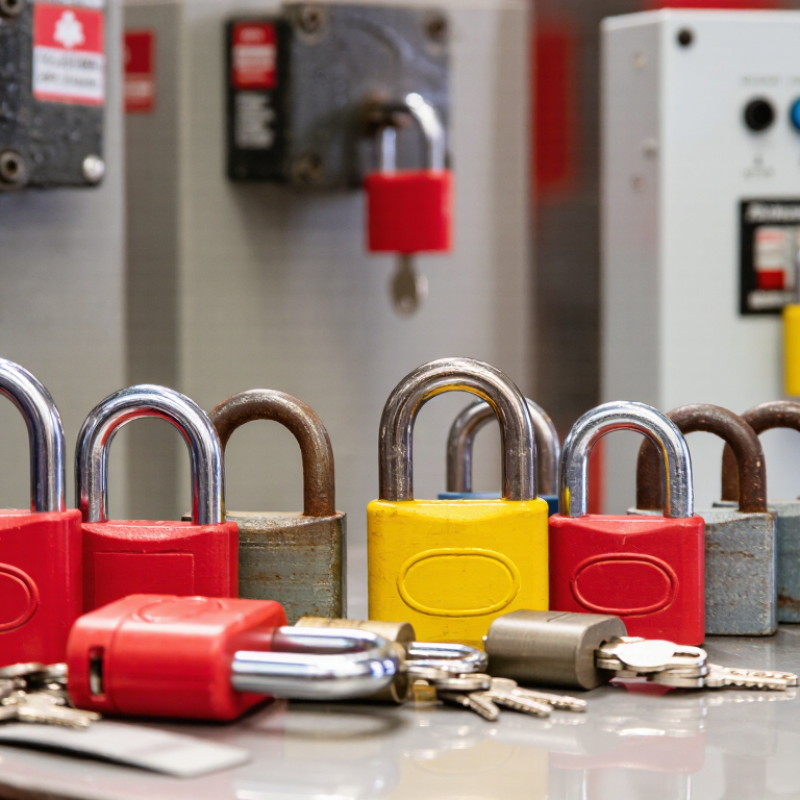
Material choice affects reliability before a lock ever reaches a machine. Nylon-bodied padlocks resist electrical conductivity and reduce accidental contact risks near energized equipment. However, nylon can crack under severe impact or cold conditions. Stainless steel or hardened steel bodies usually provide stronger mechanical resistance, but they may conduct electricity. Check the work environment, not just the product label. U.S. OSHA reports that effective lockout/tagout practices can prevent about 120 fatalities and 50,000 injuries annually. That figure makes material selection a control measure, not a cosmetic preference.

Keying and shackle design also decide whether a lockout system works under pressure. Each authorized worker should receive a uniquely keyed lock, with clear identification that remains readable after oil exposure. Master-key systems may improve emergency administration, but they can weaken personal control if poorly managed. A short shackle limits tampering and fits tight disconnect handles. A longer shackle helps reach recessed holes, yet it may create more leverage for forced removal. NIOSH investigations consistently show that unexpected startup and incomplete energy isolation remain serious hazards. Test the lock on real equipment. A perfect specification can fail in a cramped cabinet. I would also question brightly colored bodies alone; visibility helps, but it does not replace durable markings, documented procedures, or worker training.

What Are the Best Safety Lockout Padlocks in 2026? — How Materials, Keying, and Shackle Design Affect Safety
Use Case Body Material Shackle Design Keying Approach Safety Advantages Selection Considerations
General indoor equipment isolation Nonconductive polymer Insulated steel or polymer-coated steel; standard clearance One key per worker, with individually keyed locks Helps reduce electrical-conduction risk and supports personal control of a lockout point. Confirm the lock is suitable for the equipment and site procedure; polymer bodies may be less suitable for harsh chemical or high-impact environments.
Corrosive, humid, or washdown areas Corrosion-resistant polymer or appropriately corrosion-resistant metal Corrosion-resistant shackle with clearance suited to the hasp or isolation point Individually keyed; use a controlled key-management process Material choice can improve resistance to moisture and corrosive exposure. Check chemical compatibility and the manufacturer’s environmental limits; “corrosion-resistant” does not mean suitable for every chemical.
Compact valves and closely spaced lockout points Compact polymer or metal body selected for the environment Short shackle with enough clearance for secure attachment Individually keyed or assigned under a documented group-lockout plan A shorter shackle can reduce snagging and fit restricted spaces. Do not choose a shackle so short that it prevents full engagement with the lockout device.
Large hasps or recessed isolation points Polymer or metal body suited to site conditions Long shackle sized to reach the attachment point Personal key control; retain spare-key access under authorized control Extra reach can make it possible to secure equipment where a standard shackle will not fit. Longer shackles may be easier to manipulate or expose to damage; use only when the isolation point requires the added reach.
High-impact or demanding industrial environments Impact-resistant polymer or durable metal, selected after a hazard assessment Hardened or otherwise robust shackle with suitable clearance Individual-key system with controlled issuance and replacement Durable construction can help a lock withstand routine site wear when correctly selected. Assess temperature, impact, contamination, and electrical hazards; no material is ideal for every environment.
Multiple workers securing one energy source Nonconductive body where electrical hazards are relevant Shackle compatible with a group lockout hasp or designated device Each authorized worker applies a personal lock; keys remain with their owners Supports individual accountability so equipment is not returned to service until each worker removes their lock. Follow the site’s written group-lockout procedure and verify that the hasp or device accommodates every required lock.

How to Compare Lockout Padlocks for Different Work Environments

Selecting the best safety lockout padlock depends on the work environment, not appearance alone. In maintenance inspections, I compare body material, shackle clearance, key control, and label durability. A compact lock may fit a narrow electrical cabinet. However, a larger valve station may need extra shackle height. Nonconductive materials can reduce accidental contact risks around electrical equipment, but they may crack under impact or extreme cold.

Wet processing areas require different features. Look for corrosion-resistant shackles, sealed key cylinders, and surfaces that tolerate repeated cleaning. Chemical exposure can damage ordinary plastics, even when the lock looks intact. Outdoor teams should check resistance to ultraviolet light, rain, dust, and freezing temperatures. Small details matter. Can a gloved worker insert the key? Can the label remain readable after oil exposure? A key-retaining design may also help prevent an unlocked padlock from being left behind.

Color coding improves quick identification, but color should not replace a durable name or identification label. In shared workshops, individually assigned keys can support clearer accountability. During a trial, fit the padlock onto real disconnects, breakers, and valves instead of relying on catalog measurements. I once favored a lightweight model because it felt convenient. It later proved awkward with thick gloves. That mistake changed my comparison method. I now test handling, visibility, and locking force with the actual tools used on site. Supplier test data is useful, but inspection records and practical trials are more convincing.

How to Inspect, Maintain, and Replace Lockout Padlocks

A lockout padlock is only reliable when its condition is verified regularly. During each shift inspection, check the shackle for bending, deep scratches, rust, or unusual looseness. Examine the lock body for cracks and confirm that the identification label remains readable. Test the key or opening mechanism without forcing it. A stiff lock may signal internal wear, contamination, or damage.

Keep padlocks clean and dry. Wipe away dust, moisture, and chemical residue with a lint-free cloth. Store them in a designated cabinet, away from direct sunlight and standing water. Use only maintenance products approved for the lock’s construction; excessive lubricant can attract grit and prevent smooth operation. Never modify a lock, exchange keys casually, or use one assigned to another worker. Small shortcuts create confusing records.

Replace a padlock immediately when it fails to open, closes inconsistently, shows serious corrosion, or has an unreadable identity marking. A lock that looks acceptable may still have hidden internal damage. In field inspections, this is easy to miss. Record the inspection date, condition, and replacement reason. Follow the site procedure and the manufacturer’s instructions, even when the task seems routine.

I have seen teams delay replacement because the shackle still moved. That judgment was convenient, but not dependable. When a padlock has protected a person from unexpected energy, uncertainty is already a warning.

Open chat
Scan the code
Bendet Sales Assistant
Hi There👋,
Thank you for visiting our website, How can I help you?