China Best 200kW Soft Starter Manufacturer and Supplier
Choosing a dependable 200kw Soft Starter begins with understanding the motor and the work it performs. A large pump, compressor, or conveyor can place very different demands on the same rated starter. The motor nameplate, supply voltage, load profile, and expected starts per hour all deserve careful review. Details matter.
A qualified manufacturer or supplier should explain how its equipment handles acceleration, current limits, protection settings, and heat dissipation. Ask for clear technical documentation, wiring diagrams, installation guidance, and service arrangements. These details help engineers assess whether a unit suits the application, rather than relying on a headline power rating. Not every setup fits. A product page alone cannot answer every site question.
For comparison, review the starter’s rated current and duty conditions alongside the motor’s requirements. Check available enclosure options, bypass arrangements, control interfaces, and compatibility with the existing panel. Request clarification where specifications seem incomplete; that small pause can prevent costly confusion during commissioning. Real installation conditions may also differ from a tidy catalogue example, and that is worth admitting early. A supplier’s responsiveness and ability to discuss practical constraints can be as important as the listed features. This guide introduces the points buyers can use to evaluate China-based manufacturers and suppliers, compare technical claims, and make a more informed shortlist. Exact suitability should always be confirmed against the project design and manufacturer documentation.
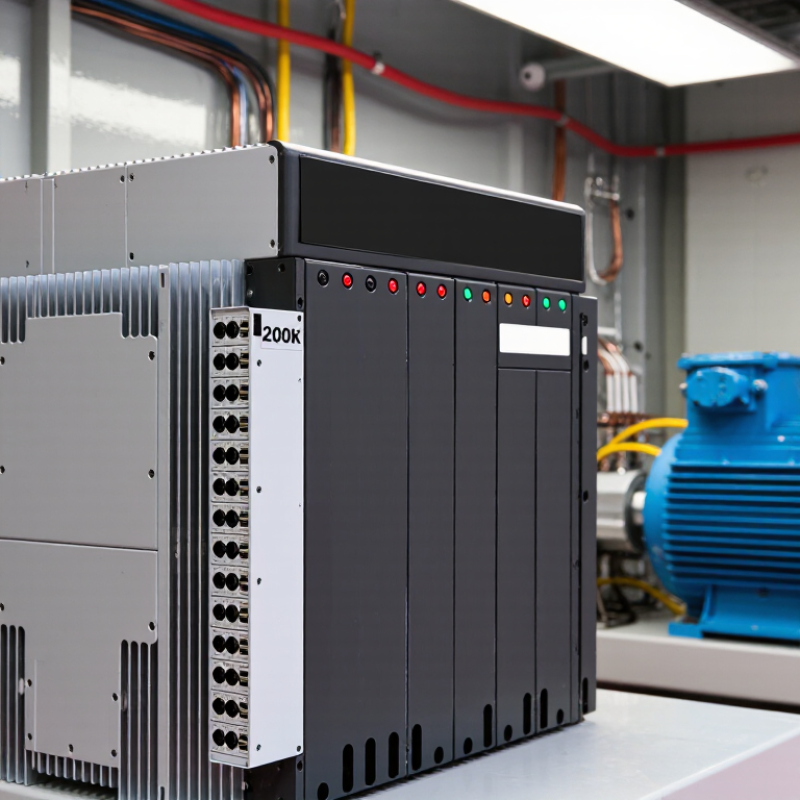
What a 200kW Soft Starter Does in Industrial Motor Systems
China Best 200kW Soft Starter Manufacturer and Supplier
What a 200kW Soft Starter Does in Industrial Motor Systems
A 200kW soft starter controls the voltage supplied to a large motor during startup. Instead of applying full voltage immediately, it raises voltage gradually. This helps limit inrush current and reduce sudden torque. On a pump line, that can mean less pipe movement and fewer pressure shocks. On a conveyor, it can ease strain on belts and couplings. The starter also supports a controlled stop, though it does not provide the same braking action as a variable frequency drive. That distinction matters.
Tips: Check the motor’s rated current, load type, and expected starts per hour before selecting a unit. Confirm the enclosure and cooling suit the installation area. Keep ventilation clear. Simple, but often missed.
A 200kW rating alone is not enough to confirm suitability. A heavily loaded crusher may need a different starting setup than a centrifugal pump. Engineers should review acceleration time, supply capacity, bypass arrangements, and overload protection. During commissioning, record startup current and motor temperature under real operating conditions. Settings that look correct on paper may need adjustment on site. Soft starters can reduce mechanical and electrical stress, but they cannot fix an undersized motor or a poorly maintained load. That part is easy to overlook.
Illustrative starting-current profile for a 200 kW motor
At 400 V, with an assumed power factor of 0.88 and efficiency of 95%, the estimated full-load current is about 346 A. The chart compares a representative direct-on-line start at 6× full-load current with a soft-starter current limit of 3×. Actual current and starting time depend on the motor, supply, load, and settings.
How a 200kW Soft Starter Controls Motor Startup
China Best 200kW Soft Starter Manufacturer and Supplier
How a 200kW Soft Starter Controls Motor Startup
A 200 kW motor can draw several times its rated current when connected directly to the supply. A soft starter reduces that initial electrical and mechanical shock. Inside the unit, solid-state switches gradually increase the voltage delivered to the motor. The motor then accelerates more gently. Less strain reaches the coupling, gearbox, and driven equipment.
The ramp is adjustable, but it should match the actual load. A lightly loaded fan may start smoothly with a short ramp, while a loaded conveyor often needs more time and torque. Current limiting can help keep demand within the site’s electrical capacity. Too little current, though, may leave the motor struggling to accelerate. That detail is easy to miss.
During commissioning, technicians typically check motor nameplate data, supply voltage, acceleration time, and overload settings. They can observe current with a suitable meter and listen for unusual vibration or humming. Once the motor reaches operating speed, a bypass contactor may carry the current, reducing heat in the starter. Protection features vary by model, so wiring diagrams and rated specifications matter. Real loads rarely behave exactly like a worksheet predicts. Adjustments may be needed.
Key Specifications and Applications of 200kW Soft Starters
A 200kW soft starter must be selected for the motor’s nameplate current, supply voltage, and starting duty—not power alone. At 400V, a motor of this size may draw roughly 350–380A at full load; efficiency and power factor change the figure. Check the actual nameplate. A 200kW rating is not a complete sizing rule.
Key specifications include rated operational current, adjustable current limit, start and stop ramp times, bypass contactor, overload protection, and permitted starts per hour. Many applications limit starting current to around two to four times motor current, but the right setting depends on load inertia and acceleration time.
IEC 60947-4-2 covers semiconductor motor controllers and starters. The IEA’s 2011 report, Energy-Efficiency Policy Opportunities for Electric Motor-Driven Systems, estimated these systems use 43–46% of global electricity. That makes smoother starts useful, though they do not guarantee energy savings during normal running.
For pumps, a gradual stop can reduce pressure shocks; fans and conveyors may benefit from reduced mechanical stress. Compressors need particular care. A datasheet cannot settle every site condition. Measure the load, and allow for hot enclosures; this detail is easy to miss.
Supplier Capabilities, Quality Standards, and After-Sales Support
For a 200 kW soft starter, supplier capability means more than producing a cabinet. The manufacturer should verify motor voltage, starting frequency, load inertia, and enclosure conditions before confirming the rating. A pump room with frequent starts needs different settings from a conveyor with a heavy, fully loaded belt. Small details matter. The International Energy Agency reported that motor-driven systems account for about 45% of global electricity use in its 2011 Energy-Efficient End-Use Equipment report. A correctly selected starter can reduce mechanical stress during acceleration, though it does not replace an efficient motor or proper system design.
Ask for documented tests, wiring diagrams, component traceability, and clear overload and bypass specifications. Compliance with IEC 60947-4-2 is a useful quality reference for semiconductor motor controllers and starters. Still, a certificate alone cannot show how carefully each unit was assembled. Request routine test records for the actual 200 kW model, including functional checks and protection settings. Site conditions can expose gaps that a factory test misses.
After-sales support should include remote troubleshooting, commissioning guidance, and replacement-part availability. A practical supplier can explain fault codes and review a start-up log with the site technician. Response time matters when a production line is waiting. No supplier gets every installation right on the first visit. That deserves honest discussion. Clear escalation contacts and written service terms help prevent small setup issues from becoming long stoppages.