







How much should a Feather Meal Processing Machine cost in China? The answer depends on more than the equipment’s price tag. Processing capacity, hydrolysis pressure, drying method, automation, installation, and after-sales support can all change the final quotation. A compact line for a small plant is not comparable to a continuous system designed for high daily throughput.
Demand provides useful context. The OECD-FAO Agricultural Outlook 2024–2033 projects that poultry meat will account for about 45% of additional meat production over the coming decade. More poultry processing means more feathers to handle, but it does not guarantee that every plant needs the same machinery. Buyers should compare hourly capacity, energy use, moisture control, and the cost of wear parts—not just the headline price. Small details matter. A dryer’s heat source, for example, can affect operating costs long after installation.
A reliable price guide should also distinguish equipment specifications from vendor claims. Dr. David Meeker is a recognized authority on animal rendering, but no verifiable quotation from him about Feather Meal Processing Machine pricing is available here. Rather than inventing one, this introduction flags the limitation. Treat supplier quotations as starting points, and request itemized costs, test data, and references from comparable installations before making a decision.
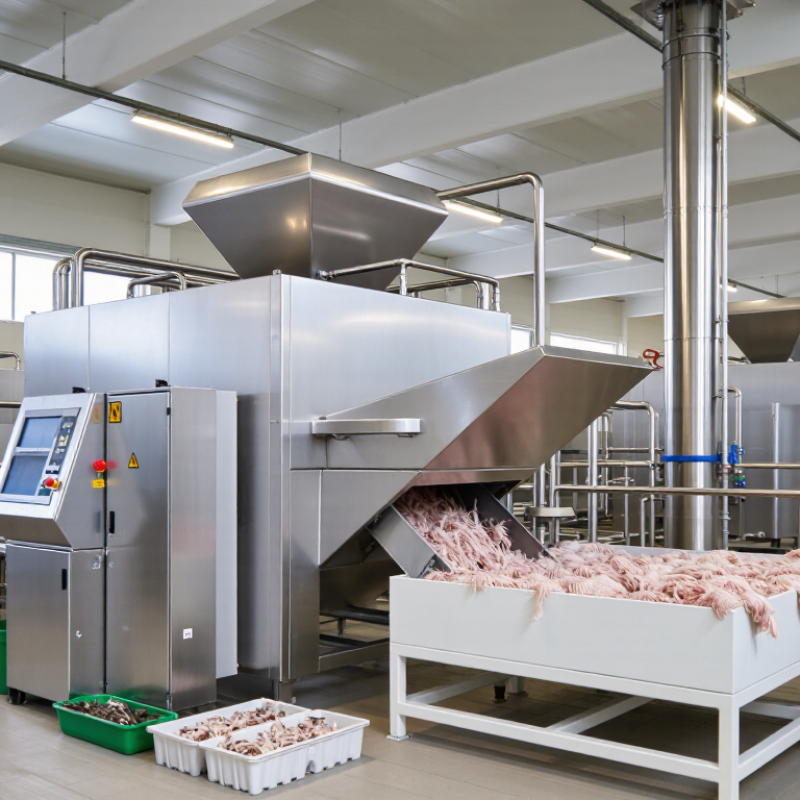
Feather meal is a protein-rich ingredient made from cleaned poultry feathers. Raw feathers are mostly keratin, a tough structural protein that ordinary grinding cannot make highly digestible. They may look like soft fluff at the receiving area, yet form dense, springy clumps when wet. That contrast matters.
Hydrolysis uses controlled heat, moisture, and pressure to loosen keratin’s structure. In a typical process, feathers are screened, fed into a sealed vessel, treated, then dried and milled. The result can be a more digestible protein ingredient, provided treatment is even and the final meal is properly dried. Too little treatment may leave poorly digestible material; excessive processing can reduce nutritional quality. Settings vary.
A practical line may include conveying, hydrolysis, drying, grinding, and dust control. When comparing feather meal processing machine prices, check capacity, energy use, contact materials, automation, and which components are included. Ask for trial data and routine checks, such as moisture and protein analysis. Small details count: wet feathers bridging in a hopper can interrupt an otherwise sound line. I would be cautious about claims based on one batch; raw materials vary, and process records matter.
China Best Feather Meal Processing Machine Price?
Hydrolysis, drying, and grinding all shape the price of a feather meal line. A quotation depends on capacity, raw material condition, and the required meal quality. Compare the included equipment, not just the headline figure.
Hydrolysis often drives cost because the vessel must handle heat, pressure, and wet raw feathers. Ask about working capacity, temperature control, steam use, and vessel materials. These details affect both purchase price and daily operation. A larger vessel is not automatically better; low, uneven loading can waste energy. That matters.
Drying adds another major cost. The dryer’s heat source, airflow, insulation, and moisture controls influence energy use and output consistency. Ask what moisture level the system is designed to achieve, and whether that figure is guaranteed under stated conditions. Small details count. Feed moisture can vary, so a single estimate may not fit every plant.
Grinding equipment is usually easier to compare, but screen size and motor power still matter. Finer meal may require more time and energy. Check whether conveyors, dust collection, installation support, and electrical controls are included. A low quote can look attractive, yet missing auxiliaries can raise the final budget. I would also leave room for uncertainty: actual operating costs depend on local energy prices and how consistently the line is run.
Feather meal quality starts with two practical checks: crude protein and moisture. AAFCO’s ingredient definition sets a minimum of 75% crude protein and a maximum of 10% moisture. These limits help buyers compare products, but they do not tell the whole story. Processing consistency matters. So does a reliable laboratory test on a representative sample.
For anyone comparing China feather meal processing machine prices, look beyond the purchase quote. Capacity, hydrolysis control, drying performance, and energy use can all affect operating costs. A machine that handles uneven raw material may produce inconsistent batches. That can make it harder to meet the protein target. Small details matter, such as whether the dryer distributes heat evenly or leaves damp pockets near the outlet.
Moisture is easy to underestimate. Too much can shorten storage life and distort the product’s measured protein percentage. A single test can mislead. Ask how samples are collected and whether results are reported on the same basis. Then compare equipment using a realistic production trial, not only a brochure figure. This takes more time, and sometimes the trial still misses daily variations. That uncertainty deserves a place in the buying decision.
AAFCO’s stated limits set a minimum of 75% crude protein and a maximum of 10% moisture for hydrolyzed poultry feathers. These are specification thresholds, not a complete price guide: market price also depends on factors such as processing costs, supply, and product consistency.
In China, feather meal machine price starts with usable throughput, not the largest number on a brochure. A 500 kg/h line needs a smaller hydrolyzer, dryer, and conveying system than a 2 t/h line. Actual output also shifts with incoming moisture and batch loading. Ask for rated and verified throughput, plus steam use per tonne. FAO’s Statistical Yearbook 2023 reports roughly 142 million tonnes of global poultry meat production in 2022. That signals a large by-product stream, not guaranteed local supply.
Power configuration is another price lever. The IEA’s Energy Efficiency 2023 report estimates motor systems use about 53% of global electricity. Compare installed kW and expected kWh per tonne; a higher motor rating alone does not prove higher output. Automation adds cost through PLC controls, sensors, interlocks, and automatic feeding, but can reduce manual handling and batch variation. A heated hydrolyzer, insulated dryer, dust collection, and stainless product-contact parts may outweigh a basic control upgrade. One caution: quotations often omit installation, steam supply, and commissioning. Those gaps matter.
China Best Feather Meal Processing Machine Price?
A low quote can hide a narrow definition of capacity. Compare guaranteed tonnes per hour using the same feather moisture, preparation, and finished-meal target. Ask whether the quoted output includes hydrolysis, drying, grinding, and conveying. Nameplate capacity alone is not enough. Request a documented acceptance test, plus the conditions under which it applies. Also compare energy in kilowatt-hours per tonne of finished meal, not just motor ratings. The IEA’s Energy Efficiency 2023 report estimates that industry used about 37% of global final energy in 2022. That broad figure is not a machine benchmark, but it shows why operating costs deserve close attention. Check the details.
Warranty terms can change the real price. Compare coverage length, excluded wear parts, labour, commissioning, and freight for replacement components. Ask how quickly technicians can respond and whether remote support is available. Put these items beside the purchase price in a five-year cost sheet. A supplier quote should identify installation requirements, expected maintenance intervals, and spare-parts availability. Even this comparison is imperfect: raw feather moisture and feed consistency can shift actual output. Record those assumptions before comparing bids. If a supplier cannot state them clearly, the lowest price may be difficult to evaluate.
Hein Minnie
Cell nr: +27 (0) 82 564 6501
Email: sale@thecirclemachine.com
Hein Minnie Jnr
Cell nr: +27 (0) 84 284 7234
Email: sale@thecirclemachine.com
Address:
10 Apsey Street,
Heidelberg,
Gauteng,
1441
Bendet Engineering Services (PTY) LTD was established in 1987. Our team of engineers and draughtsman are ready to deliver a complete turnkey solution, from the design phase to commissioning. A dedicated team that consists of electrical, mechanical and industrial engineers, we are able to offer a comprehensive service to our clients.