








Best Fuse Terminal Block Manufacturers in China

Choosing a Fuse Terminal Block manufacturer in China calls for more than comparing prices. These components connect protection devices to electrical circuits, so small design details matter. A terminal’s rated current, voltage, wire range, and fuse size should match the application. Check the housing material, contact finish, mounting style, and stated operating temperature, too. Details count.

This guide introduces Chinese manufacturers and the questions buyers can ask before requesting a quotation. Look for clear datasheets, consistent product identification, and traceable quality records. Ask whether sample units are available for fit and assembly checks. Confirm dimensions, wire-entry space, screw torque guidance, and the documents supplied with an order. These checks help reduce surprises when a part moves from a catalog page to a control panel.

A polished datasheet is useful, but it cannot prove every production detail. That takes verification. Manufacturer claims should be checked against relevant test reports and product documentation, with requirements confirmed for the intended market and installation. The best supplier on paper may not be the best fit for a specific project. Lead times, customization limits, communication, and after-sales support deserve attention as well. This comparison is a starting point, not a substitute for engineering review. Some details are easy to overlook. Even experienced buyers can miss a mismatch between a fuse format and a block designed for another size. A careful shortlist helps, but the final choice still deserves a second look.
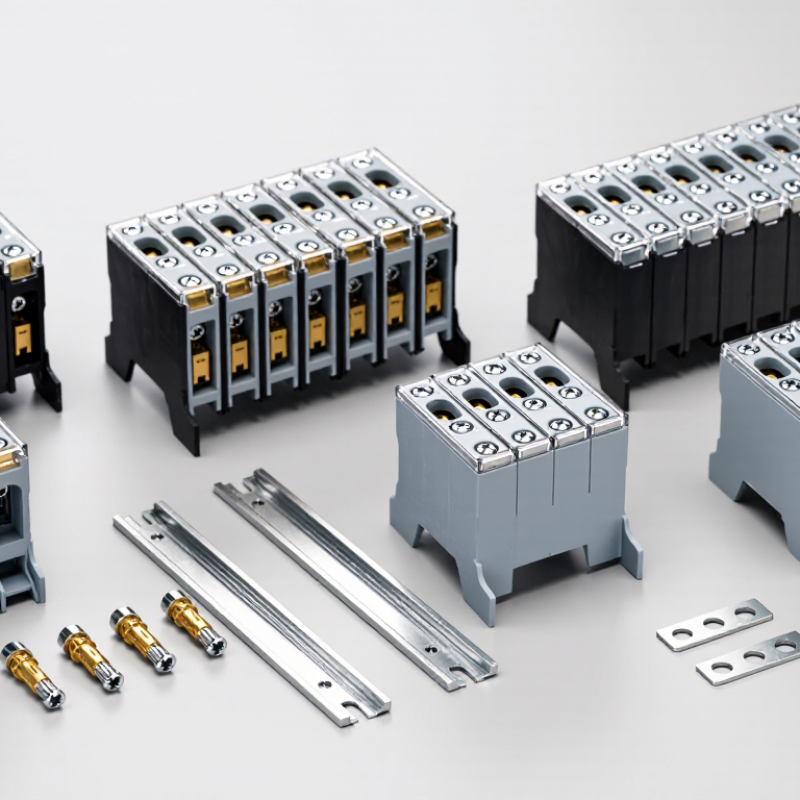
Best Fuse Terminal Block Manufacturers in China

What Is a Fuse Terminal Block?

A fuse terminal block combines a wire connection point with a holder for a replaceable fuse. It mounts on a control-panel rail, keeping conductors organized while placing overcurrent protection close to the circuit. If excessive current flows, the fuse element melts and interrupts the circuit.

Small component. Yet access matters: a technician may need to isolate the circuit and replace the fuse without disturbing nearby wiring. Some models include a blown-fuse indicator or a hinged carrier, but these features do not replace checking the circuit rating. IEC 60947-7-3:2020 covers fuse terminal blocks and specifies a scope extending to 1,000 V AC or 1,500 V DC.

Their role is easy to overlook in automated equipment cabinets. The International Federation of Robotics’ World Robotics 2024 report recorded 541,302 industrial robot installations worldwide in 2023. That figure does not measure fuse-block demand, but it reflects the scale of systems that rely on orderly control wiring and circuit protection.

When selecting a block, engineers match the fuse type, current rating, conductor size, and available panel space. Heat, vibration, and frequent maintenance also matter. A compact block may fit neatly, but cramped access can make later replacement awkward; that trade-off deserves a second look.

How Fuse Terminal Blocks Are Designed and Manufactured in China

Fuse terminal block design in China begins with rated current, voltage, wire range, and fuse size. Engineers then select a conductive path, insulation material, and contact geometry. Copper-alloy parts are stamped or machined, deburred, and often tin-plated to limit oxidation. Insulating housings are commonly injection-molded from flame-retardant engineering plastics. Small parts matter.

Manufacturers check dimensions and assembly fit before testing samples for temperature rise, dielectric strength, wire retention, and fuse compatibility. IEC 60947-7-3:2019 specifies safety requirements for fuse terminal blocks, giving engineers a reference beyond drawings and supplier claims. In production, automated inspection can catch molding defects, while torque checks help reveal loose clamping screws. One weak point remains: a clean prototype does not guarantee stable performance across every production batch.

Material planning matters, too. The International Energy Agency’s Global Critical Minerals Outlook 2024 says announced copper projects may meet only about 80% of projected 2035 demand. That pressure makes traceable sourcing and efficient stamping valuable for Chinese factories, where copper offcuts can be collected and reused. Buyers should still ask for test records, material declarations, and batch-level inspection evidence; a polished catalog is not proof.

Key Standards and Quality Factors for Chinese Manufacturers

For Chinese fuse terminal block manufacturers, standards should be verified against the exact product and intended market. IEC 60947-7-3:2021 covers fuse terminal blocks for copper conductors in circuits up to 1,000 V AC or 1,500 V DC. These limits are useful screening data, not proof that every model is compliant. Ask for current test reports, model-specific drawings, rated current and voltage, and clear marking samples. Small details matter.

Quality checks should include temperature-rise testing, dielectric strength, terminal torque, conductor pull-out, and fuse compatibility. Request material specifications for the conductive parts and insulating housing, plus batch traceability records. An ISO 9001 certificate can indicate a documented quality system, but it does not certify a terminal block’s electrical performance. Independent test evidence matters more. A polished catalog is not proof. During a factory audit, compare production samples with the approved drawings and test records; even small changes in plating or housing material deserve investigation. Some suppliers’ paperwork may look complete, yet omit the tested model number. That gap is worth resolving before approval.

Best Fuse Terminal Block Manufacturers in China - Key Standards and Quality Factors for Chinese Manufacturers
Evaluation Dimension Standard or Quality Benchmark What Buyers Should Verify
Product safety standard IEC 60947-7-3 covers safety requirements for fuse terminal blocks used in low-voltage switchgear and controlgear. Request test reports or conformity documentation for the exact product series and applicable standard edition. Confirm the report covers the supplied configuration.
Terminal block requirements IEC 60947-7-1 addresses terminal blocks for copper conductors. UL 1059 is a relevant North American standard for terminal blocks. Check that the declared approvals apply to the terminal block, conductor type, wire range, and installation conditions being purchased.
Fuse-link compatibility IEC 60269 covers low-voltage fuses; the UL 248 series covers low-voltage fuses in North American applications. Verify the permitted fuse type, size, rated voltage, and rated current against the product documentation. Do not assume fuse links are interchangeable across systems.
Rated current and voltage Ratings are product-specific and depend on design, conductor size, ambient conditions, and applicable certification requirements. Compare marked ratings with the technical datasheet and approval records. Avoid relying on a rating quoted without its conditions of use.
Conductor range and clamping Conductor sizes and connection methods should be declared for the specific terminal design and tested configuration. Check the specified wire range, solid or stranded conductor types, tightening instructions where applicable, and suitability of the clamping system.
Electrical and thermal performance Temperature-rise and electrical performance must be assessed using the applicable product standard and declared ratings. Review test evidence for the rated current and specified conductor. There is no single temperature-rise limit that applies to every product configuration.
Insulation and spacing Clearances, creepage distances, and insulation performance depend on factors including rated voltage and intended operating conditions. Confirm that the design and test documentation address the intended installation environment and applicable standard requirements.
Housing material and flammability Insulating materials should have documented properties appropriate to the product’s electrical and thermal application. Request material specifications and relevant flammability test evidence where required by the target market or end-use specification.
Marking and traceability Product identification and rating information should be consistent with the applicable standard and approval documentation. Check for legible markings, batch or lot identification, controlled production records, and a documented process for handling nonconforming products.
Restricted substances For applicable markets, assess requirements such as the EU RoHS Directive 2011/65/EU, as amended, and REACH Regulation (EC) No 1907/2006. Request current material declarations or other suitable compliance evidence for the supplied product and its materials.
Quality-system evidence A documented quality-management system can support consistent manufacturing, but certification alone does not prove product compliance. Review the scope and validity of any quality-system certificate, along with inspection plans, calibration controls, and product-specific test records.
Documentation and change control Technical files should remain aligned with the production design and the tested or certified product configuration. Ask how material, tooling, component, or manufacturing changes are reviewed and communicated, and confirm that datasheets and drawings are revision-controlled.
Market-specific suitability IEC-based and North American approval requirements are not automatically interchangeable. Specify the destination market and applicable requirements before ordering; verify the relevant listing, certification, or conformity documentation independently.

Leading Fuse Terminal Block Manufacturers in China

Leading fuse terminal block manufacturers in China supply components for control panels, machinery, and building systems. Their products combine a terminal connection with a replaceable fuse, helping protect individual circuits while keeping wiring organized. Designs vary by rated current, voltage, conductor size, fuse format, and mounting method, so buyers should compare exact specifications rather than rely on appearance.

Look for clear drawings, material details, and test records. A dependable manufacturer should explain the terminal’s temperature limits and provide evidence of relevant electrical and mechanical checks. Ask about contact materials, housing insulation, screw torque, and compatibility with solid or stranded wire. Small details matter. A sample can reveal whether the wire sits securely and whether the fuse is easy to replace in a crowded cabinet.

Production capability is only part of the evaluation. Check how the factory handles incoming materials, process inspections, and batch traceability, then confirm that supplied samples match production units. Discuss labeling, packaging, and lead times before placing a larger order. A neat catalog is not proof of consistent quality. Even an experienced supplier may need clarification when a specification is incomplete, so record agreed requirements in writing and review any changes carefully.

How to Compare Suppliers and Choose the Right Manufacturer

Choosing a fuse terminal block manufacturer takes more than comparing unit prices. Start with the electrical details: rated voltage and current, wire range, fuse dimensions, and expected fault conditions. Ask for a current datasheet and a sample that matches the quoted configuration. Small differences in clamp design or metal thickness can affect installation and heat performance. The details matter.

Compare how suppliers verify quality, not just what they claim. Request test records for temperature rise, dielectric strength, and mechanical retention, and check whether the results apply to the exact product series. Ask how they control incoming materials and inspect production batches. A clear answer should name the test method and acceptance criteria. Vague promises are not evidence.

Also examine practical support. Can the manufacturer provide drawings, traceable lot information, and consistent lead-time updates? Confirm packaging protects screws and insulating parts from damage during shipping. A low quote may hide tooling, testing, or delivery costs, so compare the full offer. I would be cautious about choosing from a polished catalog alone; supplier responses can be uneven, and a sample review takes time. That extra check is rarely wasted.

Open chat
Scan the code
Bendet Sales Assistant
Hi There👋,
Thank you for visiting our website, How can I help you?