








Choosing China’s top ISTA package testing equipment suppliers requires more than comparing prices. Buyers need reliable machines, traceable calibration, responsive service, and clear alignment with the required ISTA procedures. A drop tester can look impressive in a showroom. Its repeatability matters more.
The stakes are practical. UNCTAD’s Review of Maritime Transport 2023 reports that over 80% of world trade by volume is carried by sea. Packages may face impacts, vibration, compression, and changing conditions before reaching a customer. Smithers’ industry report, The Future of Global Packaging to 2028, also tracks continued change across packaging markets, reinforcing the need to validate protective designs rather than rely on appearance. For manufacturers and laboratories, ISTA Series Test Equipment for Packages Test supports controlled evaluation of how packages withstand distribution hazards. Still, equipment alone cannot guarantee safe delivery. Test setup, operator training, and maintenance matter.
Dr. Jay Singh, a packaging researcher and professor at Cal Poly, has emphasized the value of evaluating packaging against real distribution conditions. In paraphrase: test for the journey the package will actually face, not just for how strong it looks. That is a useful reminder, though no single test can represent every route or handling event. This guide compares Chinese suppliers by equipment capability, standards support, documentation, and after-sales service. It also flags a less comfortable point: polished specifications do not always reveal how a machine performs after years of daily use.
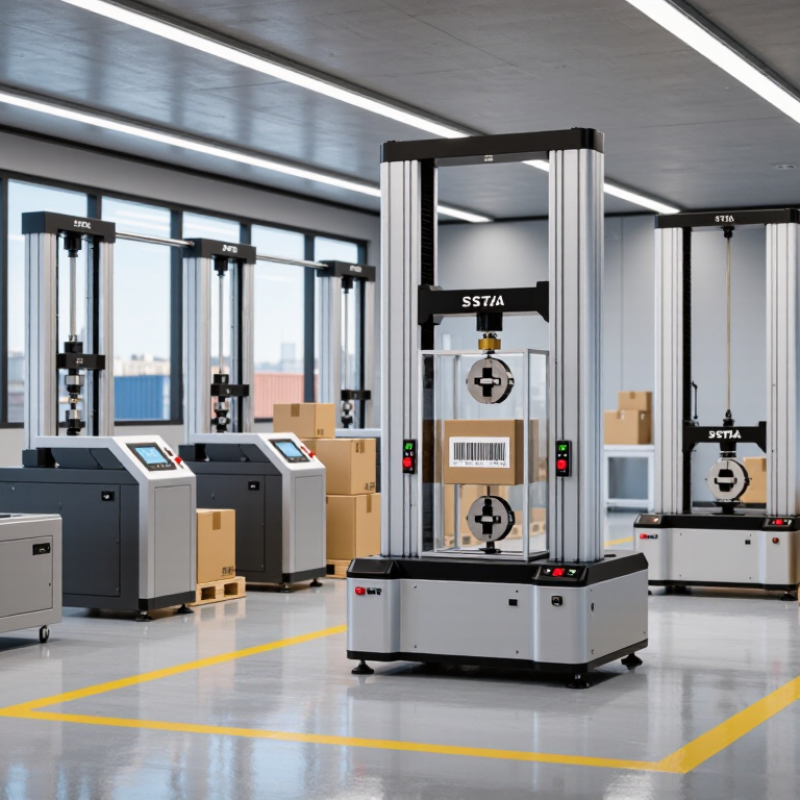
ISTA 3A is designed for individual parcels weighing up to 70 kg (150 lb). It evaluates packaged products moving through parcel delivery systems. Package shape affects the test sequence, since a flat carton and a long box encounter different handling risks. The 2024 Parcel Shipping Index reports 22.37 billion U.S. parcels in 2023. That scale makes repeatable packaging tests valuable.
Testing can include conditioning, vibration, and drop-impact sequences. Together, these checks help reveal weak corners, loose contents, or cushioning that compresses too easily. A pass is useful evidence, not a promise of damage-free delivery. Real routes vary, and lab conditions cannot reproduce every conveyor, transfer, or handling mistake.
Tips: Test the finished package, not just the empty carton. Weigh it accurately, secure the contents, and inspect seams after each sequence. Record the test setup. Small details matter—though choosing the right configuration can still take some judgment.
Reliable package testing depends on equipment that reproduces the stresses a shipment may face. A drop tester checks how cartons respond to controlled impacts on specific faces, edges, and corners. Operators should record package weight, drop height, and visible damage, not just whether the product still works. Small details matter.
Vibration systems help reveal loose parts, rubbing surfaces, or shifting contents during transport. A suitable fixture holds the package securely without hiding weak points. Compression testers measure how cartons resist stacking loads; results can change with board condition and humidity. Climate chambers expose packaging to selected temperature and moisture levels before or during other tests. Changes in adhesive, cushioning, or carton stiffness can be easy to miss.
When comparing suppliers in China, ask about test range, calibration records, safety features, and operator training. Request a sample report with test settings and observations. Keep the test repeatable. A clean lab sequence may still fail to represent every route, vehicle, or warehouse condition. That gap deserves attention. Equipment selection should reflect package size, expected distribution stresses, and the team’s ability to maintain consistent procedures.
China Top ISTA Package Testing Equipment Suppliers
Evaluate capacity on the package sizes and loads you actually test. Ask for the chamber’s usable dimensions, vibration frequency range, table payload, and drop-height limits. Then compare these with your heaviest packed product, not an idealized sample. Request a live demonstration using your packaging, and check whether the supplier can provide raw test data. UNCTAD’s Digital Economy Report 2021 estimated global e-commerce sales at 26.7 trillion US dollars in 2019, across 32 economies. That figure describes market scale, not package-damage rates. Still, it shows why repeatable testing matters across varied shipping conditions.
Calibration and compliance deserve equal scrutiny. Request current certificates for sensors, load cells, and temperature probes, with traceability and stated measurement uncertainty. Check whether calibration was performed by a laboratory accredited to ISO/IEC 17025, and confirm the certificate covers the instrument’s working range. Ask how the equipment supports the relevant ISTA procedures or ASTM D4169, including conditioning, vibration, shock, and compression where applicable. Watch a technician run a test; note whether settings, pauses, and sample orientation are recorded. Small details matter. A neat certificate alone cannot prove stable performance. One practical gap is often overlooked: suppliers may demonstrate a machine well but offer limited local servicing or operator training. Ask for maintenance intervals, spare-part lead times, and a sample test report before making a decision.
Use this evidence-based checklist to compare suppliers. It is an evaluation framework, not a ranking or a claim about any particular supplier. Confirm requirements against the current ISTA procedure and your product, package, and shipping conditions.
| Evaluation dimension | What to evaluate | Evidence to request | Practical verification | Weight |
|---|---|---|---|---|
| Testing capacity | Ability to supply and support the required equipment, test configurations, and workload, including vibration, drop, compression, and environmental testing where applicable. | Equipment list; model-specific specifications; production and delivery lead times; installation and commissioning plan; available test fixtures and chamber sizes. | Compare the stated operating ranges, payloads, dimensions, and duty cycle with the actual package and test plan. Ask for a witnessed acceptance test using agreed criteria. | 20% |
| Test-method coverage | Suitability for the selected ISTA procedure and its required sequence, load, waveform, conditioning, measurement, and reporting requirements. | A requirement-to-equipment matrix; control-system capabilities; test-program examples; applicable procedure edition and configuration details. | Map every required test step to an equipment capability. Confirm that the setup can reproduce the specified conditions; do not treat a general “ISTA compatible” claim as proof of coverage. | 15% |
| Calibration and measurement | Calibration status and measurement traceability for relevant sensors and channels, such as force, acceleration, displacement, temperature, humidity, and time. | Current calibration certificates; instrument identification and serial numbers; calibration dates and due dates; measurement ranges and uncertainties; calibration provider and scope. | Check that certificates cover the instruments, parameters, and ranges used. Where required, verify that the calibration laboratory’s ISO/IEC 17025 accreditation scope covers the relevant calibration. | 20% |
| Compliance and quality system | Documented quality controls, equipment safety provisions, and support for customer or laboratory requirements. ISTA procedure conformity is determined by the test setup and execution, not by a generic equipment certificate alone. | Quality-management certificates and their scope; inspection and test records; risk and safety documentation; applicable declarations or conformity documents for the destination market. | Confirm certificate validity and scope with the issuing body where appropriate. Check guarding, emergency stops, electrical documentation, and the customer’s applicable safety requirements. | 20% |
| Data integrity and traceability | Ability to connect each test result to the equipment, sensors, settings, procedure, sample, and operator used. | Sample reports and raw-data exports; software version and audit-trail details where applicable; equipment and sensor identifiers; data backup and retention policy. | Review a sample report for measured values, units, timestamps, test settings, exceptions, and equipment identification. Confirm that data can be exported in an agreed format. | 10% |
| Installation and after-sales service | Availability of installation, operator training, troubleshooting, spare parts, and maintenance support for the intended location. | Service response commitments; training agenda; recommended spare-parts list; maintenance schedule; warranty terms; remote and on-site support arrangements. | Confirm service coverage in writing, including response times, travel or service charges, warranty exclusions, and parts availability. | 10% |
| Technical documentation and training | Clarity and completeness of documents needed to operate, maintain, inspect, and troubleshoot the equipment. | Operating and maintenance manuals; wiring and pneumatic diagrams where relevant; calibration and inspection instructions; training materials; language options. | Review sample documents before purchase and confirm the final delivery package, document language, revision control, and training format. | 5% |
| Total evaluation weight | 100% | |||
Suggested scoring: Rate each dimension from 0 to 5: 0 = no evidence; 1 = major gaps; 2 = partial evidence; 3 = meets documented requirements; 4 = strong evidence; 5 = verified and exceeds requirements. Calculate the weighted score as (rating ÷ 5) × dimension weight.
Important: Agree acceptance tolerances and calibration intervals based on the applicable procedure, equipment specifications, risk, and customer requirements. A supplier’s ISO/IEC 17025 claim applies only when the relevant laboratory accreditation and calibration scope support the work in question; it should not be assumed to certify the equipment manufacturer or the ISTA test result.
China’s ISTA package-testing suppliers differ less by catalogue size than by how completely they support a test program. Strong coverage may include vibration tables, drop testers, compression systems, and temperature-humidity chambers. Buyers should check whether equipment supports the required ISTA procedures and package sizes, not just whether a supplier lists each machine.
UNCTAD’s Digital Economy Report 2024 notes that e-commerce sales across 43 economies approached 27 trillion US dollars in 2022. That scale makes repeatable transit testing valuable: a small parcel may face drops, vibration, and changing temperatures before delivery. When comparing suppliers, ask for installation records, calibration traceability, method-specific setup guidance, and response times for troubleshooting. A clear answer matters.
Look beyond the demonstration. Can the supplier help select fixtures for an irregular carton, train operators, and source replacement parts? Request sample test reports and confirm that stated capabilities match your actual package dimensions and load. No comparison matrix is perfect. Support can vary between technicians, and an attractive equipment range does not guarantee sound test interpretation. A short trial using your own packaging can reveal gaps that brochures miss.
Factory Acceptance Checks for Repeatability, Sensors, and Test Reports
A factory acceptance check should prove that a test can be repeated, not merely completed once. Run the same vibration or drop sequence on identical settings, then compare recorded results across cycles. Ask for the measured spread and the equipment’s stated tolerance. Small drift matters. Check that accelerometers and load sensors have current calibration records, traceable references, and visible serial numbers. Verify readings at more than one point in the working range. A sensor that passes at one setting may still misread near the limits.
Reports should connect each result to a clear test setup: package mass, dimensions, restraint method, conditioning, sequence, and sensor locations. Request raw data alongside summary charts, including timestamps and any alarms. The World Economic Forum’s 2020 report, The Future of the Last-Mile Ecosystem, projected a 78% rise in urban last-mile delivery demand by 2030. That makes consistent package testing increasingly important, but a factory test cannot reproduce every route or handling event. That is not enough. Review one completed report before acceptance, and check whether another operator can follow the same method. I would also record any unresolved variation, rather than treating a clean-looking chart as proof.
Hein Minnie
Cell nr: +27 (0) 82 564 6501
Email: sale@thecirclemachine.com
Hein Minnie Jnr
Cell nr: +27 (0) 84 284 7234
Email: sale@thecirclemachine.com
Address:
10 Apsey Street,
Heidelberg,
Gauteng,
1441
Bendet Engineering Services (PTY) LTD was established in 1987. Our team of engineers and draughtsman are ready to deliver a complete turnkey solution, from the design phase to commissioning. A dedicated team that consists of electrical, mechanical and industrial engineers, we are able to offer a comprehensive service to our clients.