10 Tips for Choosing a Flexible LED Work Light
A dark engine bay, a cramped cabinet, or a wet garden path can turn a simple repair into a frustrating task. A Flexible Led Work Light helps direct useful light into spaces where a standard lamp cannot sit. Yet flexibility alone does not guarantee a good choice. The hinge may sag, the beam may glare, or the battery may fade before the job is done.
Details matter. These ten tips focus on practical features you can assess before buying: brightness, beam spread, color quality, power options, runtime, and build. Lumens indicate light output, but a bright beam can still leave harsh shadows. A flexible neck or rotating head should hold its position without constant adjustment. Check the base, too. Magnets, hooks, and clips can make a light easier to place, but each works best on suitable surfaces.
Test it. If possible, handle the lamp and inspect its controls with work gloves on. Look for a stable grip, clear battery information, and a charging method that suits your routine. Water and dust resistance ratings can help you compare models, but they do not make every light suitable for every environment. Small print matters.
The right choice depends on where and how often you work. A compact rechargeable model may suit occasional household repairs; longer jobs may call for replaceable batteries or dependable runtime. No specification tells the whole story. These tips provide a grounded way to compare options, spot trade-offs, and choose a work light that feels useful in real conditions—not merely impressive on a product page.
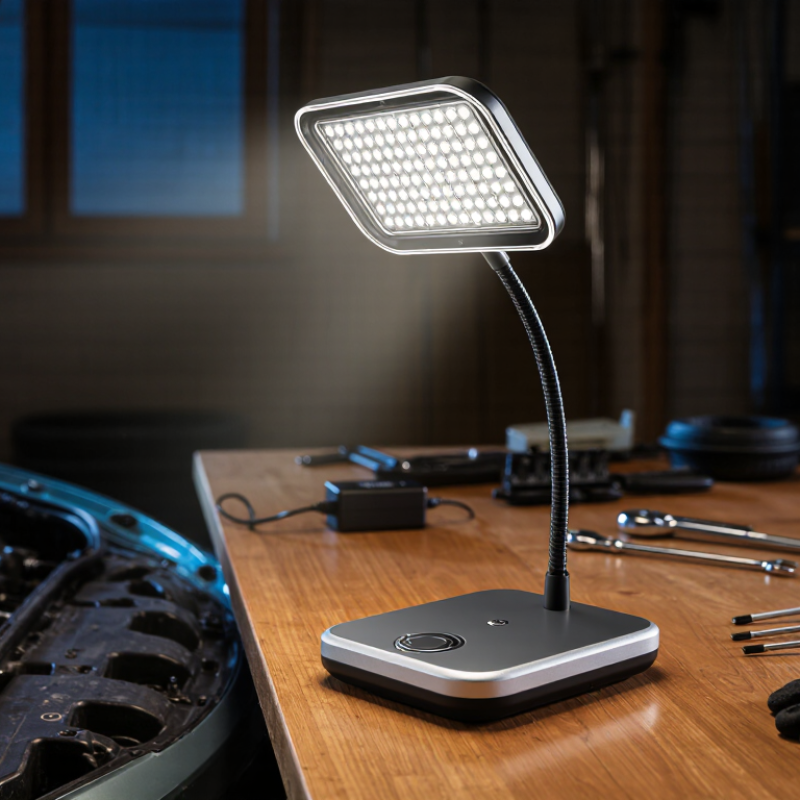
How Flexible LED Work Lights Differ from Fixed Lighting
Flexible LED work lights can be aimed at the task, not just the room. A bendable neck can reach behind a machine; a swiveling head can throw light across a bench. Magnetic bases and clamps also free both hands. Handy, but another joint can loosen or sag over time. Flexible isn’t always better.
Fixed lighting usually gives a steadier, wider spread, making it useful for general illumination. A movable work light adds focused light where shadows fall, such as inside a cabinet or beneath a vehicle. The U.S. Department of Energy’s Energy Saver guidance says LEDs use at least 75% less energy and can last up to 25 times longer than incandescent lighting. That comparison concerns LED technology, not flexible versus fixed fixtures; placement still affects how well a task is lit.
Check the light’s adjustment range, base stability, beam pattern, and glare before choosing. A narrow beam may reveal a small screw, but leave the surrounding area dim. Try positioning the lamp at the actual work surface, then check for hand shadows. Look for a durable hinge and a rating suited to dust or moisture in the work area. I’ve found that a flexible arm can drift under a heavy lamp, especially when fully extended. A sturdy mount matters as much as reach.
Which Work Conditions Should Guide Your Choice
Work conditions often matter more than a long feature list. Start with the task: inspecting a narrow engine bay needs a slim lamp head and precise aiming, while illuminating a broad bench calls for a wider beam. For close repairs, dimming can reduce glare on shiny metal. Small details matter. Check whether the light can stand, clip, or attach magnetically where needed. A flexible neck helps only if it stays in position.
Then consider the site. A damp, dusty, or outdoor workspace calls for a housing and ingress rating suited to those conditions. Read the specifications; “rugged” alone tells you little. If outlets are scarce, compare battery runtime at the brightness you actually use. Maximum-output figures can be misleading. That matters. In cold spaces, batteries may lose runtime, so allow a margin rather than planning around ideal conditions. Keep the beam away from eyes and reflective surfaces when positioning the lamp.
Think about handling over a full shift. Gloves, overhead work, and frequent repositioning can make small switches frustrating. A balanced body and secure hook may matter more than extra modes. Test reach and stability before relying on a flexible arm near moving equipment. It can sag. Recheck the setup after adjusting it; a well-aimed light can drift if its cable or head gets bumped.
How to Compare Brightness, Beam Shape, and Color Quality
Compare brightness using both lumens and lux. Lumens describe total light; lux describes light landing on a surface. A narrow beam can create a bright spot on a bolt while leaving the surrounding panel dim. A wide beam may suit under-hood work, but it can feel weaker at the center. Check the beam angle and, when available, the manufacturer’s illuminance readings at a stated distance. The U.S. Department of Energy’s 2022 SSL R&D Opportunities report notes that laboratory LED packages have exceeded 200 lumens per watt. That figure is not a work-light brightness rating: optics, housing, and heat can reduce delivered output. Look for test results measured under IES LM-79 procedures.
Color quality matters when wires, stains, or fluid leaks must be distinguished. A high CRI number helps, but CRI’s general index averages eight test colors and does not fully describe saturated reds. The Illuminating Engineering Society’s TM-30 method adds fidelity (Rf) and gamut (Rg) measures, offering a more detailed comparison. Check both if the maker provides them. A neutral white setting near 4000 K often feels practical in a garage; warmer light may appear less harsh after long use. Try the lamp on real materials. Specs don’t tell the whole story. I still find color judgment a little subjective.
How to Assess Flexibility, Power Options, and Durability
A flexible work light is useful only when its head stays where you aim it. Test the hinge and neck with one hand, then point the beam under a shelf, into a cramped corner, and across a workbench. Does it sag? That matters. A stiff joint can be awkward in tight spaces, while a loose one may droop during longer tasks. Check whether the base, clamp, or hook holds securely without blocking the beam.
Power choices shape where you can work. A rechargeable battery suits moving between rooms, but check runtime at full brightness, not just the advertised maximum. Keep spare batteries? Maybe. Mains power avoids charging breaks, though cords can snag on tool handles or stretch across a busy floor. USB charging is handy, but inspect the port cover and charging time. If possible, test the light during a typical work session before relying on it.
Durability is more than a thick-looking shell. Look for a lens that resists scratches, a protected switch, and joints that still feel firm after repeated adjustment. A rubberized surface may help prevent slips, but it can collect dust and oil. Consider drops, too: a light that falls from a low bench may still work, yet its hinge could become unreliable. I would not assume an impact rating means it can take every knock. Check the stated rating and match it to your workspace.
How to Match a Work Light to Your Tasks and Budget
Choosing a flexible LED work light starts with the task, not the brightest number on the box. For wiring or model repairs, a focused beam helps reveal small details without lighting the whole room. For car maintenance or a crowded workshop, a wider beam can reduce harsh shadows around your hands. Check brightness settings, too; lower output may be enough for close work and can extend battery runtime.
Fit the mounting style to your workspace. A magnetic base can hold on a steel cabinet, while a clamp suits shelves or benches; a flexible neck helps aim light beneath a sink or inside an engine bay. Check the light’s stability and whether its battery lasts through a typical job. For damp areas, verify the product’s stated protection rating rather than assuming it is weatherproof. Check the basics.
Set a budget around the features you will actually use. A rechargeable model may cost more upfront but avoid repeated battery purchases; a corded light may suit a fixed bench. A high lumen figure can look convincing, but it does not guarantee useful beam placement or comfortable glare. It’s easy to overbuy. Compare runtime, adjustability, build quality, and warranty terms together. If possible, test the controls with gloves on; an awkward switch can become irritating during a long repair.