



How to Choose the Best Paint Booth Filters for Your Needs?

Choosing the right paint booth filters is crucial for achieving optimal results. Paint booth filters play a significant role in maintaining air quality and ensuring a smooth finish on surfaces. Selecting filters that meet specific needs can be challenging, as there are various types available on the market.

Many factors come into play when making this decision. The type of paint used, the size of the booth, and the desired air filtration level all impact the choice. You might find yourself overwhelmed by the options. Not every filter will be suitable for every project.

Understanding these nuances can enhance your painting experience. It is essential to consider how filters affect the final product. Superior filters can prevent contaminants from ruining a finish. By selecting the right paint booth filters, you invest in your craft's quality. This can significantly impact your overall satisfaction with your work.
How to Choose the Best Paint Booth Filters for Your Needs?

Understanding the Different Types of Paint Booth Filters Available

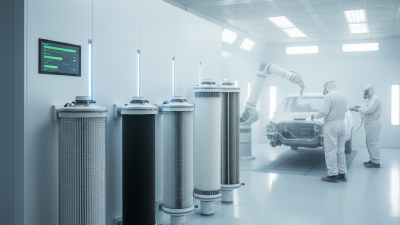
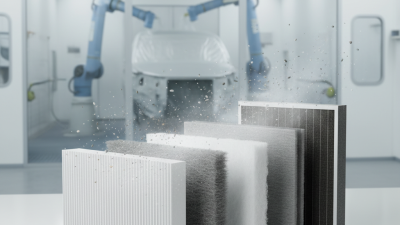
When selecting paint booth filters, understanding the different types available is crucial. There are primarily three main categories: particulate filters, chemical filters, and spray booth filters. Particulate filters effectively capture dust and debris, ensuring cleaner air in the booth. According to the EPA, over 90% of airborne particles can be filtered out with high-efficiency particulate air (HEPA) filters.

Chemical filters, on the other hand, target volatile organic compounds (VOCs) and other harmful gases. A report by the Occupational Safety and Health Administration (OSHA) indicates that improper ventilation can lead to a 50% increase in exposure to these hazardous materials. Using the right chemical filter can significantly reduce health risks.

Spray booth filters are designed for high-efficiency air flow while maintaining a clean workspace. They help enhance the quality of the finish on painted surfaces. However, there's a need for constant surveillance on filter performance. Regular maintenance is necessary, as filters can become saturated, reducing their efficacy. Frequent checks can greatly affect your facility's compliance and safety levels. Balancing filter type and maintenance strategy is key for optimal performance in any paint booth.
Paint Booth Filter Types Distribution

Criteria for Selecting the Right Paint Booth Filters for Your Projects

Choosing the right paint booth filters is crucial for achieving optimal results in your projects. The first criterion to consider is the type of paint you will be using. Different paints release various particles and chemicals. Therefore, filters must match the application type, whether you are spraying water-based or solvent-based paints. It’s also vital to assess the filter efficiency, which is often measured by MERV ratings. Higher ratings capture finer particles, improving air quality and protecting workers.

Next, think about your workspace size. Larger booths may require more extensive filtration systems. Also, consider the frequency of filter replacement. Some filters last longer than others, impacting overall costs. Balancing quality and budget is essential. Additionally, don’t overlook installation and maintenance ease. Complicated setups can lead to errors and increased downtime. Lastly, always check for compliance with local regulations. Ignoring this aspect could lead to serious consequences. Be mindful of the details. Reflect on past experiences to make the best choice for your needs.

Evaluating Filter Efficiency and Performance Metrics

When selecting paint booth filters, evaluating filter efficiency is crucial. Understanding the efficiency rating helps gauge how well the filter captures paint particles. Filters with a higher efficiency rate, often stated as a percentage, generally perform better. However, some filters boast high ratings yet may not be the best fit for your specific needs. Consider the type of materials you're working with. The filter must meet those unique requirements.

Performance metrics, such as airflow resistance, are equally important. A filter may be efficient, but if it restricts airflow too much, it can lead to uneven paint application. That’s an area where many users overlook details. Choosing between a highly efficient filter and one that allows better airflow can be troublesome. It's vital to balance these factors for optimal results.

Another consideration is the lifespan of the filter. Some may have impressive efficiency, yet they clog faster. Frequent replacements can add unexpected costs. Reflect on your operational demands. Are you able to change filters regularly? The goal is to maintain quality without sacrificing resources. Researching and testing different types can significantly impact your decision, ensuring that you remain aligned with your long-term objectives.

Exploring Maintenance and Replacement Considerations for Filters

When selecting paint booth filters, maintenance and replacement are key factors to consider. Regularly checking filter performance helps to maintain air quality. Clogged filters can lead to poor airflow and affect overall booth efficiency. It’s important to set a maintenance schedule to inspect filters frequently.

Tips for checking filters: Look for discoloration or visible dirt buildup. If a filter appears saturated or has lost its rigidity, it’s time to replace it. Additionally, consider the type of work being done. Heavy usage may require more frequent changes.

Another consideration is compatibility. Ensure that the filters you choose match your booth's specifications. Attempting to use incorrect filters may lead to inadequate capture of particles and inefficiencies. Balancing cost and quality is essential; sometimes lower-priced filters can disappoint in performance. Take the time to reflect on previous experiences with different filters. Adjust your choices accordingly for better results.

Budgeting for Paint Booth Filters: Cost vs. Quality Analysis

When considering paint booth filters, budgeting is essential. You want to strike a balance between cost and quality. Low-cost filters might seem appealing, but they often compromise efficiency. They may begin to clog quickly. This leads to increased maintenance and downtime.

Quality filters, on the other hand, provide better airflow and capture more particles. They help maintain a cleaner environment. This ultimately saves money long term. However, higher prices can cause hesitation. It's important to assess the expected lifespan of each filter type. Sometimes, investing more upfront means fewer replacements down the line.

Thinking critically about your needs is crucial. Are you prioritizing initial costs or long-term performance? Many buyers focus only on price, missing out on potential benefits of quality filters. Evaluating these factors thoroughly can lead to better decision-making and ultimately enhance your operations.

How to Choose the Best Paint Booth Filters for Your Needs?

Filter Type Cost Per Filter Average Lifespan (Months) Filtration Efficiency (%) Best Use Case
Electrostatic Filters $30 6 95 Fine Paint Finishes
HEPA Filters $50 12 99.97 High Dust Environments
Carbon Filters $45 9 90 Odor Removal
Synthetic Filters $25 3 85 General Use
Activated Alumina Filters $35 8 92 Chemical Absorption
Open chat
Scan the code
Bendet Sales Assistant
Hi There👋,
Thank you for visiting our website, How can I help you?