



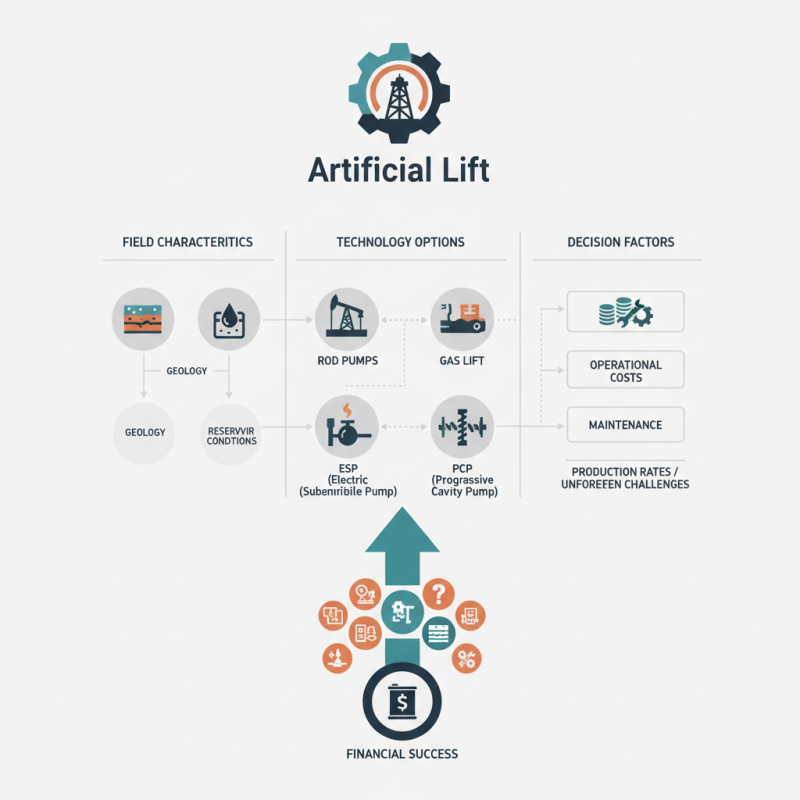
Selecting the right Artificial Lift Technologies for oil recovery is crucial. The effectiveness of these technologies can greatly impact production rates. Oil fields have distinct characteristics, and understanding these is key to making informed choices.
Different methods of artificial lift exist. Each comes with unique advantages and disadvantages. For example, rod pumps may work well for certain wells but can be inefficient in others. Assessing the specific geology and reservoir conditions is essential for optimal results.
The process, however, isn't always straightforward. Unforeseen challenges can arise during implementation. Factors like operational costs and maintenance should also be considered. Choosing the right Artificial Lift Technologies requires careful analysis and sometimes a trial-and-error approach. Ultimately, the choice can shape the financial success of oil recovery projects.
Artificial lift technologies play a crucial role in enhancing oil recovery.
Understanding these systems is essential for efficient production. Various methods exist, each with unique advantages and drawbacks. Common options include electric submersible pumps, gas lift, and rod pumps. The choice depends on factors like well depth, production rate, and fluid characteristics.
Tips for selecting the right technology include:
Engaging with experienced engineers can provide fresh insights. They can spot problems you may not notice. Regularly reassessing your choice is vital. Technologies evolve, and what worked before may not be optimal now. Stay updated with industry trends and advancements. It's a complex decision-making process, but informed choices lead to better oil recovery outcomes.
Choosing the right artificial lift technology is critical in oil recovery processes. Various factors influence this decision, including reservoir characteristics and production goals. The depth of the well plays a significant role. A deeper well may require more robust lift technology to overcome pressure challenges.
Fluid properties also matter. The viscosity and gas content can determine which method is the most efficient. For example, heavy oil might need a unique approach compared to lighter crude. It’s essential to analyze these properties to select the correct method.
Cost and efficiency are other critical factors. A technology that requires significant upfront investment may not always yield the best long-term returns. Operators must weigh the initial costs against potential production increases. Sometimes, simpler systems work better in the long run.
Adapting to field conditions is necessary; flexibility is a crucial component in artificial lift selection.
Selecting the right artificial lift system is crucial for enhancing oil recovery. Various systems exhibit different efficiencies under specific conditions. For instance, rod pump systems are common for shallow wells. They provide consistent lifting but can struggle with high gas-to-oil ratios. In contrast, electric submersible pumps (ESPs) handle larger volumes effectively. However, they might falter in wells with heavy sand production.
What about progressive cavity pumps? These systems excel in handling viscous fluids. Yet, they often require more maintenance, which could lead to increased operational costs. Understanding your well's specific conditions is vital. A poor selection can lead to inefficient production and higher expenditure. The process is not straightforward; trial and error often reveal unexpected challenges.
Combining different technologies may offer benefits. For example, integrating ESPs with downhole compressors could improve gas handling. However, this approach complicates the system. Balancing costs and production efficiency is always a struggle. Testing various options may lead to the best outcome. Regular performance evaluations are necessary to ensure optimal results.
Choosing the right artificial lift technology for oil recovery demands careful economic consideration. The effectiveness of these systems can greatly influence your return on investment. For many operators, the initial cost is a vital factor. However, the long-term operational costs can be equally significant. A less expensive system may lead to higher maintenance costs later.
Understanding the production environment is crucial. Factors such as reservoir characteristics and well depth play a role in decision-making. Sometimes, operators overlook the specific needs of their wells. This can result in selecting a technology that underperforms. It is essential to analyze all available data and trends before making a decision.
While advanced technologies promise enhanced recovery rates, they may not always be the best fit economically. It is vital to assess the cost-benefit ratio. Many companies rush into adopting the latest technology without proper analysis. This often leads to overspending without achieving expected returns. A thoughtful approach can prevent costly mistakes and improve overall production efficiency.
Choosing the right artificial lift technology is heavily influenced by well conditions. Key factors include depth, pressure, and fluid characteristics. For instance, a report by the Society of Petroleum Engineers highlights that, at depths over 8,000 feet, gas lift systems outperform other methods. Fluid viscosity also plays a crucial role. High-viscosity fluids can hinder pump efficiency.
Many operators overlook the impact of temperature. Elevated temperatures can reduce the efficiency of certain artificial lifts. A significant finding from the American Petroleum Institute indicates that temperatures above 200°F can lead to a 25% decrease in pump performance. Thus, understanding the specific conditions of the well helps in selecting the appropriate technology.
Not all installations yield the expected results. Some settings result in frequent downtime, disrupting production. Reports suggest that improper selection can lead to up to 30% inefficiency in extraction. Constant monitoring and adaptation are essential. The reality is, a one-size-fits-all approach may not work. Operators must continually review and adjust their strategies based on real-time data.
Hein Minnie
Cell nr: +27 (0) 82 564 6501
Email: sale@thecirclemachine.com
Hein Minnie Jnr
Cell nr: +27 (0) 84 284 7234
Email: sale@thecirclemachine.com
Address:
10 Apsey Street,
Heidelberg,
Gauteng,
1441
Bendet Engineering Services (PTY) LTD was established in 1987. Our team of engineers and draughtsman are ready to deliver a complete turnkey solution, from the design phase to commissioning. A dedicated team that consists of electrical, mechanical and industrial engineers, we are able to offer a comprehensive service to our clients.