




How to Choose the Best Air Duct Machine for Your Business?

Choosing the best Air Duct Machine is rarely a simple price comparison. Your decision affects cutting accuracy, installation speed, worker safety, and long-term maintenance costs. A small workshop may need a compact machine for lightweight galvanized steel. A large fabrication company may require automated forming, seam closing, or plasma cutting capabilities.

HVACR educator and equipment consultant John Barba offers a practical reminder: “The right tool is the one that fits the work.” That principle matters when comparing Air Duct Machine options. Examine your daily production volume, duct sizes, material thickness, available floor space, and operator experience. A powerful motor sounds attractive, but excessive capacity can increase energy use and training demands. A low-cost model may look efficient until replacement blades, downtime, and difficult servicing appear.

Look closely at real operating details. Can one technician move the machine safely? Does the control panel remain clear when dust covers the work area? Can local technicians obtain belts, blades, filters, and electrical components quickly? Ask for a live demonstration using your own materials. Brochures can hide weaknesses.

No machine is perfect. I would not trust a purchase based only on speed claims. Noise, vibration, calibration drift, and cleaning time deserve equal attention. Record these findings during a trial. Then compare total ownership cost, not just the invoice. The best Air Duct Machine should support consistent output, safer work, and predictable growth. Sometimes, the less impressive machine performs better because operators actually use it correctly.
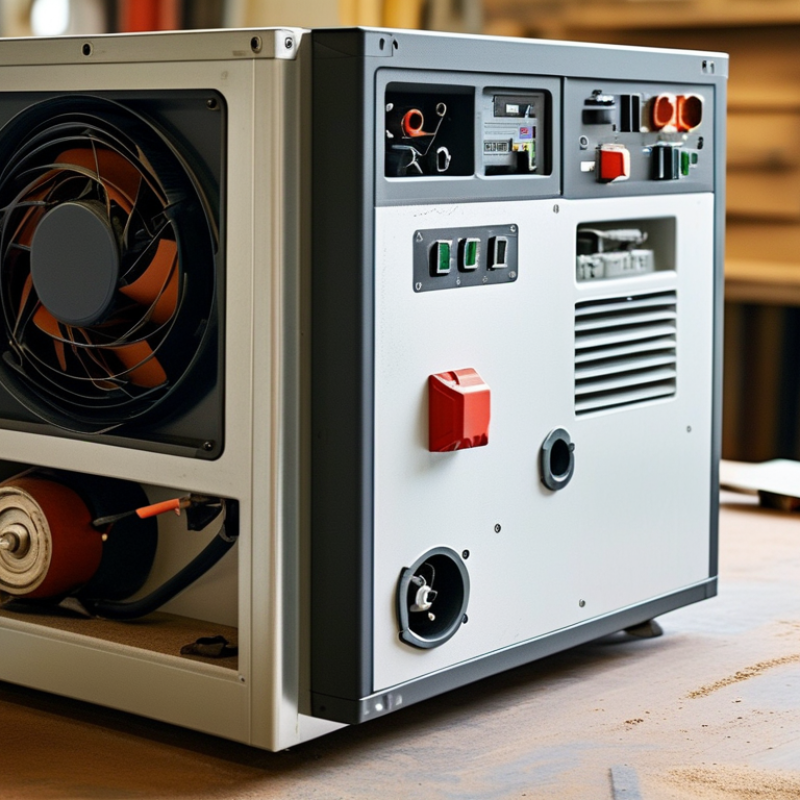
How to Choose the Best Air Duct Machine for Your Business?

Identify Duct-Cleaning Jobs Using NADCA ACR 2021 Guidelines

Choosing an air duct machine should begin with the job, not the equipment catalog. NADCA ACR 2021 guidelines emphasize inspection, system assessment, and controlled cleaning. Check the air handler, supply ducts, return ducts, coils, filters, and access points. Look for settled dust, moisture damage, microbial growth, and construction debris. A quick visual check helps. It can also mislead.

For heavy debris, choose equipment that supports source removal and strong negative pressure. The machine should connect safely to the duct system and capture loosened material through suitable filtration. Rotating brushes, air whips, and skipper tools may fit different duct shapes. Flexible ducts require gentler control. Rigid metal ducts can tolerate more agitation. Match the tool to the surface.

Record the duct size, access limitations, contamination type, and airflow direction before selecting a machine. NADCA ACR 2021 also supports protecting occupants, sealing openings, and preventing cross-contamination during work. In real buildings, plans are often incomplete. I have learned to measure every access panel twice. A powerful machine is not always the best machine. Excessive suction can damage weak connections or disturb insulation. Review the assessment, test a small section, and adjust the method when site conditions disagree with your first assumption.

Size Negative-Air Capacity Against Duct Volume and the 3,000-CFM Benchmark

Choosing an air duct machine starts with negative-air capacity, not the motor’s advertised horsepower. Measure the connected duct volume in cubic feet. Then estimate the required airflow with this formula:

duct volume × target air changes per hour ÷ 60

For example, a 10,000-cubic-foot system needs about 667 CFM for four air changes per hour. A 3,000-CFM machine would provide roughly 18 air changes per hour before losses.

That is a useful screening benchmark, not a universal rule.

Pressure matters more than free-air CFM. Long flex-duct runs, loaded filters, access openings, and bends can reduce real airflow sharply.

NADCA’s ACR Standard emphasizes controlled negative pressure and proper containment during HVAC hygiene work. Its guidance supports evaluating the complete setup, rather than trusting one catalog number.

ASHRAE Handbook procedures also highlight system resistance, leakage, and operating conditions when assessing air movement.

Check performance at the expected static pressure. Ask for test data, not only maximum airflow.

A machine rated at 3,000 CFM in open air may deliver much less through a filter and duct hose. Measure pressure at the farthest opening with a calibrated gauge.

Adjust the calculation when the duct volume is uncertain. That part is often overlooked.

A conservative choice may protect containment, but an oversized unit can increase noise, energy use, and filter replacement costs. Field measurements should decide the final capacity.

Select HEPA Filtration Rated 99.97% at 0.3 Microns by DOE/EPA

How to Choose the Best Air Duct Machine for Your Business?

When selecting an air duct machine, treat filtration as a performance requirement, not a marketing phrase. The U.S. Department of Energy specifies HEPA filters at 99.97% efficiency for particles measuring 0.3 microns. The U.S. Environmental Protection Agency also explains that indoor pollutant levels can be two to five times higher than outdoor levels, and sometimes much higher. This makes reliable particle control important during duct cleaning and renovation work.

Check the filter seal, airflow, static pressure, and filter-loading indicator. A machine may claim strong airflow, yet lose performance when dust covers the filter. I prefer a unit with a sealed housing, washable prefilter, pressure gauge, and documented test results. Keep the 0.3-micron rating in context. It represents the most penetrating particle size, not the only size captured. Gas pollutants and odors require different treatment.

Do not choose by motor power alone. A quieter machine may work better in occupied buildings, where communication and customer comfort matter. Measure the duct size, hose length, available electrical supply, and expected daily workload before buying. EPA guidance notes that portable filtration performance depends on clean air delivery and proper operation. A neglected seal can undermine an excellent filter. That sounds simple. In practice, it is often missed. Ask for replacement-filter availability and maintenance records, because operating cost can quietly exceed the purchase price.

How to Choose the Best Air Duct Machine for Your Business? - Select HEPA Filtration Rated 99.97% at 0.3 Microns by DOE/EPA

Selection Dimension Recommended Benchmark Why It Matters What to Verify Before Purchase
HEPA filtration efficiency True HEPA filtration rated at 99.97% efficiency for particles measuring 0.3 microns. The 0.3-micron particle size is widely used as the most penetrating particle size for HEPA performance testing. Higher filtration efficiency helps reduce recirculation of fine dust and allergens. Request independent test documentation, filter classification, gasket condition, and the replacement-filter part specification.
Airflow capacity Select airflow according to the duct size, contamination level, hose length, and required air changes. Compare performance in CFM or m³/h at a stated static pressure. A higher free-air rating does not always mean stronger cleaning performance once hoses, filters, and duct resistance are connected. Check the airflow curve or tested airflow at working static pressure rather than relying only on the maximum free-air figure.
Static pressure capability Choose a unit with a published static-pressure rating suitable for the connected ductwork, hose, pre-filter, and HEPA filter load. The machine must maintain useful airflow as resistance increases during operation and as filters collect dust. Confirm the measurement units, test method, operating point, and whether the rating is positive or negative pressure.
Pre-filtration system Use a staged system with a coarse or washable pre-filter, a finer secondary filter, and the final HEPA filter. Pre-filters capture larger debris and help extend HEPA filter life, reducing pressure loss and operating costs. Check filter sequence, filter-surface area, replacement intervals, cleaning instructions, and availability of compatible consumables.
Air leakage control Use a sealed housing with secure latches, a continuous filter gasket, and sealed hose connections. A high-efficiency filter cannot perform as intended if contaminated air bypasses the filter through gaps or damaged seals. Inspect the housing, gasket compression, access panels, clamps, and any available leak-test or service procedure.
Duct and hose compatibility Select connection sizes and adapters that match the duct openings and hose diameters used by your service team. Correct sizing reduces airflow losses, improves setup time, and helps prevent loose connections during cleaning. Verify inlet and outlet diameters, adapter availability, hose flexibility, maximum recommended hose length, and grounding requirements where applicable.
Negative-pressure operation For containment work, choose equipment designed to maintain negative pressure in the work zone and connect it to a suitable exhaust or containment arrangement. Negative pressure helps prevent loosened dust from migrating into occupied areas during duct cleaning or remediation. Confirm pressure monitoring, alarm functions, exhaust routing, enclosure compatibility, and the required site-containment procedure.
Electrical requirements Choose voltage, frequency, plug type, current draw, and circuit requirements that match the locations where the machine will be used. Electrical incompatibility can cause nuisance tripping, unsafe extensions, downtime, or equipment damage. Review the nameplate rating, recommended circuit protection, extension-cord limits, and applicable electrical-safety certification.
Noise level Compare sound pressure or sound power ratings measured under the same test conditions; lower dB values are preferable for occupied buildings. Lower operating noise can improve worker comfort and reduce disruption in offices, schools, healthcare facilities, and retail spaces. Check the measurement distance, operating mode, filter condition, and whether hearing protection is recommended.
Portability and handling Prioritize balanced handles, lockable casters, suitable machine weight, compact dimensions, and safe stair or vehicle loading arrangements. Duct-cleaning crews often move equipment through narrow corridors, service areas, and multiple floors. Measure doorways and storage space, check wheel durability, and assess whether two-person lifting or ramps are required.
Filter monitoring and maintenance Prefer differential-pressure indicators, filter-change alerts, tool-free access where practical, and documented inspection procedures. Monitoring helps identify clogged filters, reduced airflow, and maintenance needs before performance becomes unacceptable. Confirm alarm thresholds, reset procedures, inspection frequency, safe filter removal, and disposal requirements for contaminated filters.
Operating cost Evaluate energy consumption, filter replacement cost, maintenance labor, downtime, and expected service life instead of purchase price alone. Consumables and labor can represent a significant portion of the total cost of ownership for frequently used equipment. Request a maintenance schedule, consumable pricing, warranty terms, repair support, and expected replacement-part lead times.
Safety and compliance Select equipment with documented electrical safety compliance and use procedures appropriate to the dust, mold, asbestos, or other contaminants encountered. The machine, filter, containment method, and work practices must be suitable for the specific hazard; HEPA filtration alone does not make equipment appropriate for every hazardous material. Review the safety manual, intended-use limitations, grounding instructions, hazardous-material requirements, local regulations, and worker-protection procedures.

Practical selection rule: Choose the machine that maintains the required airflow at working static pressure while providing verified 99.97% HEPA filtration at 0.3 microns, reliable sealing, suitable duct connections, and manageable total operating costs.

Match Agitation Tools to Duct Materials Under SMACNA Standards

Choosing the best air duct machine starts with the duct material, not motor power. Under SMACNA standards, cleaning methods should protect the system’s construction and internal surfaces. A machine that performs well on galvanized steel may damage fiberglass ductboard or flexible duct.

For galvanized steel, select controlled rotary brushes with adjustable speed and firm bristles. They can remove compact dust from seams and corners. Use softer agitation tools for internally lined ducts. Excessive pressure may tear the liner or release fibers. Flexible ducts need even gentler treatment. Air whips and low-pressure tools can loosen debris without crushing the support wire. Vacuum control matters too. Poor negative pressure can spread dust into occupied areas.

Inspect the duct before choosing attachments. Look for loose insulation, damaged joints, access limits, and heavy buildup. In field work, technicians often test a small section first. This simple step prevents expensive repairs. A stronger machine is not always better. I have seen aggressive brushing leave visible marks on aging metal, even when the duct looked sound.

Choose equipment with adjustable agitation, pressure control, interchangeable tools, and clear airflow monitoring. Keep inspection photos and record the settings used. These details support reliable work and help verify alignment with SMACNA guidance and project specifications. Some sites still require a slower process. That can feel inefficient, but protecting the duct is the real measure of performance.

How to Choose the Best Air Duct Machine for Your Business?

Match agitation tools to duct materials under SMACNA-based cleaning practices.

The index shows a practical starting point for selecting agitation intensity: higher values indicate materials that generally tolerate more robust mechanical agitation, while lower values require softer tools, reduced contact force, and closer inspection. Fiberglass-lined, flexible, and internally insulated ducts are more vulnerable to abrasion and should be cleaned with methods suitable for their construction. SMACNA guidance emphasizes protecting duct surfaces, insulation, seals, and air-cleaning performance; always verify the system condition before selecting equipment.

Compare Total Cost, OSHA Controls, Noise, Power, and Payback

How to Choose the Best Air Duct Machine for Your Business?

The purchase price is only the starting point. Compare filters, hoses, brushes, transport, maintenance, and operator training. A cheaper machine may require frequent repairs or longer setup times. That difference affects every job. I once underestimated downtime during filter changes, and my payback estimate became too optimistic. Measure real cleaning hours, not brochure claims.

OSHA-related controls deserve careful attention. Look for guarded moving parts, clear emergency stops, dust containment, and practical lockout procedures. Check the current requirements for your workplace and document employee training. Noise matters, too. A machine that sounds acceptable outdoors may become exhausting inside a mechanical room. Record its operating level and consider hearing protection, especially during repeated shifts. Short demonstrations help.

Power requirements can quietly limit productivity. Confirm voltage, amperage, cable length, generator needs, and available outlets at customer sites. Pneumatic equipment also needs a suitable compressor and steady air delivery. Calculate payback using realistic monthly jobs, labor hours, consumables, repairs, and financing costs. Include slow seasons. A simple spreadsheet is useful, but it cannot predict every service delay. Test the machine on a typical project before committing. Bring a sound meter and stopwatch. Numbers expose assumptions. My own estimates still miss occasional access problems, awkward duct layouts, and customer delays. That is frustrating, but useful.

Open chat
Scan the code
Bendet Sales Assistant
Hi There👋,
Thank you for visiting our website, How can I help you?