







What is Cold Rolled Coil and How Is It Used?

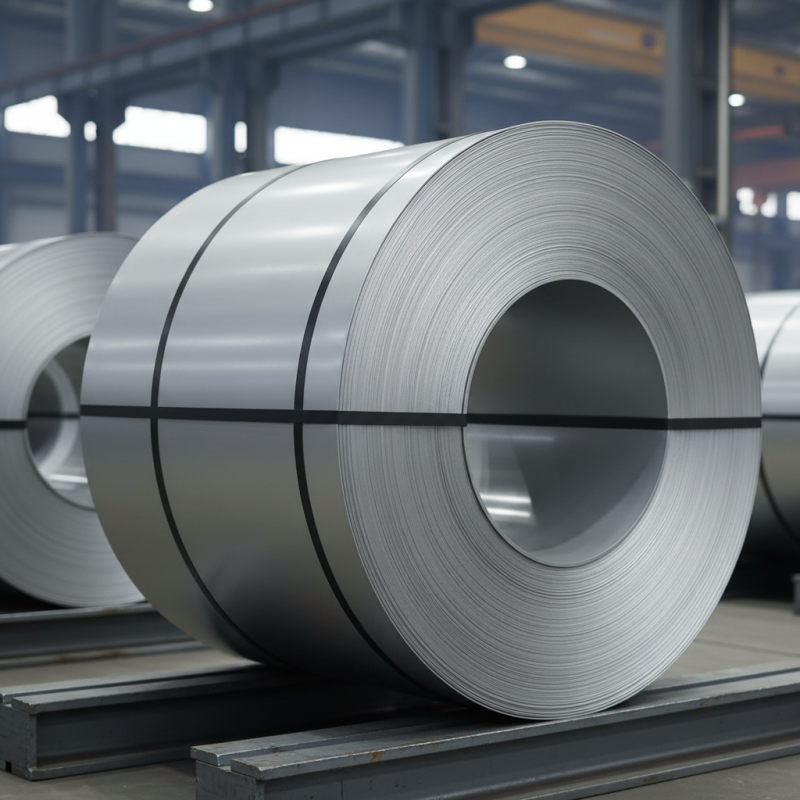
Cold Rolled Coil is an essential material in various industries. It is produced by rolling steel at room temperature. This process enhances its strength and surface finish. The resulting coils are thinner than hot-rolled alternatives. They offer better dimensional accuracy and surface quality for manufacturing.

These coils find applications in automotive, construction, and appliances. They are used in car body panels, frame structures, and electrical devices. Cold Rolled Coil provides the necessary strength and flexibility for these products. However, the quality can vary based on production techniques. Some coils may require further processing to meet specific standards.

Understanding Cold Rolled Coil is vital for manufacturers. They must consider factors such as thickness, width, and finish. Each application demands unique specifications. Despite advancements, there can still be challenges in achieving consistent quality. Continuous evaluation and adjustment in the manufacturing process are important.
What is Cold Rolled Coil and How Is It Used?

What is Cold Rolled Coil?

Cold rolled coil is a type of steel product known for its smooth finish and precise dimensions. The process begins with hot rolled steel. After cooling, it undergoes further processing at room temperature. This transformation results in a thinner and stronger material. It is commonly used in various industries, including automotive and construction.

The unique characteristics of cold rolled coil make it ideal for many applications. Its surface is often smooth. This makes it suitable for parts that require a clean finish. Additionally, the material offers excellent formability, allowing it to be shaped into complex forms. However, manufacturers must handle it with care, as it can be susceptible to scratches.

Despite its advantages, there can be challenges. Quality control is essential during production. Even minor defects can impact the final product. Companies must continually refine their processes. Paying attention to these details may prevent costly errors in the future. Cold rolled coil represents a fascinating intersection of artistry and engineering, yet it demands constant vigilance in production.

Cold Rolled Coil Production and Applications

The Manufacturing Process of Cold Rolled Coil

Cold rolled coil is produced through a precise manufacturing process. Initially, hot rolled steel is passed through a series of rollers. This transforms the steel into thinner sheets. The thickness can vary greatly, often from 0.01 inches to 0.125 inches. The process also enhances the steel's surface finish, making it smoother and more appealing for various applications.

During production, temperatures are maintained carefully. The typical temperature is around ambient conditions. This allows for better control over thickness and surface quality. According to the American Iron and Steel Institute, cold rolled steel accounts for about 25% of the total steel production in North America. Its higher strength and better mechanical properties are vital for industries like automotive and construction.

However, the process is not without challenges. Scratches and imperfections can occur during rolling. Manufacturers must conduct rigorous quality checks to minimize these flaws. In a competitive market, even minor discrepancies can lead to customer dissatisfaction. Addressing these issues requires ongoing improvements in techniques and equipment. The relentless pursuit of high quality remains a priority in the cold rolling industry.

What is Cold Rolled Coil and How Is It Used? - The Manufacturing Process of Cold Rolled Coil

Dimension Description Applications
Thickness Typically ranges from 0.2 mm to 4.0 mm Automotive, appliances, construction
Width Common widths are between 600 mm and 2000 mm Sheet metal applications, furniture frames
Length Can be provided in custom lengths Various industrial usages
Finish Smooth and polished surface finish Used in visible applications where aesthetic is important
Strength Higher tensile strength compared to hot rolled steel Structural components, manufacturing of parts

Characteristics and Properties of Cold Rolled Coil

Cold rolled coil is a type of steel that undergoes a specific processing method. This process enhances its properties, making it suitable for various applications. It's characterized by a smooth surface finish and precise dimensions. These traits make cold rolled coil ideal for industries like automotive and construction.

In terms of properties, cold rolled coil is known for its increased strength. The cooling process tightens the metal's grain structure. This results in greater durability and a higher resistance to wear. Its excellent formability allows manufacturers to create complex shapes. However, the increased strength can make it more challenging to weld.

Cold rolled coil is also less prone to deformation. It retains its shape under stress, which is crucial in many applications. However, it can be more susceptible to rust. This requires careful handling and storage. Overall, cold rolled coil presents both advantages and challenges for manufacturers. They must consider these factors when deciding its use.

Applications of Cold Rolled Coil in Various Industries

Cold rolled coil (CRC) is a flat-rolled steel product widely used in various industries. It is made from hot rolled steel sheets, processed at room temperature. The result is a smooth, high-strength finish. This property makes CRC ideal for applications requiring precision and durability. Industries such as automotive and construction rely heavily on this material.

In the automotive sector, CRC is essential for body panels, chassis components, and structural reinforcements. According to a report by a market research firm, the automotive industry accounts for nearly 38% of total CRC consumption globally. The precision of cold rolled steel helps improve vehicle safety and fuel efficiency. Additionally, in construction, CRC is used in manufacturing steel frames and roofing materials. The American Iron and Steel Institute highlights that cold rolled products account for significant portions of new building projects.

However, there are challenges. The production process can be energy-intensive. Moreover, fluctuations in raw material prices often affect CRC availability. Operators must consider these factors to ensure sustainability. Continuous innovation is vital. Research into alternative methods may reduce environmental impacts. This will ultimately enhance the material’s effectiveness across industries.

Advantages of Using Cold Rolled Coil Over Hot Rolled Coil

Cold rolled coil, widely used in various industries, offers several advantages over hot rolled coil. One major benefit is its enhanced surface finish. Cold rolling allows for a smoother and cleaner surface, making it ideal for applications where aesthetics matter. The cold rolled process also produces a tighter tolerance in dimensions. This precision can be crucial in manufacturing components where fit and form are critical.

Another key advantage is increased strength. When steel is cold rolled, it undergoes work hardening, which boosts its tensile strength. This makes cold rolled coils suitable for applications that require stronger materials, like automotive parts or structural components. However, one needs to consider the limitations as well. Cold rolling may lead to increased brittleness in some materials, which could pose challenges during further processing. Moreover, the additional processing time can increase production costs.

While cold rolled coil comes with distinct benefits, it is essential to weigh these against specific project requirements. Choosing the right type of coil can be complex, and gathering proper input can make a difference. Understanding the properties and limitations of each option is vital. Sometimes it may be necessary to experiment to find the optimal solution. Thus, careful consideration remains crucial in the decision-making process.

Open chat
Scan the code
Bendet Sales Assistant
Hi There👋,
Thank you for visiting our website, How can I help you?