








As industries evolve, the importance of conveyor machines becomes clearer. These essential tools streamline processes and enhance productivity. In 2026, buyers will face diverse options, each tailored for specific applications.
The market offers several types of conveyor machines, from belt conveyors to roller systems. Each type varies in design and functionality. For instance, belt conveyors are ideal for continuous transport, while roller conveyors excel in heavy loads. Understanding these differences is crucial for effective selection.
However, navigating these choices is not always straightforward. Buyers must weigh factors such as cost, efficiency, and maintenance. Conscientious decision-making involves both research and trial. Manufacturers today face pressure to innovate, which can lead to choices that may not always align with practical needs. Balancing innovation with reliability remains a challenge for many businesses.
In the evolving landscape of manufacturing and logistics, selecting the right conveyor machine type is crucial for efficiency. According to a report by Transparency Market Research, the global conveyor systems market is expected to reach $7.5 billion by 2026. This highlights the increasing reliance on conveyor systems across various sectors, such as food and beverage, pharmaceuticals, and automotive.
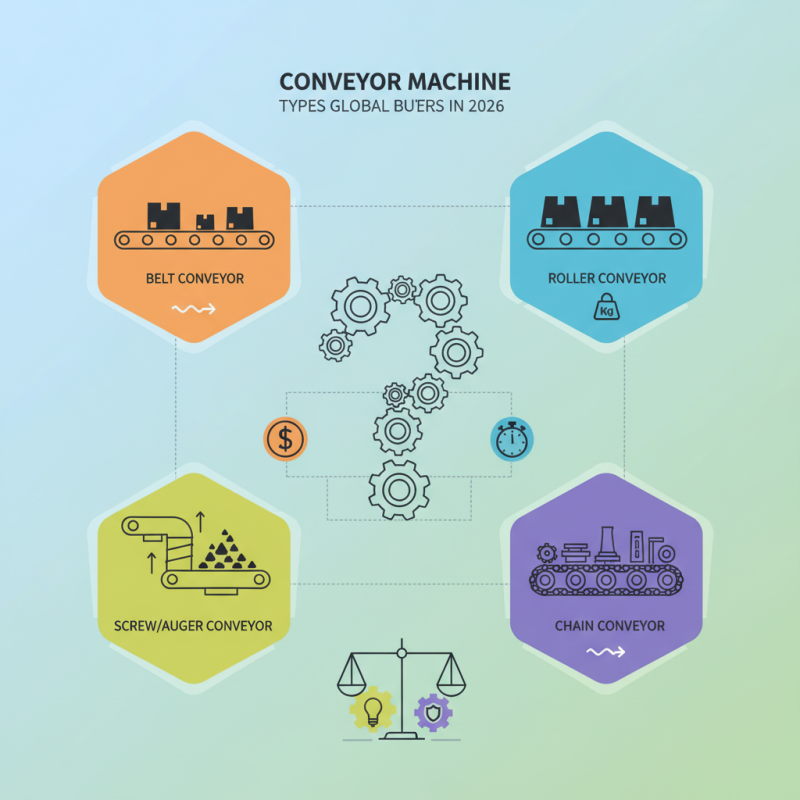
Among the popular types projected to dominate in 2026 are belt conveyors, roller conveyors, and modular conveyors. Belt conveyors are especially favored for their versatility in transporting goods over long distances. Meanwhile, roller conveyors are ideal for handling heavy loads, making them a staple in warehouses. Modular conveyors are gaining traction due to their adaptability and ease of installation. However, selecting the perfect type requires understanding specific operational needs.
Despite these advancements, challenges do exist. Not all conveyor systems are universally applicable. Some industries may find existing solutions inadequate for their needs. For instance, specific material types or spatial constraints can hinder performance. Conducting thorough assessments and leveraging expert knowledge is essential for making informed purchasing decisions. Buyers must consider durability, maintenance, and cost in their evaluations.
The conveyor market is evolving rapidly, driven by technological advancements and changing consumer demands. In 2026, we can expect significant growth in automation. Industries are seeking faster and more efficient material handling solutions. This shift highlights the increasing reliance on conveyor systems for production and logistics.
Sustainability is becoming a priority. Eco-friendly materials and energy-efficient designs are gaining traction among manufacturers. Buyers are looking for machines that minimize environmental impact while enhancing productivity. Innovations such as smart conveyors can provide real-time monitoring and analytics, improving operational efficiency.
However, challenges remain. Not every business can afford the latest technologies. Smaller companies may struggle to keep pace. It’s vital for buyers to assess their unique needs before investing. The right conveyor system must fit seamlessly into existing processes. Adapting to this dynamic market landscape requires careful planning and reflection.
When discussing conveyor machines, three major types come to mind: belt, roller, and chain conveyors. Each serves specific purposes in various industries. Belt conveyors are widely used for transporting bulk materials. They are essential in mining and food production. However, belt conveyors can be affected by wear and tear, requiring regular maintenance.
Roller conveyors, on the other hand, excel in handling packages and pallets. They allow easy movement of goods, making them a staple in warehouses. However, they may face challenges with uneven loads, affecting efficiency. It's critical to evaluate the load capacity before implementation.
Chain conveyors are robust and perfect for heavy items. They operate with durability and strength. However, they can be noisy and may require lubrication. Understanding the specific applications of each conveyor type is crucial for optimal performance. This detailed analysis illuminates the strengths and weaknesses of these conveyor systems, assisting global buyers in making informed decisions.
The conveyor industry is on the brink of a technological revolution in 2026. Innovations in automation and smart features are redefining efficiencies. Industry reports indicate that smart conveyor systems could increase overall productivity by up to 25%. The integration of IoT technologies enables real-time monitoring. These advancements help businesses adapt quickly to changes in demand.
Automation reduces labor costs. Leveraging advanced sensors and AI enhances precision in operations. However, some companies may struggle with the initial investment in these technologies. Transitioning to smart systems requires a thoughtful strategy. Investing in employee training to manage these technologies is essential.
Tips: Consider starting with smaller pilot projects. They allow you to evaluate performance without overwhelming your existing systems. Stay updated with the latest trends to avoid lagging behind competitors. Regular assessments can help identify areas needing improvement, ensuring a seamless integration of new technologies.
Industry 4.0 revolutionizes conveyor machines, enhancing efficiency and performance significantly. Smart technologies integrate data and automation within production processes. This shift enables real-time monitoring of operations, reducing downtime effectively. Data analytics allow for predictive maintenance, which minimizes unexpected failures.
However, the transition carries challenges. Many companies struggle to adapt to new technologies. Employees may require retraining to operate advanced systems efficiently. Moreover, the initial investment can be substantial. The return on investment may not be immediate, necessitating careful planning and patience.
The focus shifts toward sustainable practices as well. Integrating energy-efficient designs supports environmental goals. Yet, balancing cost and sustainability remains complex. While innovation boosts productivity, it also demands continuous evaluation and adaptation. As the industry evolves, adaptability will define success in the global conveyor market.
The article "Top Conveyor Machine Types for Global Buyers in 2026" explores the evolving landscape of the global conveyor market, projecting significant trends and advancements for the coming year. Key conveyor types, including belt, roller, and chain conveyors, are analyzed in detail, highlighting their unique characteristics and applications.
Innovations in conveyor technology, particularly in automation and smart features, are emphasized, showcasing how Industry 4.0 is transforming conveyor machine efficiency and performance. Additionally, the article addresses environmental considerations, presenting sustainable conveyor solutions and practices that are becoming increasingly important in the manufacturing and logistics sectors. Overall, the insights provided will guide global buyers in making informed decisions about conveyor machine investments in 2026.
Hein Minnie
Cell nr: +27 (0) 82 564 6501
Email: sale@thecirclemachine.com
Hein Minnie Jnr
Cell nr: +27 (0) 84 284 7234
Email: sale@thecirclemachine.com
Address:
10 Apsey Street,
Heidelberg,
Gauteng,
1441
Bendet Engineering Services (PTY) LTD was established in 1987. Our team of engineers and draughtsman are ready to deliver a complete turnkey solution, from the design phase to commissioning. A dedicated team that consists of electrical, mechanical and industrial engineers, we are able to offer a comprehensive service to our clients.