



Drone Jamming refers to disrupting the radio signals a drone uses for control, communication, or navigation. In simple terms, interference may interrupt a connection or affect a drone’s ability to respond. The outcome is not always predictable. A drone might hover, land, continue on its route, or behave differently depending on its design and conditions. The risks are real. A disrupted aircraft could endanger people, damage property, or interfere with nearby communications.
Whether Drone Jamming is legal depends on the country, the circumstances, and who is using the equipment. In many places, transmitting interference is tightly restricted, even when the intention is to protect a home or event. Context matters. Permission to manage a site does not necessarily include permission to interfere with radio signals. Rules can also differ for public agencies and authorized operators, so broad claims about legality are unreliable. This article introduces the technology, explains why its effects deserve careful attention, and outlines the legal questions readers should check with relevant authorities. It also distinguishes signal jamming from safer, lawful responses, such as documenting a concern, contacting local officials, or using approved site-security procedures. The distinction can feel frustrating when a drone seems intrusive. Still, acting on an assumption can create greater risks than the original problem.
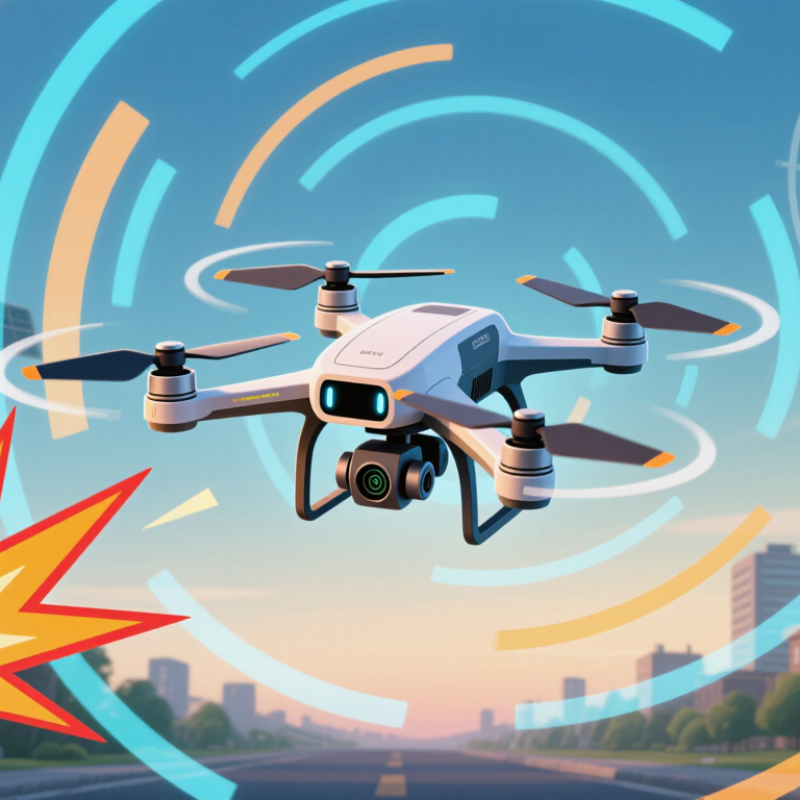
Drone jamming means disrupting the radio signals a drone uses to communicate or navigate. A pilot may see a lost-link warning while the aircraft stops responding to commands. Some drones may hover, return, or land, depending on their design and settings. Others may behave differently. The outcome is not always predictable.
Jamming is different from simply detecting a drone. Detection observes or identifies activity; jamming interferes with a signal. That distinction matters. A device that appears to affect one aircraft could also disrupt nearby communications or navigation systems. In a controlled safety test, trained professionals assess those risks and follow applicable authorization requirements. Ordinary users should not attempt to interfere with drone signals. The phrase can sound simple, but the real-world effects are not. Even careful explanations can miss an important detail: signal conditions, aircraft design, and surroundings all influence what happens.
Drone jamming disrupts the radio signals a drone uses to communicate with its controller or receive navigation data. When the control link weakens, the aircraft may pause, hover, land, or follow a preprogrammed safety response. The result depends on its design and settings. Navigation can also be affected: blocked satellite-position signals may leave a drone with less reliable location information. It does not always lose control immediately. There is no single outcome, and that uncertainty is easy to overlook.
Tips: If a drone behaves unpredictably, keep people clear and avoid approaching it. Note the time, location, and visible behavior from a safe distance. Contact the relevant aviation or site-safety authority rather than trying to interfere with its signals.
Jamming is not a routine safety tool for the public. Rules differ by location, and transmitting interference is often tightly regulated or prohibited without specific authorization. Check current guidance from the appropriate local authorities. A brief explanation can make the technology sound simple; real systems and their fail-safes are not.
Drone jamming is the deliberate disruption of signals used by a drone. In authorized, controlled settings, trained security teams may evaluate it as one part of a broader safety plan. Examples include supervised exercises or protecting a sensitive site when approved procedures allow it. The aim is to reduce a specific risk, not to create a new one. Context matters.
The effects can reach beyond the intended aircraft. A disrupted signal may cause a drone to hover, land, or behave unpredictably, depending on its design. Nearby communications and navigation services may also be affected. That can put people, vehicles, and property at risk. Small devices can still create a large problem.
There is no simple rule that applies everywhere. Rules differ by location, equipment, and who is operating it, so authorization should be confirmed with the relevant authorities before any testing or deployment. Detection, reporting, and clear site procedures may offer safer options. They are not perfect, either. A crowded event, a low-flying aircraft, or a mistaken identification can complicate decisions quickly. Responsible planning means weighing the threat against possible harm, documenting approvals, and ensuring trained personnel can stop an operation when conditions change.
Maximum imprisonment under 47 U.S.C. § 501 for willful and knowing violations of the Communications Act
In the United States, deliberately jamming radio communications can violate federal law. The chart shows statutory maximum prison terms, not typical sentences; actual penalties depend on the circumstances. Jamming can also disrupt communications and navigation relied on by other users. Private individuals should not use jammers.
Sources: 47 U.S.C. § 333 and 47 U.S.C. § 501.
Drone-jamming laws depend on the country, the signal involved, and who operates the equipment. In the United States, the Communications Act generally bars unauthorized radio transmissions and interference with licensed communications. The FAA also protects aircraft and the national airspace; a drone’s proximity to an airport can raise separate aviation and safety concerns. A device’s intended use does not automatically make its operation lawful.
Federal counter-drone authority is limited, not a general permission for private users. A 2022 U.S. Government Accountability Office report, GAO-22-105705, identified four federal departments with statutory authority to mitigate drone threats in defined circumstances. That distinction matters: the report does not grant similar powers to individuals or ordinary businesses. Other countries have different rules, and local aviation, telecommunications, and criminal laws may apply. Even a mistaken attempt to stop a drone could disrupt nearby communications or create safety risks.
Tips: Before responding to a drone, record its location and time from a safe place, then contact the relevant aviation or public-safety authority. Check local rules first. Small details matter. This is general information, not legal advice; laws and agency powers can change.
When a drone appears over a home, worksite, or event, choose steps that protect people without interfering with the aircraft. Move guests indoors, keep clear of its path, and note the time, location, flight direction, and visible details from a safe place. If the operator is nearby, a calm request to land or move away may resolve the issue. Keep distance. Do not assume the drone’s purpose from its appearance alone.
For a repeat problem, save dated notes and photos taken from your property, then contact local aviation or public-safety authorities for guidance. Rules differ by location, so ask which reporting channel applies before taking action. The FAA’s 2023 UAS Sightings Report recorded more than 2,000 pilot reports of drone sightings that year. That figure is a useful reminder: reports need clear, verifiable details. For a public venue, train staff to guide people indoors and record observations consistently. This is practical, though it may feel slow when a drone is overhead. Avoid confronting an unknown operator; prioritize people’s safety and let the appropriate authorities assess the concern.
This overview focuses on the United States. Laws and procedures differ by jurisdiction; it is not legal advice. Consult relevant authorities or a qualified attorney about a specific situation.
| Topic | What it means | Practical implications |
|---|---|---|
| Drone jamming | Deliberately transmitting radio-frequency interference to disrupt a drone’s control link, navigation signals, or communications. | The drone may behave unpredictably, lose control, or continue operating under a fail-safe response. Interference can also affect unrelated communications or navigation systems. |
| Is jamming legal in the U.S.? | Generally, private individuals and organizations may not use radio jammers in the United States. Federal law restricts the operation, marketing, and sale of devices intended to interfere with authorized radio communications. | A person should not assume that property ownership or concern about a drone creates permission to jam it. Limited government authorities may have specific legal powers that ordinary users do not. |
| Risks of interfering with a drone | A drone is an aircraft under federal aviation law. Interfering with its operation can create aviation-safety risks and may raise additional legal issues. | Do not shoot at, seize, damage, or electronically disable a drone. Such actions can endanger people and property and may violate federal, state, or local law. |
| Document the incident | Record the date, time, location, flight path, duration, and observable behavior. Take photographs or video only where lawful and safe. | Keep notes factual. Avoid confronting the operator or publishing personal information that could identify someone without a lawful basis. |
| Contact the operator | If it is safe and appropriate, politely ask the operator about the flight and explain the concern. | Do not trespass, threaten, or interfere with the aircraft. If the situation feels unsafe, disengage and contact the appropriate authorities. |
| Report a safety concern | Report an immediate danger to local emergency services. For non-emergency aviation concerns, use the relevant aviation authority’s reporting channels; suspected crimes can be reported to local law enforcement. | Provide the location, time, description, and any safely collected evidence. Reporting channels and jurisdiction depend on the circumstances. |
| Improve privacy without interference | Use lawful privacy measures such as blinds, screens, covered outdoor areas, or relocating sensitive activities indoors. | These steps reduce exposure without transmitting interference or physically affecting the aircraft. |
| Site procedures and professional advice | Organizations can establish observation, documentation, escalation, and emergency-response procedures. Any detection or mitigation technology should be reviewed for legal and privacy compliance. | Consult legal counsel and relevant authorities before deploying equipment. Detection does not itself authorize jamming or taking control of a drone. |
Key point: In the United States, do not use a jammer to deal with a drone. Document the event, protect privacy through non-interfering measures, and report safety or legal concerns through appropriate channels.
Hein Minnie
Cell nr: +27 (0) 82 564 6501
Email: sale@thecirclemachine.com
Hein Minnie Jnr
Cell nr: +27 (0) 84 284 7234
Email: sale@thecirclemachine.com
Address:
10 Apsey Street,
Heidelberg,
Gauteng,
1441
Bendet Engineering Services (PTY) LTD was established in 1987. Our team of engineers and draughtsman are ready to deliver a complete turnkey solution, from the design phase to commissioning. A dedicated team that consists of electrical, mechanical and industrial engineers, we are able to offer a comprehensive service to our clients.