
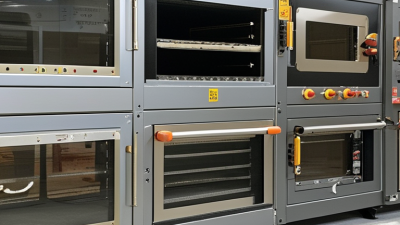
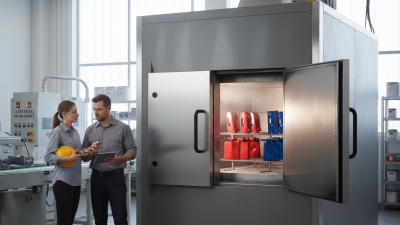

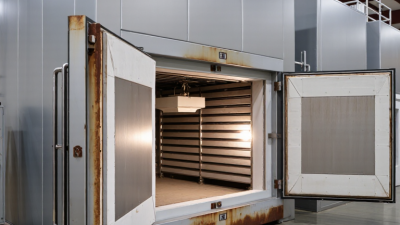






A powder coating oven is the controlled heat chamber where a dry powder finish becomes a durable, continuous film. It does not simply “bake” metal. The oven must deliver stable temperature, balanced airflow, and enough time for the coating to cure correctly. Powder first clings to a grounded steel part through electrostatic attraction. Heat then melts the particles, allowing them to flow together and chemically cross-link.
Powder-coating author Nicholas Liberto offers a practical reminder: “The cure schedule belongs to the coating, not merely to the oven.” That principle matters on every production line. A display may show 400°F, or approximately 204°C, while the part itself remains colder inside its thickest section. Operators therefore monitor part temperature with calibrated probes, not assumptions. Conveyor speed, load spacing, metal thickness, and oven recovery also influence the final result.
A tidy finish can still hide an under-cured film. That is the uncomfortable part. It may look smooth, yet fail during impact, corrosion, or adhesion testing. Excessive heat creates different problems, including discoloration, brittleness, or surface defects. Reliable results require the powder manufacturer’s technical data, verified oven profiles, and consistent inspection records. This guide explains how a powder coating oven works, why temperature uniformity matters, and which practical details separate a dependable finish from an attractive mistake. Some variables remain easy to overlook. Good process control begins by admitting that.
What Is a Powder Coating Oven and How Does It Work?
Definition and Purpose of a Powder Coating Oven
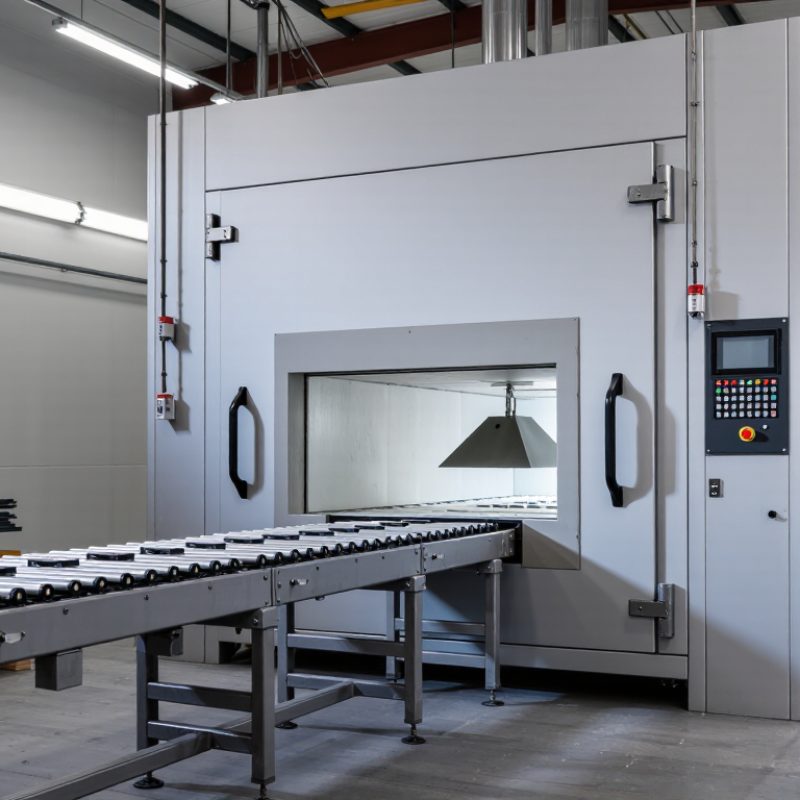
A powder coating oven is an enclosed heating chamber for curing powder-coated parts. It does not simply dry the coating. Heat melts the powder, allowing it to flow across the metal surface. Chemical cross-linking then creates a hard, continuous finish.
The oven’s main purpose is controlled and even heat. Most thermoset powders cure around 160–200°C, but the correct setting depends on the powder formulation and metal thickness. Cure time usually begins when the part reaches the required temperature, not when it enters the oven. This detail is often misunderstood. A thick steel frame may need much longer than a thin panel.
Inside the chamber, heated air moves around the workpiece. Even airflow reduces cold spots and helps prevent uneven gloss, weak adhesion, or rough texture. Clean surfaces still matter. Oil, moisture, rust, and trapped residue can spoil the finish before curing begins. In practical workshop use, operators check the part temperature with a suitable probe rather than trusting the oven display alone. The display measures air temperature, not always the metal itself.
Loading also affects results. Parts need enough space for air to circulate. Overcrowding can create shaded areas and inconsistent curing. A small mistake can remain invisible until the coating chips. That makes process records valuable, although they are not perfect. Ambient temperature, part shape, and oven recovery time can all change the outcome. The oven supports quality; it cannot repair poor preparation.
| Dimension | Definition, Function, or Process | Typical Data and Practical Considerations |
|---|---|---|
| Definition | A powder coating oven is an industrial heating chamber used to cure powder coating applied to a prepared metal surface. The oven melts the powder and enables it to form a continuous, durable film. | Primarily used for metal parts, panels, frames, appliances, automotive components, and fabricated products. |
| Main Purpose | The oven provides controlled heat for the chemical cross-linking process that converts loose powder into a hardened protective and decorative finish. | Produces improved adhesion, corrosion resistance, surface hardness, and appearance compared with uncured powder. |
| Coating Material | Powder coating is a dry, finely ground mixture of resin, pigment, additives, and curing agents. It is normally applied electrostatically before oven curing. | Common resin families include epoxy, polyester, epoxy-polyester hybrid, and polyurethane. The required cure schedule depends on the formulation. |
| How the Process Works | The coated part enters the heated chamber. The powder first warms and melts, then flows across the surface and chemically cures into a solid film. | The part must reach the required metal temperature; oven air temperature alone does not determine whether curing is complete. |
| Typical Cure Temperature | Most conventional powder coatings are cured within a controlled temperature range specified by the coating manufacturer. | Approximately 160–200°C (320–392°F) part-metal temperature is common, although some formulations require lower or higher temperatures. |
| Typical Cure Time | Cure time generally begins when the metal part reaches the specified curing temperature, rather than when it enters the oven. | Common schedules are approximately 10–30 minutes at the required part temperature. Thick or heavy parts may require longer heating time. |
| Heating Methods | Ovens transfer heat to the workpiece through one or more heating methods. The selected method affects heat-up speed, temperature uniformity, and equipment layout. | Common systems include gas-fired convection, electric convection, infrared, and combined infrared-convection heating. |
| Convection Heating | Fans circulate heated air around the parts so that heat is transferred gradually and evenly to the coating and substrate. | Suitable for varied part shapes and loads; performance depends on airflow distribution, insulation, loading pattern, and temperature control. |
| Infrared Heating | Infrared emitters transfer radiant energy directly to exposed surfaces, allowing rapid heating without relying entirely on air circulation. | Often useful for fast line speeds or selected geometries, but part color, surface orientation, thickness, and shadowing can affect heating uniformity. |
| Essential Oven Components | A functional oven generally includes an insulated chamber, heating equipment, temperature sensors, a control system, airflow equipment, access doors, and exhaust or ventilation provisions. | Controls should maintain the required temperature profile and help prevent under-curing, over-curing, and excessive energy use. |
| Temperature Uniformity | Uniform heating is necessary so that all areas of the part receive an adequate cure without overheating sensitive sections. | Uniformity is verified through temperature mapping or profiling at representative locations inside the oven and on the workpiece. |
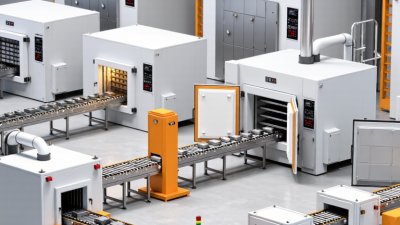
| Production Configurations | Powder coating ovens may be designed as batch units for intermittent processing or as continuous systems integrated with a conveyor line. | Batch ovens suit variable sizes and lower production volumes; continuous ovens suit repeatable high-volume production. |
| Part Preparation | Cleaning and surface preparation remove oil, dirt, rust, and other contaminants before powder application and curing. | Typical preparation may include degreasing, rinsing, chemical conversion treatment, drying, and inspection before coating. |
| Quality Indicators | A properly cured finish should display the specified appearance and provide the intended mechanical and chemical performance. | Common checks include film thickness, color and gloss, adhesion, hardness, impact resistance, and cure verification. |
| Under-Curing | Under-curing occurs when the coating does not receive sufficient time or temperature to complete the cross-linking reaction. | Possible results include poor adhesion, reduced hardness, weak chemical resistance, surface defects, and premature coating failure. |
| Over-Curing | Over-curing occurs when the coating is exposed to excessive temperature or excessive thermal time. | Possible effects include discoloration, loss of gloss, brittleness, yellowing of some formulations, or damage to the substrate. |
| Energy Efficiency | Efficient operation depends on insulation, correctly sized heating capacity, airflow management, door sealing, heat recovery, and appropriate loading. | Avoiding unnecessary empty-oven operation and maintaining clean burners, filters, sensors, and ventilation paths can reduce energy waste. |
| Safety Requirements | Operators must control heat, moving equipment, combustion systems, electrical components, and combustible powder residues. | Typical safeguards include temperature-limit protection, emergency shutdowns, ventilation, ignition control, guarding, grounding, and regular maintenance. |
| Key Operating Rule | The correct cure schedule must be selected from the technical instructions for the specific powder coating and verified on the actual part. | Do not rely only on a general oven setpoint; part thickness, material, load density, airflow, and heating method all affect the final cure. |
Note: Temperature and time ranges are general industry references. The coating supplier’s technical data sheet and the actual part-temperature profile should be used to establish the final curing schedule.