What is Pu Silicone and How is it Used in Manufacturing?
Pu Silicone has emerged as a pivotal material in modern manufacturing. Renowned expert Dr. Emily Hart, a leading figure in silicone technology, states, "Pu Silicone offers unparalleled versatility across various applications." This remarkable polymer blends polyurethane's durability with silicone's flexibility, creating an essential resource for industries ranging from automotive to consumer goods.
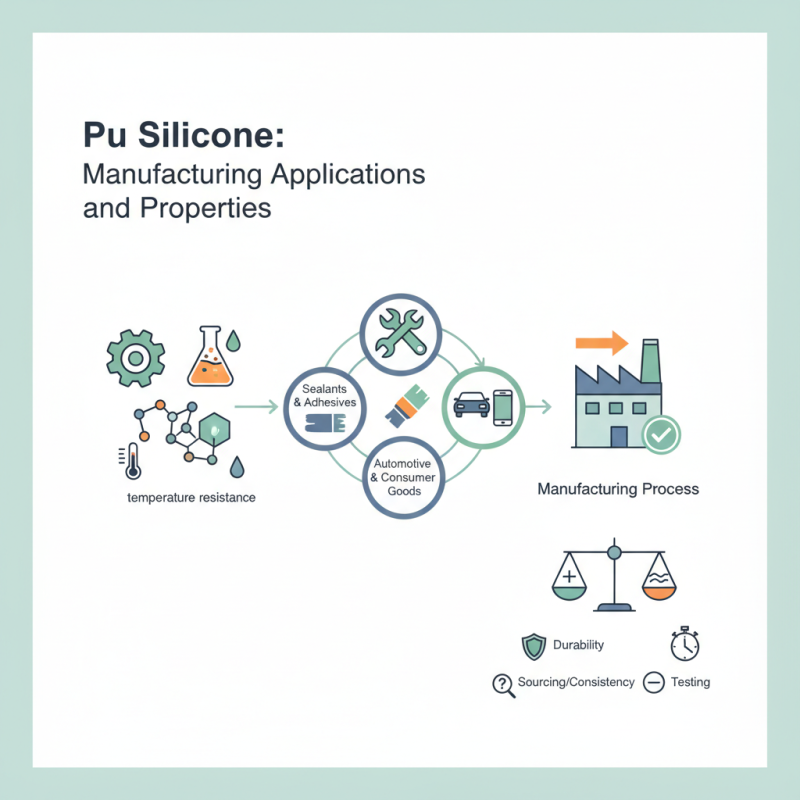
Manufacturers are drawn to Pu Silicone for its unique properties. It withstands extreme temperatures and resists chemicals effectively. These characteristics make it ideal for sealants, adhesives, and coatings. Many production processes benefit from its low surface tension, enhancing adhesion and performance.
Despite its advantages, the industry must navigate some challenges. Sourcing high-quality Pu Silicone can be complex. Variability in formulations often leads to inconsistencies. Companies must invest time in rigorous testing to ensure reliability. Therefore, while Pu Silicone showcases immense potential, its effective use requires careful consideration and expertise.
Understanding Pu Silicone: Definition and Composition
Polyurethane (PU) silicone is a versatile material widely used in manufacturing. Its unique composition combines silicone and polyurethane, making it highly flexible and durable. This hybrid structure allows it to withstand various environmental conditions, including extreme temperatures. Industry reports indicate that the global PU silicone market is projected to grow significantly, reaching approximately $2 billion by 2026, driven by rising demand in automotive and construction sectors.
Understanding the components of PU silicone is crucial. It typically consists of a siloxane backbone combined with isocyanates, which contribute to its strength and elasticity. According to a recent analysis, the properties of this material can be tailored by adjusting its formulation. This customization plays a vital role in applications such as seals, gaskets, and mold-making. However, inconsistencies in production processes can lead to variations in quality, which manufacturers must address to ensure reliability.
PU silicone's applications are diverse, but challenges remain. In some cases, the curing process can create defects if not carefully controlled. Despite its advantages, the use of PU silicone may come with increased costs compared to traditional materials. Manufacturers need to weigh these factors against the long-term benefits, as they can impact the overall performance of products. Understanding the trade-offs is key to leveraging PU silicone effectively in various applications.
Key Properties of Pu Silicone: Advantages in Manufacturing
Pu silicone, or polyurethane silicone, offers unique advantages in manufacturing due to its key properties. This material boasts exceptional flexibility and durability, making it ideal for a wide range of applications. According to a report from Grand View Research, the global silicone market is expected to reach $30 billion by 2025, driven largely by advancements in industrial applications. These properties contribute to its increasing popularity among manufacturers.
One of the standout features of Pu silicone is its strong resistance to chemicals and temperature variations. It can withstand extreme conditions while maintaining its structural integrity. This ability allows manufacturers to use Pu silicone in demanding environments without compromising performance. However, challenges exist in sourcing high-quality raw materials and ensuring consistent product performance. Factors such as processing conditions and formulation can significantly impact the final product quality, leading to potential production setbacks.
The versatility of Pu silicone is another reason why it's preferred in various industrial sectors. It can be used to create adhesives, coatings, and sealants that perform optimally over time. In a study published by the American Chemical Society, it was shown that Pu silicone products often have a longer lifespan compared to traditional alternatives. However, the manufacturing process can sometimes lead to variability in mechanical properties, which necessitates thorough testing before large-scale application.
Common Applications of Pu Silicone in Various Industries
PU silicone is highly versatile, making it invaluable across many industries. In the automotive sector, it is used for gaskets, seals, and vibration dampers. These components ensure better durability against harsh environments. Manufacturers often choose PU silicone for its flexibility and strong adhesive properties.
In the healthcare industry, PU silicone plays a crucial role. It is commonly found in medical devices and prosthetics. Its biocompatibility and resistance to bacteria make it safe for patient use. Precision in manufacturing ensures that these devices meet strict safety standards.
Tip: Always consult experts when developing new products with PU silicone. It’s vital to understand the specific requirements of your application. Adjustments in formulation can significantly impact performance.
Another critical application is in electronics. PU silicone is used for encapsulating components. This protects against moisture and temperature variations. However, improper mixing or curing can lead to defects, which could compromise device integrity.
Tip: When working with PU silicone for electronics, conduct thorough testing. Consider potential environmental factors that may affect performance over time. Always prioritize quality control during production.
What is Pu Silicone and How is it Used in Manufacturing? - Common Applications of Pu Silicone in Various Industries
| Application Area | Description | Benefits |
| Consumer Electronics | Used for manufacturing silicone cases and components that provide protection against shock and abrasion. | High durability and flexibility, protecting devices from physical damage. |
| Automotive Industry | Incorporated in the production of gaskets, seals, and hoses that require resistance to extreme temperatures and chemicals. | Enhanced longevity and reliable performance in harsh environments. |
| Construction | Used for sealants and adhesives for construction materials that provide flexibility and adhesion. | Waterproof, UV resistant, and allows for movement in building materials. |
| Medical Devices | Utilized in creating molds and components for medical devices due to its biocompatibility. | Safe for use in medical applications and flexible to accommodate body movements. |
| Food Processing | Employed as non-stick coatings and mats that are safe for food contact. | Easy to clean, reduces waste, and promotes food safety. |
Manufacturing Processes Involving Pu Silicone: Techniques and Methods
Pu silicone, or polyurethane silicone, is increasingly important in manufacturing processes. Its unique properties, such as flexibility and durability, make it a versatile choice in various applications. From automotive components to electronic devices, understanding how to effectively employ this material can enhance production efficiency.
Manufacturers often use techniques like injection molding and casting when working with Pu silicone. Injection molding allows for precise shapes and high-volume production. This method requires careful temperature management to ensure proper curing. On the other hand, casting can produce intricate designs, but it may involve longer curing times. Each technique has its own advantages and challenges that require careful consideration.
In practice, implementing Pu silicone can pose challenges. For example, achieving the right consistency during mixing is crucial. Small variations can significantly affect the final product. Moreover, post-curing processes sometimes lead to unexpected results, which may require adjustment. Experimentation and refinement are key to mastering these methods. Manufacturers must remain agile and willing to learn from each production cycle to optimize outcomes.
Safety and Environmental Considerations for Pu Silicone Use
PU silicone, or polyurethane silicone, is widely used in various manufacturing processes. However, its safety and environmental implications require careful consideration. In construction and automotive industries, PU silicone contributes to better durability and flexibility. Still, potential health impacts on workers cannot be overlooked.
A recent report by the National Institute for Occupational Safety and Health (NIOSH) highlights that prolonged exposure to certain chemical components in PU silicone can lead to respiratory issues. For example, isocyanates used in the production can be harmful. Companies must enforce strict safety protocols and provide proper personal protective equipment (PPE) to their employees.
Environmental concerns also arise from the disposal of PU products. According to a study published in the Journal of Environmental Science & Technology, these materials can take over 30 years to degrade. This raises questions about landfill waste management and alternative recycling methods. Industries are now exploring eco-friendly substitutes, but the transition is gradual. This highlights the ongoing need for research and innovation in creating more sustainable solutions in PU silicone manufacturing.