








What Is a Pyro Gasket and What Is It Used For?
A Pyro Gasket is a heat-resistant sealing component designed to control flames, smoke, and hot gases. It commonly appears around fire-rated doors, access panels, ductwork, industrial enclosures, and high-temperature pipe connections. Its job seems simple. It must close a gap when temperatures rise.
Many Pyro Gasket designs use graphite, ceramic fiber, mica, or intumescent materials. Some expand when exposed to heat. Others retain their structure inside severe thermal conditions. This reaction helps seal openings that could otherwise allow fire or smoke to spread. Fire-protection engineer Dr. James A. Milke offers a useful principle: “Tested performance matters more than visual confidence.” That warning deserves attention. A gasket may look strong, yet perform poorly without proper testing and installation.
In practical applications, fit matters as much as material. A loose strip can leave a visible path around a door frame. Excessive compression can damage delicate components or prevent correct movement. Installers should check the product’s temperature rating, dimensions, compatibility, and required fire-test certification. Manufacturer instructions should guide every cut, joint, and fixing point.
A Pyro Gasket is not magic. It is one part of a complete fire-resistance system. The surrounding frame, fasteners, substrate, and installation quality also influence performance. This is where mistakes happen. Real sites are dusty, uneven, and rushed. Careful inspection remains essential, especially after maintenance or repeated door use. The right gasket protects a designed opening, but it cannot correct a poorly engineered assembly.
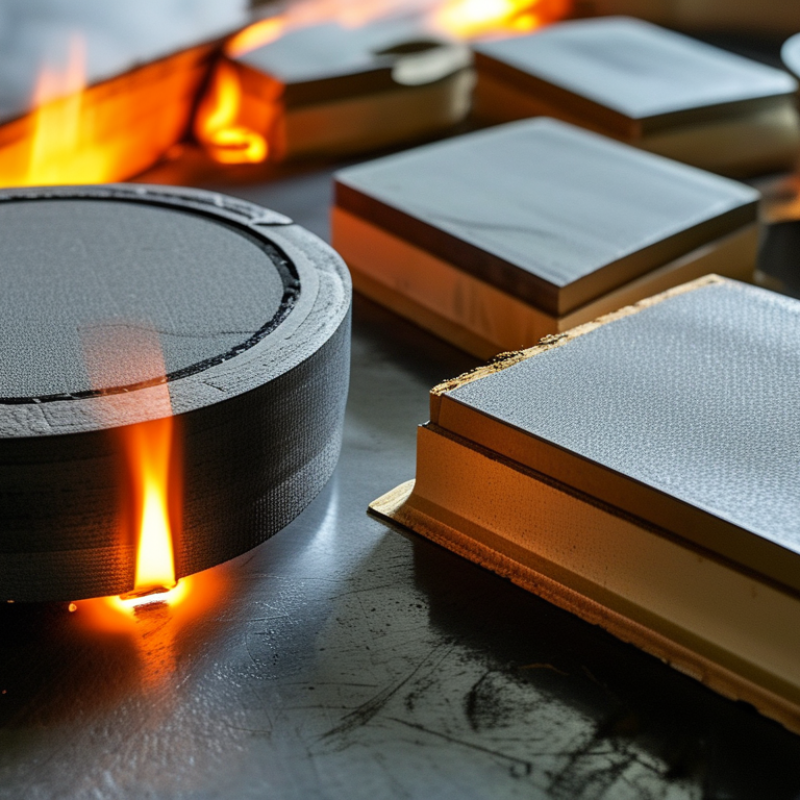
What is a pyro gasket? It is a high-temperature sealing component designed to control gases, flames, or heat between joined surfaces. “Pyro” usually refers to heat or fire resistance, but the exact meaning can vary by application. Some pyro gaskets use expanded graphite, mica, ceramic materials, or layered metal construction. The material choice depends on temperature, pressure, chemical exposure, and flange movement.
It is commonly used around exhaust manifolds, turbocharger connections, industrial furnaces, burners, and high-heat pipe joints. A correctly fitted gasket fills tiny surface irregularities. This prevents hot gases from escaping through narrow gaps. In practice, even a small leak can leave black soot, create a sharp hissing sound, or damage nearby wiring. Fit matters greatly.
Not every heat-resistant gasket is suitable for every system. Check the manufacturer’s temperature and pressure ratings before installation. The sealing faces should be clean, flat, and free from old gasket fragments. Uneven tightening can crush the gasket on one side and leave a leak on the other. That mistake is surprisingly common. Inspectors should also check discoloration, cracking, erosion, and loose fasteners during maintenance. A pyro gasket may look intact while losing its sealing strength. This is where judgment becomes important, because operating conditions often differ from laboratory ratings.
A pyro gasket is a heat-resistant sealing component used between connected surfaces. It commonly appears in exhaust systems, engines, furnaces, and industrial piping. Its main task is to control gases, pressure, and heat at a joint. Without a reliable seal, hot gas can escape through tiny surface gaps.
How does a pyro gasket work? It compresses between two mating surfaces when bolts are tightened. This pressure fills small scratches and uneven areas. Many pyro gaskets use metal layers, heat-resistant fibers, or specialized coatings. When temperatures rise, the gasket must tolerate expansion without losing contact. Some designs also absorb vibration, which helps protect the joint during repeated heating and cooling cycles.
The process sounds simple. It is not foolproof. A gasket can look undamaged but lose its sealing ability after repeated thermal stress. Incorrect bolt pressure can also cause early failure. Too little pressure leaves leakage paths, while excessive pressure may crush the material. In practical maintenance, technicians check surface flatness, bolt condition, torque settings, and signs of soot or discoloration. These details often reveal problems before a visible leak appears.
Tips: Choose a gasket rated for the actual temperature, pressure, and fluid involved. Clean both surfaces carefully, but avoid deep scratches. Follow the specified tightening pattern. Recheck the joint after its first heating cycle when the equipment design allows it. A small inspection can prevent a costly repair.
| Data Dimension | Typical Information | How It Relates to Performance |
|---|---|---|
| Basic Definition | A pyro gasket is a heat-resistant sealing component designed to maintain a seal in high-temperature or fire-exposed conditions. | It helps prevent the escape of hot gases, flames, smoke, fluids, or combustion by-products through a joint. |
| Primary Purpose | To seal mating surfaces while tolerating thermal expansion, vibration, pressure changes, and severe heat. | Reliable sealing reduces leakage and helps protect nearby components from heat and hazardous gases. |
| Common Applications | Exhaust systems, turbocharger connections, industrial furnaces, boilers, engines, ovens, burners, and high-temperature ductwork. | The gasket is selected according to the temperature, pressure, media, joint design, and required service life. |
| Typical Construction | May include a metallic core, expanded graphite, mica, ceramic fiber, mineral fiber, or other heat-resistant sealing layers. | Layered construction combines mechanical strength with resistance to heat, oxidation, and thermal cycling. |
| Heat Resistance | Service capability varies widely by material and design; many high-temperature gasket materials are used from approximately 300°C to over 1,000°C in specific conditions. | The stated temperature rating should be treated as application-specific because pressure, atmosphere, oxidation, and exposure time also affect performance. |
| Sealing Mechanism | The gasket is compressed between two surfaces, filling microscopic irregularities and creating a controlled sealing line. | Correct compression produces a more continuous barrier and limits leakage during operation. |
| Thermal Expansion | High-temperature joints expand and contract as equipment heats and cools. | A suitable gasket accommodates limited movement without losing contact or becoming excessively crushed. |
| Pressure Capability | Pressure resistance depends on gasket material, thickness, flange condition, bolt load, temperature, and joint geometry. | A gasket rated for temperature alone may not be suitable for a high-pressure application. |
| Fire and Flame Function | Some pyro gaskets are designed to resist direct flame exposure or help maintain a seal during a specified fire test. | Fire resistance is not universal; the exact product must meet the applicable test method and installation requirements. |
| Chemical Compatibility | Compatibility must be checked against exhaust gases, steam, oils, fuels, solvents, acids, alkalis, and other process media. | Chemical attack can weaken the gasket, increase porosity, or cause premature leakage even when the temperature is acceptable. |
| Installation Requirements | Clean, undamaged sealing surfaces, correct alignment, suitable fasteners, and an even tightening sequence are essential. | Uneven compression, surface damage, or incorrect torque can create hot spots and leakage paths. |
| Compression Considerations | Every gasket has a recommended compression range determined by its material and construction. | Insufficient compression may cause leaks, while excessive compression may damage the gasket or distort the joint. |
| Failure Symptoms | Soot marks, visible smoke, unusual odors, hissing sounds, overheating near the joint, loss of pressure, or fluid leakage. | These symptoms may indicate incorrect installation, material degradation, flange damage, or operating conditions beyond the design limit. |
| Maintenance Interval | Inspection should follow equipment maintenance schedules and should also be performed after overheating, disassembly, or a suspected leak. | Many compressed gaskets are replaced after removal because reuse can reduce sealing reliability. |
| Selection Checklist | Confirm dimensions, joint type, operating temperature, pressure, chemical media, movement, surface finish, bolt load, and applicable safety standards. | Matching the gasket to the complete operating environment is more important than selecting by temperature rating alone. |
Note: Actual temperature and pressure limits depend on the specific gasket material, design, joint configuration, and operating environment.
A pyro gasket is a fire-resistant sealing component used where heat, pressure, and leakage risks overlap. Its materials often include expanded graphite, mica, ceramic fiber, aramid fiber, and stainless steel. Graphite handles high temperatures well, while mica resists oxidation more effectively. Ceramic fiber adds thermal insulation, but it can become brittle after repeated compression. No material is perfect.
Design determines practical performance. Spiral-wound gaskets combine metal winding with a flexible filler, allowing recovery during thermal cycling. Kammprofile gaskets use a grooved metal core and facing layers, creating controlled compression around flanges. Ring-type designs suit high-pressure connections, while jacketed versions protect softer fillers from mechanical damage. In field inspections, uneven flange faces and incorrect bolt loading often cause more failures than material selection.
Testing should match the installation. API 6FA and ISO 10497 fire-test procedures commonly use approximately 30 minutes of fire exposure, with leakage and operational limits assessed afterward. These tests do not guarantee identical results in every plant. Installation quality still matters. The NFPA report Fire Loss in the United States During 2023 recorded about 1.39 million reported fires, showing why small sealing decisions deserve serious attention. I would specify graphite alone only after checking oxygen exposure, pressure cycling, flange movement, and maintenance access. That judgment is sometimes missed.
A pyro gasket is a heat-resistant sealing component designed for joints exposed to intense temperatures, pressure, vibration, or combustion gases. Its construction may include graphite, mica, ceramic fiber, metal, or layered materials. The exact material depends on the temperature range, media, flange design, and required service life. “Pyro” usually refers to high-heat performance, not a single universal gasket type.
Pyro gaskets are commonly used around engine exhaust manifolds, turbocharger connections, catalytic equipment, industrial ovens, furnaces, and heat exchangers. They also appear in high-temperature pipework carrying hot air, steam, or combustion gases. In these locations, ordinary rubber seals can harden, shrink, or burn. A suitable pyro gasket helps prevent leaks while allowing the joint to tolerate thermal expansion. The seal must fit closely.
In field inspections, technicians often look for black soot marks, warped flanges, loose fasteners, or a sharp exhaust smell near the joint. These signs may indicate poor compression or surface damage. Correct bolt torque matters, but it is not the whole answer. Flange flatness, gasket thickness, installation direction, and temperature cycling also influence performance. A gasket rated for high heat may still fail in the wrong chemical environment. This is an easy detail to miss. Checking technical data and replacing damaged hardware can improve reliability, although real conditions sometimes reveal limits that laboratory ratings do not show.
A pyro gasket is a heat-resistant sealing element used around exhaust manifolds, combustion equipment, furnaces, and high-temperature process joints. Its job is simple but demanding: contain gases while facing heat, vibration, pressure changes, and repeated thermal cycling. Selection should begin with the real operating conditions, not the highest temperature printed on a product sheet. Record normal and peak temperature, pressure, fluid composition, flange material, bolt load, and joint movement. Metallic, graphite, ceramic, and composite constructions behave differently. ASME B16.20 provides dimensional and material guidance for several metallic gasket types, while API fire-test standards can help evaluate fire-resistant sealing performance.
Maintenance needs discipline. Inspect the joint during planned shutdowns for soot trails, oxidation, distortion, loose fasteners, and hardened material. A thin black line near a flange is not cosmetic; it can indicate leakage and local overheating. The U.S. Department of Energy reports that compressed-air leaks may waste 20–30% of compressor output, showing how small sealing failures can create measurable losses. Pyro-gasket leakage may also affect safety and equipment reliability. Replace a gasket after removal when compression, surface damage, or thermal exposure is uncertain. Clean flange faces carefully, check flatness, and tighten bolts in a controlled cross-pattern using verified tools. Do not guess.
One overlooked issue is installation history. A gasket may have failed because of poor alignment, not poor material. Recheck the root cause. Temperature ratings can also be optimistic in dirty, vibrating service. Reassessment is necessary. Keep inspection records, torque values, photographs, and operating changes together. This evidence supports better decisions during the next replacement.
A pyro gasket is a heat-resistant sealing component designed to prevent gas, flame, fluid, or pressure leakage in high-temperature equipment such as exhaust systems, boilers, furnaces, engines, and process piping. Material selection depends on temperature, pressure, chemical exposure, flange design, and thermal cycling.
How to select and maintain a pyro gasket: Choose a material with a suitable temperature margin above the operating temperature, while also checking pressure, media compatibility, flange condition, and required compression. Inspect the gasket for cracking, oxidation, deformation, leakage, or loss of compression after thermal cycling. Replace it whenever the joint is opened unless the gasket is specifically designed for reuse. The temperature values shown are typical engineering ranges; actual limits vary with material grade, atmosphere, pressure, and installation conditions.
Hein Minnie
Cell nr: +27 (0) 82 564 6501
Email: sale@thecirclemachine.com
Hein Minnie Jnr
Cell nr: +27 (0) 84 284 7234
Email: sale@thecirclemachine.com
Address:
10 Apsey Street,
Heidelberg,
Gauteng,
1441
Bendet Engineering Services (PTY) LTD was established in 1987. Our team of engineers and draughtsman are ready to deliver a complete turnkey solution, from the design phase to commissioning. A dedicated team that consists of electrical, mechanical and industrial engineers, we are able to offer a comprehensive service to our clients.