








Top 10 Restringing Racket Machines for Global Buyers

Choosing a reliable restringing machine is a practical decision for clubs, retailers, coaches, and traveling technicians. A suitable Restringing Rackets Machine should deliver stable tension, firm support, smooth rotation, and repeatable results. Small differences matter. A loose clamp can change string response. A poorly calibrated tension head can frustrate experienced users.

This guide examines the Top 10 Restringing Racket Machines for Global Buyers through real workshop needs. We consider electronic and manual systems, six-point mounting, clamp movement, tension accuracy, portability, maintenance, and after-sales support. Buyers should also check voltage compatibility, replacement parts, warranty coverage, and user training. A machine may look affordable, yet expensive shipping or limited service can change its real value.

Stringing specialist Ron Yu has said, “Consistency is the foundation of professional racquet stringing.” That principle guides this comparison. The best machine is not always the fastest or most expensive. It should match workload, skill level, racket volume, and available workspace. A busy shop may need a digital constant-pull system. A coach on the road may prefer a lighter crank model.

No ranking is perfect. Personal technique still matters. Even an advanced machine needs calibration, careful mounting, and patient handling. We also recognize that product specifications can change by market, so buyers should confirm current details directly with manufacturers or authorized distributors. These observations are based on practical stringing priorities, not attractive packaging alone. Expect useful contrasts, but leave room for your own testing.
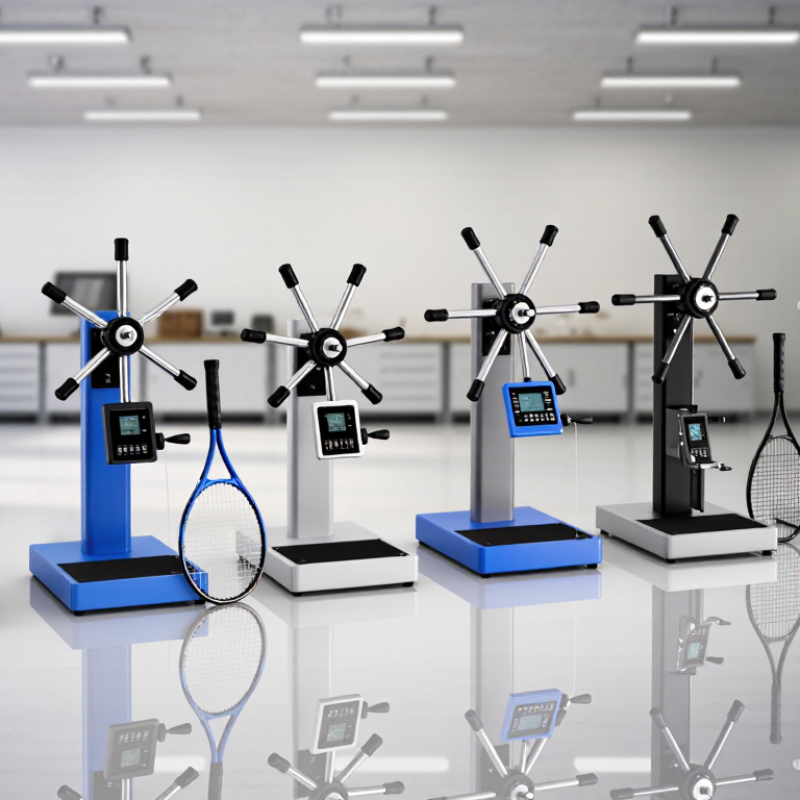
Top 10 Restringing Racket Machines for Global Buyers

What a Racket Restringing Machine Does and Who Needs One

A racket restringing machine applies controlled tension while holding a racket frame steady.

It lets an operator remove worn strings, install new ones, and create a repeatable playing response. The tension head pulls each string, while clamps secure it before the next pull. A mounting system helps prevent frame distortion.

That detail matters. Poor setup can cause uneven tension, damaged grommets, or premature string failure.

In practice, I would check calibration, clamp cleanliness, turntable stability, and support contact before accepting a job. Even experienced operators miss one step sometimes.

The audience is broader than tournament professionals.

Racket clubs, coaching centers, schools, sports retailers, mobile technicians, and frequent players can all need one. The International Tennis Federation’s Global Tennis Report 2024 counted about 106 million tennis players across 199 countries. That scale suggests varied service needs, from a junior’s first restring to daily repairs for competitive squads.

The Sports & Fitness Industry Association’s 2024 Topline Participation Report recorded 23.8 million U.S. tennis participants in 2023.

For global buyers, machine choice should reflect workload, local voltage, training access, and replacement-part availability. Electronic tension control improves repeatability, while manual systems may suit low-volume users.

Speed is not everything. Operators still need tension knowledge, safe mounting habits, and written setting records.

Participation reports show demand, but they do not guarantee profitable service volume. Test that assumption carefully.

Key Specifications for Comparing Machines Across Global Markets

Top 10 Restringing Racket Machines for Global Buyers

Key Specifications for Comparing Machines Across Global Markets

A reliable restringing machine should provide a stable tension range, usually from 10 to 90 pounds. Buyers should check tension accuracy, repeatability, and calibration options. A machine that drifts by two pounds can noticeably change racket response. Digital displays help, but they do not replace regular calibration.

Clamping quality matters during real workshop use. Look for smooth, non-marking clamps that hold thin badminton strings and thicker tennis strings securely. Six-point mounting systems usually support frames more evenly than basic two-point designs. Check the turntable rotation, brake strength, pulling speed, and adjustment range. Faster is not always better. Excessive speed can create inconsistent results for delicate strings.

Global buyers must examine power compatibility, plug standards, and voltage requirements before ordering. A dual-voltage system can simplify installation across regions. Weight and footprint also matter when shipping costs or small repair counters are involved. Ask about spare parts, service manuals, warranty terms, and local technical support. These details often matter more than an attractive screen. I once considered a wide tension range the strongest advantage, but daily clamp stability proved more valuable. Certification documents should be clear and traceable. Measurement units should switch easily between pounds and kilograms. Some specifications look impressive on paper, yet practical testing may reveal awkward controls, noisy motors, or difficult maintenance access.

Top 10 Restringing Racket Machines for Global Buyers - Key Specifications for Comparing Machines Across Global Markets
Rank Machine Configuration Drive / Tension System Typical Tension Range Adjustment Resolution Reference Tension Accuracy Racket Mounting System Turntable Rotation Clamps Power Requirement Approx. Net Weight Best Use Case Global Buying Considerations
1 Electronic Constant-Pull Floor Machine Electronic constant-pull motor with digital control 10–90 lb / 4.5–40.8 kg 0.1 lb / 0.05 kg Typically within ±0.1–0.2 lb after calibration Six-point, self-centering support 360° continuous rotation Two fixed swivel clamps; 5–6 tooth diamond-coated bases 100–240 V AC, 50/60 Hz on universal versions Approx. 35–55 kg Professional shops, academies and high-volume service centers Confirm plug type, voltage certification, calibration procedure and replacement-clamp availability.
2 Electronic Constant-Pull Tabletop Machine Electronic constant-pull motor with programmable presets 10–90 lb / 4.5–40.8 kg 0.1 lb / 0.05 kg Typically within ±0.2 lb after calibration Six-point or four-point adjustable mounting 360° rotation Two swivel clamps with removable bases 100–240 V AC, 50/60 Hz Approx. 22–35 kg Compact professional workshops and mobile technicians Check table strength, machine footprint, transport case options and local electrical compliance.
3 Electronic Constant-Pull with Linear Tension Head Linear electronic tension head with automatic pull-speed control 11–88 lb / 5–40 kg 0.1 lb / 0.05 kg Typically within ±0.2 lb after calibration Six-point support with adjustable side arms 360° rotation with locking positions Two swivel clamps; fixed or floating options 100–240 V AC, 50/60 Hz Approx. 25–40 kg Racket technicians seeking repeatable electronic tensioning Compare pull-speed settings, emergency-stop design and service access to the tension head.
4 Electronic Lockout / Electric Brake Machine Electronic pull followed by mechanical lockout 11–88 lb / 5–40 kg 0.1–0.5 lb / 0.05–0.2 kg Typically within ±0.3–0.5 lb after calibration Six-point or four-point mounting 360° rotation Two fixed or swivel clamps 100–240 V AC, 50/60 Hz Approx. 20–35 kg Independent shops balancing price and electronic control Lockout systems may produce more tension loss than true constant-pull systems; compare calibration data carefully.
5 Manual Crank Lockout Floor Machine Spring-loaded hand crank with mechanical lockout 11–88 lb / 5–40 kg Usually 1 lb / 0.5 kg Dependent on spring calibration and operator technique Six-point manual mounting 360° rotation Two fixed or swivel clamps No external power required Approx. 25–45 kg Low-volume retail shops, clubs and regions with unstable power Mechanical calibration tools and replacement springs should be available locally.
6 Manual Crank Tabletop Machine Spring-loaded crank with mechanical lockout 11–88 lb / 5–40 kg Usually 1 lb / 0.5 kg Dependent on spring calibration and operator technique Four-point or six-point adjustable mounting 360° rotation Two fixed clamps; swivel upgrade may be available No external power required Approx. 15–28 kg Portable service work and small club workshops Verify bench-clamp or bolt-down requirements and the stability of the mounting platform.
7 Drop-Weight Precision Machine Gravity-operated drop weight with calibrated bar 10–90 lb / 4.5–40.8 kg Usually 1 lb / 0.5 kg High repeatability when level and correctly calibrated Six-point manual mounting 360° rotation Two fixed or swivel clamps No external power required Approx. 18–32 kg Budget-conscious users and areas with limited electrical infrastructure Use on a level surface; check bar length, weight calibration and shipping protection.
8 Portable Drop-Weight Machine Compact gravity-operated drop-weight mechanism 10–60 lb / 4.5–27.2 kg Usually 1 lb / 0.5 kg Suitable for occasional and travel-based restringing Four-point or six-point compact mounting Limited or 360° rotation, depending on design Two floating or fixed clamps No external power required Approx. 8–18 kg Coaches, traveling technicians and personal use Confirm compatibility with badminton, tennis and squash frames before ordering.
9 Manual Tabletop Rotational Machine Hand-operated tension mechanism with rotary turntable 11–66 lb / 5–30 kg Usually 1 lb / 0.5 kg Varies with mechanical design and operator control Four-point adjustable mounting 180°–360° rotation Two fixed clamps No external power required Approx. 10–22 kg Entry-level tennis and badminton restringing Check frame clearance, mounting rigidity and whether replacement clamps are standardized.
10 Compact Electric Entry-Level Machine Basic electric motor with preset or manual tension control 11–66 lb / 5–30 kg 0.5–1 lb / 0.2–0.5 kg Typically within ±0.5–1.0 lb after calibration Four-point adjustable mounting 180°–360° rotation Two fixed clamps 110–120 V or 220–240 V; universal input is model-dependent Approx. 12–25 kg Home users, schools and low-volume club programs Confirm regional voltage, fuse rating, warranty coverage and the availability of compatible stringing tools.

How to Evaluate the Top Ten Machines for Performance and Usability

Selecting among the top ten restringing racket machines requires more than comparing prices. The ITF Global Tennis Report 2024 recorded over 100 million tennis players across nearly 200 countries. That scale creates varied workloads, from occasional home repairs to continuous workshop service. I would test each machine with the same racket, string, and reference tension. Measure tension consistency after five pulls. Check whether the reading stays within a narrow tolerance. Small errors become visible during repeated jobs.

Performance should receive the highest weighting. Examine mounting stability, clamp movement, turntable smoothness, and calibration access. A loose base can alter results, even when the display looks precise. Test a 60-pound setting several times. Record the actual pull force. The machine should recover quickly between pulls. According to the Tennis Industry Association and SFIA 2024 participation reporting, United States tennis participation reached about 24 million players in 2023. Busy markets need reliable cycle times, not impressive specifications alone.

Usability also separates strong machines from merely acceptable ones. Look for clear controls, comfortable working height, low hand strain, and simple string routing. Check power requirements before international shipping. Service manuals, spare parts, and local technical support matter greatly. I would rank these factors beside accuracy, not beneath it. A perfect score is unlikely. My own evaluation could still miss long-term wear. Therefore, ask for calibration records and test reports from independent laboratories before making the final purchase.

Safety, Maintenance, Accessories, and Long-Term Reliability

When comparing the top 10 restringing racket machines, global buyers should inspect safety before speed. A stable base, guarded moving parts, and a clear tension-release process reduce avoidable injuries. I prefer machines with firm clamp locks and readable tension scales. During repeated jobs, loose clamps can mark strings or distort the frame. Keep fingers away from the pulling head. Small habits matter. Grounded electrical systems and suitable voltage protection are essential for international workshops. Verify local electrical requirements before ordering.

Maintenance affects accuracy more than many product pages suggest. Wipe clamp surfaces after each session, remove string fragments, and check mounting posts weekly. Dust can make a precise machine behave poorly. Lubricate only where the manual permits. Excess oil attracts grit. Useful accessories include starting clamps, cutters, replacement gripper parts, calibration tools, and protective covers. A bright work lamp also helps reveal frame contact problems. I would rather replace a worn clamp early than explain a damaged racket later.

Long-term reliability depends on repair access, documentation, and operator training. Ask whether spare parts, service diagrams, and calibration support are available in your region. A machine may look impressive yet become inconvenient when one small spring fails. I have learned to record tension readings and maintenance dates, even when the workflow feels rushed. The record is not glamorous. It exposes drift. No machine stays perfect without care, and my own checks are sometimes too late. That is why a practical inspection routine belongs beside the machine.

Top 10 Restringing Racket Machines for Global Buyers

Comparative buyer benchmark covering safety, maintenance convenience, accessory readiness, and long-term reliability. Scores use a 0–100 index, with higher maintenance scores indicating easier routine servicing and lower ownership burden.

The profiles represent common machine configurations rather than companies or brands. Actual performance may vary according to installation quality, usage volume, calibration, and preventive maintenance.

Pricing, Shipping, Support, and Compliance for Global Buyers

Top 10 Restringing Racket Machines for Global Buyers

Pricing, Shipping, Support, and Compliance for Global Buyers

A serious comparison should examine landed cost, not only the listed machine price. Add crating, insurance, customs duties, local taxes, and possible installation fees. Ask whether the quotation includes stringing tools, calibration equipment, and spare clamps. A low price can still become expensive. That matters.

Shipping details deserve equal attention. Confirm package dimensions, gross weight, delivery terms, and port or door service. Wooden crates should protect delicate tension systems from moisture and impact. Request clear commercial invoices, packing lists, and origin documents. Keep records. Some buyers overlook voltage and plug compatibility, creating delays after delivery.

Support quality separates a useful machine from a costly mistake. Check response times, training options, warranty limits, and the availability of replacement parts. Remote video guidance can help with calibration, but it cannot fix every mechanical issue. Compliance also requires careful checking. Review applicable electrical safety, labeling, user manual, and importer obligations in the destination market. Requirements differ by country and may change. Independent verification is wise. In practice, product pages may omit small but important details, so written confirmation protects both sides. A reliable supplier should explain limitations honestly, even when the answer is inconvenient.

Open chat
Scan the code
Bendet Sales Assistant
Hi There👋,
Thank you for visiting our website, How can I help you?