



China has a growing aftermarket network for Audi RS Q3 exterior components, but supplier choice should begin with fitment, not a dramatic product photo. An Audi Rs Q3 Body Kit may include a front splitter, side skirts, a rear diffuser, or a roof spoiler. Each piece needs to match the vehicle’s model year, bumper shape, and mounting points. Even a small mismatch can leave uneven gaps around the wheel arch or bumper.
This guide will examine Chinese suppliers through practical checks: material specifications, dimensional drawings, sample availability, finish quality, packaging, and communication about installation. Ask for clear photos of the actual parts, not only polished renderings. Confirm whether the kit is designed for your exact RS Q3 generation, and ask what hardware and fitting instructions come with it. A neat edge matters.
Supplier claims deserve scrutiny. Carbon-fiber appearance does not confirm carbon-fiber construction, and “direct fit” can mean different things. Request written details before ordering. Check the return terms, production lead time, and shipping protection. These steps cannot guarantee a perfect result, but they reduce avoidable surprises.
No source articles or verifiable expert quotation were provided, so I will not assign invented words to a named specialist. A reliable principle still guides this comparison: fitment evidence should carry more weight than bold marketing language.
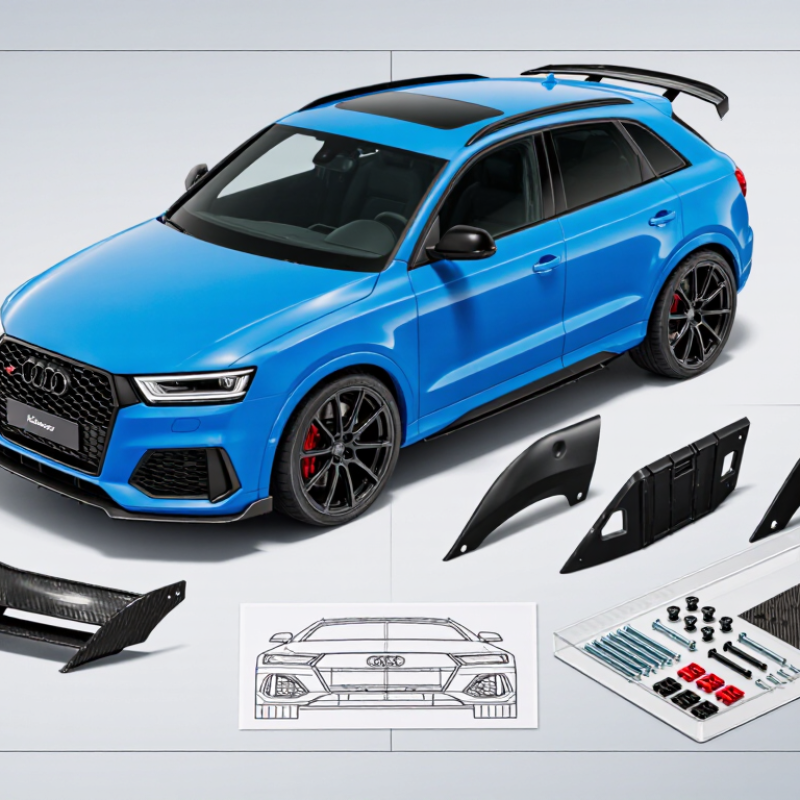
Understanding body-kit options starts with checking how each part changes the vehicle’s shape and function. A front splitter can sharpen the nose, but it may also reduce ground clearance. Side skirts visually lower the body and should align with existing mounting points. Rear diffusers and spoilers vary widely in depth and profile. Choose a coordinated set, or mix parts only after comparing measurements and finish. Attractive photos do not guarantee a clean fit.
Tips: Ask for part dimensions, material details, installation instructions, and clear photos of the actual components. Confirm compatibility with your vehicle’s model year and factory equipment. Check whether fitting requires drilling or trimming. Small details matter.
Materials affect weight, flexibility, repairability, and finish. Reinforced plastic is often practical for daily use, while composite panels may need more careful handling. Ask how surfaces arrive: ready for paint, primed, or finished. A supplier should explain tolerances and provide a sensible process for resolving fitment issues. Keep every question and specification in writing. Even careful planning can miss a detail, so test-fit parts before final painting. That extra step takes time, but it can prevent visible gaps around wheel arches and bumper edges.
A body kit for a compact performance SUV usually includes a front splitter, side skirts, wheel-arch extensions, and a rear diffuser. Some packages add a roof spoiler or replacement bumpers. Each part needs to follow the vehicle’s original contours, or small gaps can show around the lamps and wheel arches. Check mounting points and clearance before choosing a design. A low front lip may look sharp, but it can scrape on steep driveways.
Material choice affects weight, repairability, and finish. ABS plastic is light and often suits detailed shapes, while polypropylene can flex under minor knocks. Fiberglass allows custom forms, though it may crack if struck and needs careful finishing. Carbon-fiber parts are light, but construction and surface quality vary; a glossy weave alone does not prove strength. Choose parts with clear material specifications, consistent edges, and supplied fitting hardware. Look closely.
Painted components need even surfaces and compatible preparation. Unpainted plastic may require extra priming, depending on its type. Ask suppliers about test fitting, mounting instructions, and replacement-part availability. Measurements matter. I would not assume a kit fits just because its listing names the vehicle model; trim, sensors, and production changes can affect fit. That detail is easy to overlook, and it can make installation harder.
Typical material density by body-kit component. These are approximate material values, not supplier-specific specifications; actual density varies by grade and composite construction.
Chinese body-kit suppliers usually begin with measurements of the vehicle, not a styling sketch. Engineers check bumper contours, wheel-arch gaps, mounting points, and sensor locations. They may use a 3D scan, then compare the digital model with physical measurements. Small clearances matter. A few millimeters can affect installation. Designers shape the kit in CAD and review airflow, ground clearance, and access to factory fixings. A glossy render can still hide a poor fit, so early prototypes are important.
Suppliers commonly make sample parts from ABS plastic, fiberglass, or composite materials, depending on the design and order volume. They trim edges, drill mounting holes, and test the parts on an actual vehicle before approving production. That step can reveal uneven panel gaps or interference near the tires. It is not always a quick fix. After revisions, molds are prepared and parts are formed, finished, and checked for surface defects and dimensional consistency. Reliable suppliers document material specifications and inspection results, though buyers should still request clear fitment photos and installation guidance. Packaging also deserves attention; long trim pieces can bend if they are poorly supported during shipping.
When comparing China-based suppliers for a performance SUV body kit, judge the evidence, not just the catalog photos.
SEMA’s 2023 Market Report estimated the U.S. specialty-equipment market at $52.3 billion in 2022. That figure shows a large customization market, but it does not certify any supplier’s quality.
Ask for material specifications, production tolerances, and dated photos of finished parts. Not enough. Request a sample or documented test-fit results for the exact model year and trim.
Fitment problems often appear at the edges: uneven bumper gaps, blocked parking sensors, or liners that need trimming. Ask whether the kit was checked against a vehicle scan or physical test car.
Confirm what the quote includes, such as mounting hardware, protective packaging, and replacement parts for shipping damage. Compare landed costs, not unit prices alone. A low quote may exclude costly freight or careful packing.
I would still treat supplier claims cautiously; even a detailed report cannot replace an actual fit check. A simple checklist helps, but it will not catch every production variation.
Before paying a deposit, verify that the supplier can make the exact body kit configuration you need. Request dated photos of the actual parts, close-ups of mounting points, material specifications, and a written list of included hardware. Ask for a sample measurement against an original bumper or vehicle scan. A clean catalog image proves little. I would also request a video showing the parts being packed; it can reveal finish defects and weak edge protection.
Use trade figures as context, not proof of quality. The China Association of Automobile Manufacturers reported 5.859 million vehicle exports in 2024, showing the scale of China’s automotive supply base. McKinsey has projected the global automotive aftermarket could reach $1.8 trillion by 2030. Neither figure confirms that an individual body-kit supplier is reliable. Check the company’s registered business details, production address, inspection records, and export references independently. Confirm who pays for rework if test fitting reveals misaligned holes.
Before ordering, put the specification, finish, quantity, packaging, lead time, and defect remedy in one signed document. Ask for a pro forma invoice that matches those terms. Pay through a traceable business channel, and consider an independent pre-shipment inspection for larger orders. Keep a small allowance for fitting adjustments; even a well-made kit may need minor alignment. I once treated a polished sample as a guarantee. That was too optimistic.
| Verification area | Evidence to request | Practical acceptance check | When to verify |
|---|---|---|---|
| Business identity | Current business registration details and the legal entity shown on the quotation and sales contract. | Confirm that the contracting party, invoice issuer, and payment beneficiary are consistent or that any differences are documented. | Before paying a deposit |
| Vehicle fitment | Written fitment details covering model year, body style, market version, and any exclusions or required modifications. | Match the stated application to the buyer’s vehicle. Do not rely on a product photo alone to confirm compatibility. | Before approving the order |
| Kit contents | A parts list identifying each included component, mounting hardware, instructions, and optional items. | Ensure the quotation, parts list, and purchase order describe the same scope and quantities. | With the quotation |
| Material and finish | Declared material for each part, finish options, care guidance, and available material or coating test documentation. | Compare the written specification with the sample or approved reference. Avoid accepting vague descriptions such as “premium material” without details. | Before sample approval |
| Fitment and quality checks | Inspection checklist, measurement records where applicable, and photographs of the parts and mounting points. | Agree in writing on inspection criteria, defect handling, and whether installation or a physical sample is required before bulk production. | Before production release |
| Sample order | Sample price, contents, dispatch estimate, packaging details, and the process for recording approval or requested changes. | Use a sample to assess finish, completeness, packaging, and fitment before committing to a larger quantity. | For a first order or new specification |
| Price and payment terms | Itemized quotation stating currency, quantity, tooling or sample charges, payment schedule, and included services. | Check that all charges and payment milestones are recorded in the contract or purchase order. Verify payment instructions independently. | Before sending funds |
| Packaging and shipping | Packaging method, carton dimensions and weight if available, shipping terms, destination details, and responsibility for freight and customs arrangements. | Confirm the agreed delivery term and who handles export documents, transport booking, import clearance, duties, and local delivery. | Before booking shipment |
| Order documents | Signed purchase order or sales contract specifying part descriptions, quantities, specifications, delivery schedule, and remedies for non-conformity. | Resolve differences between the quotation and contract before production begins; retain approved drawings, messages, and sample records. | Before production release |
| Final inspection and claims | Pre-shipment photos or inspection report, packing list, and written procedure for reporting shortages, damage, or specification differences. | Document the condition of the shipment on receipt and report issues within the contract’s stated claim period. | Before dispatch and upon delivery |
Hein Minnie
Cell nr: +27 (0) 82 564 6501
Email: sale@thecirclemachine.com
Hein Minnie Jnr
Cell nr: +27 (0) 84 284 7234
Email: sale@thecirclemachine.com
Address:
10 Apsey Street,
Heidelberg,
Gauteng,
1441
Bendet Engineering Services (PTY) LTD was established in 1987. Our team of engineers and draughtsman are ready to deliver a complete turnkey solution, from the design phase to commissioning. A dedicated team that consists of electrical, mechanical and industrial engineers, we are able to offer a comprehensive service to our clients.