






Top 10 Electromagnetic Wire Suppliers for Global Buyers?

Electrification is raising the stakes for buyers of Electromagnetic Wire. The International Energy Agency’s Global EV Outlook 2024 projected more than 17 million electric-car sales worldwide that year, over one-fifth of all cars sold. That forecast is not a direct measure of magnet-wire demand, but it signals expanding production of motors, generators, and electrical components that rely on dependable winding materials.

“The Age of Electricity is upon us,” said Dr. Fatih Birol, Executive Director of the IEA, in the agency’s World Energy Outlook 2024. For procurement teams, that shift makes supplier evaluation more than a price comparison. Insulation consistency, conductor quality, thermal performance, documentation, and delivery reliability all matter. A small flaw in enamel coating can become a costly problem after wire is wound into a motor and tested under load.

This guide compares ten suppliers for global buyers, focusing on product range, technical support, manufacturing reach, and evidence of quality controls. A datasheet is useful. It is not proof of consistent production. Buyers should verify specifications against their application and request relevant test records before placing large orders. No ranking can replace a factory audit or a careful review of samples. Supplier capabilities also change, so treat this list as a starting point—not a final purchasing decision.
Top 10 Electromagnetic Wire Suppliers for Global Buyers?

What Electromagnetic Wire Is and How It Is Used

What Electromagnetic Wire Is and How It Is Used

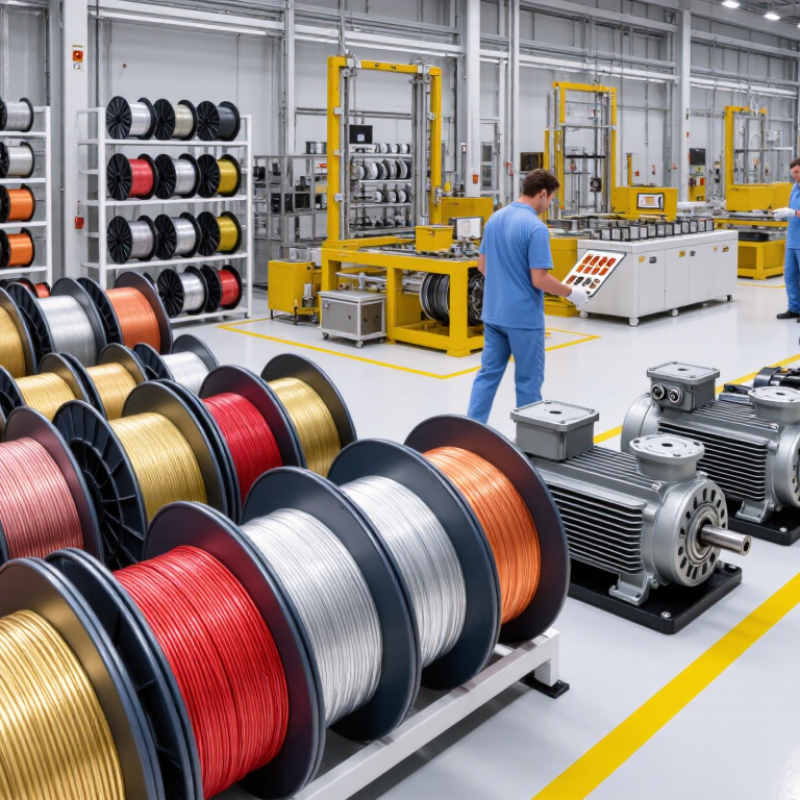
Electromagnetic wire, often called magnet wire, is a metal conductor covered by a thin insulating coating. Copper is widely used because it conducts electricity well and can be drawn into fine, flexible wire. Aluminum is another option, especially where lower weight matters. That thin coating matters. It allows adjacent turns of wire to sit close together without making electrical contact.

Manufacturers wind this wire into coils for motors, transformers, inductors, and solenoids. In a motor, current flowing through the windings creates a magnetic field that helps produce rotation. A transformer uses separate wire coils to transfer electrical energy between circuits. In smaller devices, tightly wound coils can support sensing, filtering, or controlled movement. The wire’s diameter, coating type, and temperature rating affect how much current and heat the finished component can handle.

Choosing wire is not only about conductivity. Equipment designers also consider winding space, operating temperature, insulation durability, and the shape of the coil. A very fine wire can fit more turns into a compact space, but it may be harder to handle and more vulnerable to damage. Heat changes everything. It is easy to overlook the coating when comparing specifications, yet that layer can influence reliability over years of use. Exact requirements depend on the application, so a datasheet should be checked before production.

Criteria for Evaluating Global Electromagnetic Wire Suppliers

Top 10 Electromagnetic Wire Suppliers for Global Buyers?

Criteria for Evaluating Global Electromagnetic Wire Suppliers

Supplier selection should start with the application, not the catalogue. Motor windings, transformers, and charging equipment require different conductor sizes, insulation systems, and thermal performance. The IEA’s Global EV Outlook 2024 reported more than 14 million electric cars sold in 2023, increasing demand for components used in electric motors. This is useful context, but it does not prove that every wire supplier can meet automotive-grade requirements.

Compare documented properties: conductor material and diameter tolerance, insulation type, thermal class, breakdown voltage, and test frequency. Check whether certificates identify the actual production batch, not only the factory. IEC 60317 provides specifications for particular winding-wire types; buyers should confirm that the relevant part matches their application. The IEA’s Electricity Grids and Secure Energy Transitions report says annual grid investment needs to exceed USD 600 billion by 2030. That points to growing infrastructure demand, but supplier capacity still needs direct verification. Ask for sample coils, test records, monthly output, lead times, and export packaging details. A polished datasheet can hide gaps.

Tips: Request a recent test report and a small trial lot. Check spool labels against batch records. Small details matter. No scorecard is perfect; even experienced buyers can overlook how storage humidity affects insulation condition.

Profiles of Ten Leading Electromagnetic Wire Suppliers

Profiles of ten leading electromagnetic wire suppliers are most useful when they reveal what each can make, test, and deliver. Compare round and rectangular conductors, copper and aluminum options, insulation classes, and available wire gauges. Ask whether a supplier can provide stable coating thickness and batch-level test records. Small defects matter. A rough enamel surface can weaken insulation in a tightly wound motor.

The International Energy Agency’s Electricity 2024 report projects global electricity demand to grow by an average of 3.4% annually through 2026. Its Global EV Outlook 2024 estimated electric car sales would reach about 17 million in 2024. These reports do not measure wire demand directly, but they indicate expanding needs for motors, transformers, and related equipment. Supplier profiles should therefore explain capacity, lead times, traceability, and experience with demanding applications—not just quote annual output.

A practical comparison can distinguish suppliers focused on traction motors, power transformers, industrial drives, or custom low-volume runs. Check how they handle sample approval, insulation testing, and production changes. Ask for details. Regional inventory can shorten delivery, while local technical support helps resolve winding or bonding problems. Still, a polished specification sheet is not proof of consistent quality; buyers should verify claims with sample testing and documented audits.

Comparing Supplier Products, Certifications, and Global Reach

For global buyers, comparing electromagnetic wire suppliers means looking beyond catalog breadth. Magnet wire, winding wire, and specialty conductors differ in insulation, temperature class, and dimensional tolerance. A useful review checks whether a supplier can provide the specific gauge, coating, and test data required for a project. Small details matter.

Certifications offer evidence, but they need context. Ask for current certificates, product-specific test reports, and clear traceability from production lot to shipment. Requirements vary by application and destination, so buyers should confirm acceptance with their own engineering and compliance teams. A certificate alone is not a guarantee. Samples and documented testing can reveal issues that a polished brochure may miss.

Global reach also involves more than a map of sales offices. Compare production locations, export experience, lead-time estimates, packaging, and the availability of technical support across time zones. Ask how suppliers handle shortages or changes in specifications. Then compare responses, not just quoted prices. A tidy spreadsheet can still miss practical concerns, and supplier claims should be checked against records and sample performance. One overlooked question: who answers when a shipment is delayed?

Common Magnet-Wire Insulation Thermal Classes

IEC 60085 defines thermal classes for electrical insulation systems. The chart shows selected class temperatures—not a ranking of suppliers or a guarantee of a product’s continuous operating temperature. Verify each wire’s specifications and certifications with the supplier.

How Buyers Can Select and Verify a Supplier

A reliable electromagnetic wire supplier should be able to explain how its products match your operating conditions. Share the conductor size, insulation type, temperature range, and winding process you expect to use. Ask for written tolerances, test methods, and lot-level traceability. Vague claims such as “high quality” are not useful without measurable specifications. Details matter.

Review material certificates and quality records, then confirm they refer to the actual product and production lot. Request samples from a normal production run, not only specially prepared pieces. Check dimensions, surface condition, insulation consistency, and winding behavior against your own requirements. Where possible, arrange independent testing for critical applications. A neat document pack is reassuring, but it cannot prove every spool will perform identically. That gap deserves attention.

Assess delivery capacity and communication, too. Ask how the supplier handles rejected lots, production changes, and schedule delays. For cross-border orders, verify packaging, moisture protection, lead times, and shipping responsibilities before approving a purchase. A factory visit or remote audit can reveal whether testing equipment is maintained and records are actually used. No checklist catches everything. Keep evaluation notes, compare answers across suppliers, and begin with a manageable order if uncertainty remains. Some buyers focus heavily on price; a small saving may matter less than consistent wire and clear corrective action.

Top 10 Electromagnetic Wire Suppliers for Global Buyers? - How Buyers Can Select and Verify a Supplier

A practical, non-branded checklist for evaluating suppliers of magnet wire and other winding-wire products.

No. Evaluation Dimension What Buyers Should Assess How to Verify
1 Product and application fit Whether the supplier makes the required winding-wire construction, such as round or rectangular conductor, and the specified insulation system. Request a product data sheet and a written quotation that identify conductor shape, nominal dimensions, insulation type, applicable tolerances, and intended application. Confirm that the offered construction matches the design specification.
2 Conductor material The required conductor may be copper or aluminum; conductivity, mass, dimensions, and joining requirements differ by material and application. Check the material declaration and product specification. For a sample or production lot, review the agreed incoming-inspection results and any material test documentation relevant to the purchase specification.
3 Insulation and thermal class Insulation chemistry and thermal classification affect the wire’s suitability for the specified electrical, thermal, and manufacturing conditions. Ask for the exact insulation designation and supporting product documentation. Confirm the applicable temperature rating and test requirements against the equipment design and relevant product specification; do not treat temperature class alone as proof of lifetime in every application.
4 Standards and specification control Requirements vary by wire type, destination market, and end use. IEC 60317 contains specifications for particular winding-wire types, IEC 60851 covers test methods, and NEMA MW 1000 is a magnet-wire standards document. Identify the exact standard, edition, wire type, and contractual requirements that apply. Request a clause-by-clause compliance statement where appropriate, and confirm that the supplier’s test methods and product data refer to the agreed specification.
5 Dimensional consistency Conductor dimensions, insulation build, and finished-wire tolerances can affect winding operations, slot fill, and electrical performance. Review the dimensional tolerances stated on the quotation and data sheet. Request sample measurements or a lot inspection report, and confirm the measurement method and sampling plan before ordering.
6 Testing and quality records Suitable inspection and testing help establish that supplied wire conforms to the agreed requirements. Ask for a sample test report or certificate of analysis showing the tested product, lot identification, test methods, results, and acceptance criteria. Confirm which tests are performed routinely and which are available only by agreement.
7 Quality-system evidence A documented quality system can support controlled production, inspection, corrective action, and record retention. Request the current quality-system certificate, check its validity and scope with the issuing certification body, and confirm that the named manufacturing site and relevant activities are covered. A certificate does not replace product qualification.
8 Production capacity and lead time Available capacity, minimum order quantities, and lead times must fit the buyer’s forecast and replenishment needs. Request written lead times for samples and repeat orders, production-site details, minimum order quantities, and a capacity commitment for the required specification. Validate performance through a pilot order and delivery records where available.
9 Export documentation and logistics International shipments require clear commercial, packaging, and transport arrangements; import requirements depend on the destination and product. Confirm the agreed Incoterms® rule and named place, packaging and reel details, shipping documents, country-of-origin information, and any destination-specific declarations required by the buyer or importer.
10 Traceability and change control Lot-level traceability and notification of material or process changes support investigation of quality issues and consistent repeat supply. Check that labels and documents link each shipment to a production lot. Agree how long records are retained, how nonconforming product is handled, and how changes to materials, processes, or production locations are communicated and approved.

Buyer note: Use this checklist to compare suppliers against the same written specification. Verify standards, certifications, test evidence, and import requirements for the specific product and destination; requirements are not identical for every winding-wire application or market.

Open chat
Scan the code
Bendet Sales Assistant
Hi There👋,
Thank you for visiting our website, How can I help you?