








When conducting experiments in a laboratory, achieving reliable and consistent results is essential. A key player in this process is the laboratory sample pulverizer. This tool is designed to grind and reduce the size of samples, ensuring uniformity for accurate analysis. However, not all pulverizers are created equal. Choosing the right one can influence the outcome of your research significantly.
The best laboratory sample pulverizers offer precision and efficiency. They cater to various materials, accommodating diverse research needs. Some models excel in speed, while others focus on achieving a finer grind. It’s crucial to consider the specifics of your sampling requirements for optimal performance. A poor choice may lead to inconsistent results, which could skew research findings.
In this guide, we will explore the top five laboratory sample pulverizers. Each option has unique features to consider. While this list provides excellent choices, it is essential to reflect on your specific needs and conditions. Understanding the strengths and weaknesses of each pulverizer will help you make an informed decision. Your laboratory's success may hinge on this choice, so careful consideration is warranted.
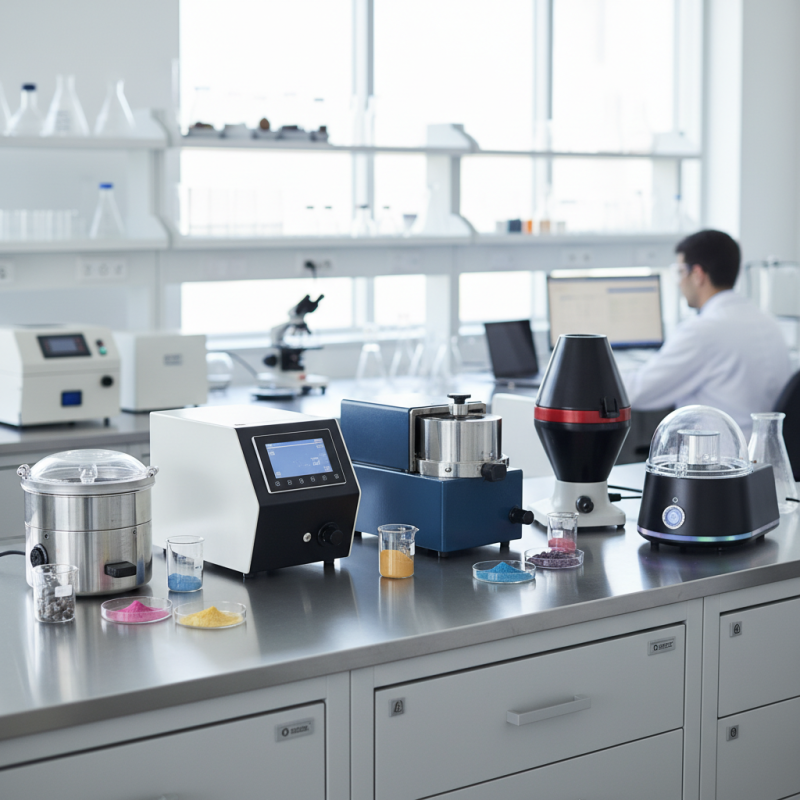
When selecting a laboratory sample pulverizer, several key features should guide your choice. Efficiency in sample processing is essential. According to industry reports, pulverizers that achieve a fine particle size consistently are preferred. Machines with robust crushing capabilities ensure optimal results in a short time.
Versatility is another crucial aspect to consider. A good pulverizer should handle various materials, from soft fruits to hard minerals. This adaptability allows for a wider range of applications. Ease of maintenance is important too. Equipment with accessible parts simplifies cleaning and upkeep, minimizing downtime.
The noise level of pulverizers can impact laboratory environments. Quiet machines enhance the working atmosphere. Moreover, energy efficiency is increasingly vital. Devices that consume less power reduce operational costs and environmental impact. However, achieving all these features in one unit can be complex. Balancing performance with cost often leads to trade-offs that require careful reflection.
When selecting a laboratory sample pulverizer, consider the material type. Different materials require tailored approaches for optimal results. For instance, hard materials like ceramics need robust machines. They tend to grind slowly, which can cause frustration. Conversely, softer materials, such as food samples, may require less powerful tools. Misjudging this can lead to inconsistent particle sizes.
Versatility in pulverizers is vital. Some machines excel at processing minerals, while others handle organic samples better. The choice must reflect your specific needs. A pulverizer that works well for one type might falter with another. This inconsistency can impact research outcomes.
Checking specifications is crucial. Look at the sample size capacity and grinding speed. A mismatch can lead to significant delays. Reflecting on these factors is important. If errors occur in your choice, adjustments may be needed later. Understanding material properties is key to optimizing pulverization results.
Laboratory sample pulverizers play a crucial role in achieving accurate results. Each device has unique features that can significantly influence performance. Various factors may affect their efficiency. Some models excel in particle size reduction while others struggle, resulting in inconsistent outcomes.
The speed of operation matters too. High-speed pulverizers tend to produce finer particles. However, they may generate excessive heat, impacting sample integrity. Users often face a trade-off between speed and quality. The ideal pulverizer should balance both to ensure optimal results.
Another critical aspect is usability. Some pulverizers are user-friendly, while others require time to master. Training is essential for new users to maximize potential yields. Reflecting on performance data reveals areas of improvement. This self-evaluation can guide users in selecting the best equipment for their specific needs.
| Model | Max Feed Size (mm) | Final Grind Size (µm) | Capacity (kg/h) | Power (kW) | Weight (kg) | Price Range (USD) |
|---|---|---|---|---|---|---|
| Model A | 10 | 40 | 15 | 5 | 200 | $1500 - $2000 |
| Model B | 8 | 30 | 20 | 4 | 150 | $1000 - $1500 |
| Model C | 12 | 50 | 25 | 6 | 250 | $2000 - $2500 |
| Model D | 15 | 20 | 30 | 7 | 300 | $2500 - $3000 |
| Model E | 5 | 10 | 10 | 3 | 100 | $800 - $1200 |
Proper maintenance of laboratory pulverizers is essential for optimal performance. Regular cleaning is crucial. Dust and residue can build up after use. Always inspect the blades and grinding chambers for wear. A worn blade can lead to inconsistent particle sizes. Check seals and gaskets for any damage; they play a vital role in safety.
Calibration should not be ignored. It ensures precision in particle sizing. A minor miscalibration can lead to significant issues. Periodically, testing a sample run can reveal discrepancies. Listen for unusual sounds during operation; they often indicate underlying problems. If a machine runs loudly or vibrates excessively, it might need immediate attention.
Documentation is equally important. Keep track of maintenance schedules and repairs. This practice helps in identifying patterns and potential future issues. A well-maintained pulverizer boosts efficiency and extends lifespan. Remember, neglect can lead to costly downtime. Care for your equipment, and it will serve you well.
Choosing a laboratory pulverizer involves considering both performance and cost. The right pulverizer can save time and resources. Different models offer various features at different price points. Some may seem cheaper initially but require more maintenance. This leads to higher costs over time.
A cost-effective pulverizing solution should align with your specific needs. Efficient models can provide quick results without compromising sample integrity. Spend some time comparing the energy consumption and maintenance frequency of different machines. A seemingly affordable option might not be the best choice if it needs frequent repairs.
Look for models that offer durability and reliability. Read user reviews for insights on real-world performance. Limitations often surface over time. Ensure the machine's versatility aligns with diverse sample types. Finding the perfect balance is essential but can be challenging.
Hein Minnie
Cell nr: +27 (0) 82 564 6501
Email: sale@thecirclemachine.com
Hein Minnie Jnr
Cell nr: +27 (0) 84 284 7234
Email: sale@thecirclemachine.com
Address:
10 Apsey Street,
Heidelberg,
Gauteng,
1441
Bendet Engineering Services (PTY) LTD was established in 1987. Our team of engineers and draughtsman are ready to deliver a complete turnkey solution, from the design phase to commissioning. A dedicated team that consists of electrical, mechanical and industrial engineers, we are able to offer a comprehensive service to our clients.