






What Are the Top Types of Chemical Eyewash Stations?

Choosing the right Chemical Eyewash station starts with the work area, not a product catalogue. A plumbed eyewash provides a continuous water supply where plumbing is available. A self-contained unit can serve locations without nearby water lines, but its solution needs scheduled inspection and replacement. Combination stations pair an eyewash with a safety shower for sites where splashes could affect both eyes and the body. Personal rinse bottles are useful for immediate, supplemental flushing; they should not be mistaken for a full emergency eyewash.

Dr. David Michaels, an occupational-health researcher and former OSHA administrator, has emphasized preventing workplace harm rather than relying on emergency response. Put plainly—not as a verbatim quotation—the principle for eyewash planning is: “Control the hazard before an emergency begins.” That idea matters when corrosive liquids sit near a mixing bench or transfer hose. A station hidden behind cartons is technically present, yet practically hard to reach.

Details count. Check access, water supply, temperature, maintenance needs, and whether workers can activate the unit quickly. A facility’s conditions may change, too; a station that once fit the workflow can become obstructed after equipment moves. That deserves a second look. This overview compares the main station types, explains where each may fit, and highlights the trade-offs buyers should weigh. The best choice is not always the most elaborate one. It is the unit workers can reach, operate, and maintain when seconds feel unusually long.
What Are the Top Types of Chemical Eyewash Stations?

Plumbed Eyewash Stations for Fixed Work Areas

Plumbed eyewash stations suit fixed work areas where corrosive or irritating chemicals are handled regularly. They connect to a reliable water supply, so workers do not need to locate a portable unit during an emergency. Place the station close to the hazard, with a clear, well-lit route and no doors or stored materials blocking access. A worker should be able to reach it quickly, even while distressed. Seconds matter.

Choose a model that delivers a steady, gentle flow to both eyes and can be activated easily, often with a broad paddle or push plate. The water should be clean and comfortably tempered; an icy spray may discourage a full rinse. Check that the basin drains properly and that spray heads have protective covers. Installation should follow the site’s risk assessment, equipment instructions, and applicable safety standards.

A station can look ready and still fail. Supply lines may clog, covers can collect dust, and nearby boxes may quietly narrow the path. Assign someone to test and inspect the unit on a regular schedule, recording problems and repairs. Follow the manufacturer’s instructions for flushing and maintenance. In cold or hot areas, protect the plumbing from temperature extremes. Small details get missed. A brief, practical walk-through with workers can reveal whether the station is truly reachable and usable.

Top Types of Chemical Eyewash Stations: Plumbed Units for Fixed Work Areas

Plumbed stations are suited to fixed work areas with a reliable water supply. ANSI/ISEA Z358.1 specifies minimum flow rates of 0.4 gpm for an eyewash, 3 gpm for an eye/face wash, and 20 gpm for an emergency shower. Combination units must provide the required eyewash and shower flows at the same time. Emergency equipment is designed to deliver flushing fluid for at least 15 minutes.

Self-Contained Eyewash Stations for Locations Without Water Lines

Self-contained eyewash stations suit chemical handling areas where fixed plumbing is unavailable, such as loading bays, maintenance vehicles, and temporary work zones. Their reservoirs store flushing fluid, so workers can reach a rinse without waiting for a water line. No plumbing required. But the unit must be close, visible, and unobstructed; distance matters when someone’s eyes are burning.

ANSI/ISEA Z358.1-2014 (R2020) specifies an eyewash flow of at least 0.4 gallons per minute for 15 minutes, with flushing fluid at a tepid temperature. OSHA’s 29 CFR 1910.151(c) also requires suitable facilities for promptly flushing eyes and body when workers may encounter injurious corrosive materials. A portable reservoir must therefore hold enough fluid for the required flush, not just a quick splash. Check fluid compatibility, expiration dates, seals, and activation parts on a documented schedule. A dusty cap or a depleted tank can defeat the purpose. That weak point is easy to overlook. Staff should also practice opening the unit and keeping eyelids open during rinsing; a station is only useful if people can operate it under stress.

Combination Eyewash and Safety Shower Stations

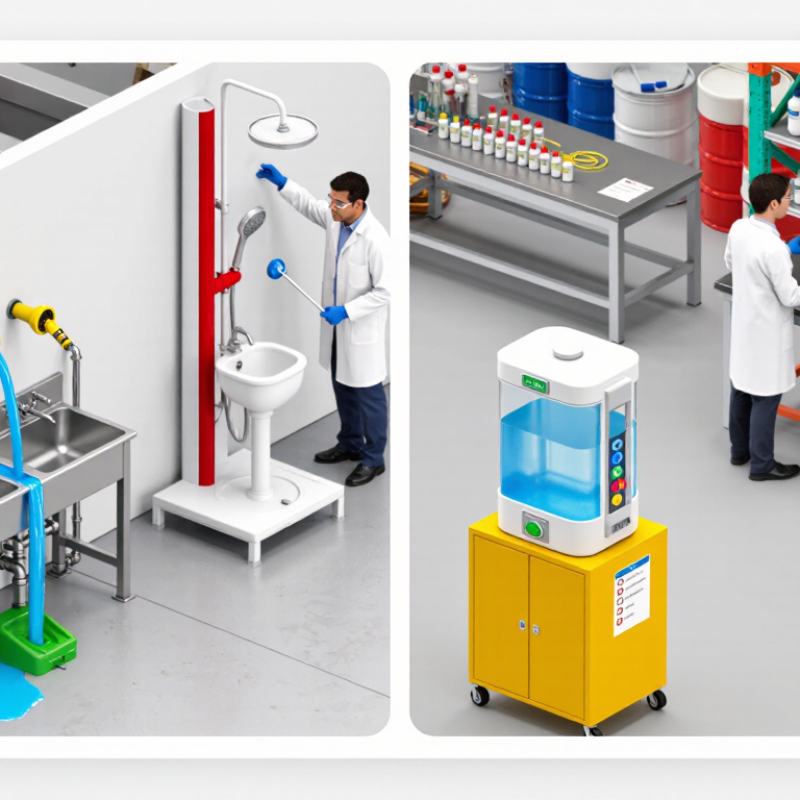
Combination eyewash and safety shower stations provide two kinds of emergency washing in one location. They are useful where workers handle liquids that may splash across the face, clothing, or skin. A nearby shower can rinse a larger area while the eyewash lets someone flush both eyes. Seconds matter. The equipment should be easy to reach, clearly marked, and free from stored boxes or carts. Plan the location around actual work tasks, not just an empty spot on a floor plan.

Tips: Keep the route clear and check that the shower and eyewash operate together as intended. Use tepid water where required by applicable guidance. Verify flow, drainage, and access during regular inspections. Show workers how to activate the equipment before an incident occurs.

Routine checks help reveal problems such as a stiff pull rod, blocked drain, or weak water flow. Follow the applicable safety standard and the station’s maintenance instructions, and record inspection results. One detail is easy to overlook: a worker may need help removing contaminated clothing while continuing to rinse. Practice that response, and reconsider the layout if the station feels awkward to use.

What Are the Top Types of Chemical Eyewash Stations? - Combination Eyewash and Safety Shower Stations
Type Configuration Water Supply Commonly Suited For Key Considerations
Floor-Mounted Plumbed Combination Station A safety shower and eyewash are installed together on a floor-mounted assembly. Connected to a reliable potable-water supply and drainage arrangement as required by the site. Fixed work areas where chemical exposure is a foreseeable risk and plumbing is available. Keep the route clear and the unit readily accessible. Confirm water supply, temperature, drainage, and installation requirements for the selected equipment.
Wall-Mounted Plumbed Combination Station An eyewash and overhead shower are mounted on or supported near a wall. Connected to a fixed water supply. Laboratories, production spaces, and other locations where a wall installation suits the layout. Check that the wall and surrounding area allow unobstructed access and that the shower and eyewash can be operated as intended.
Recessed or Enclosed Combination Station Some or all of the equipment is set into an enclosure or wall recess. Typically connected to fixed plumbing. Indoor facilities where space, equipment protection, or a tidier installation is important. Ensure doors, covers, or enclosures do not delay access or interfere with operation. Include the unit in inspection and maintenance routines.
Freeze-Protected Plumbed Combination Station A combination unit designed for locations where freezing conditions may affect exposed water lines or components. Fixed plumbing with a freeze-protection approach appropriate to the installation, such as protected piping or a suitable heated enclosure. Outdoor or unheated areas exposed to low temperatures. Choose equipment and protection based on local conditions and the installation design. Verify that the unit remains ready for use during cold weather.
Self-Contained Tank-Fed Combination Station A shower and eyewash supplied by a dedicated stored-water tank rather than a continuous plumbing connection. Onboard tank; capacity and usable duration depend on the specific model and setup. Sites without a dependable water connection or temporary work areas where a suitable stationary installation is not practical. Requires scheduled inspection, cleaning, water replacement or treatment as specified by the manufacturer, and confirmation that the available supply is adequate for the hazard assessment.
Selection note: The appropriate station depends on the chemicals handled, site layout, water availability, temperature conditions, and applicable regulations. OSHA 29 CFR 1910.151(c) requires suitable facilities for quick drenching or flushing of the eyes and body where corrosive materials may be present. ANSI/ISEA Z358.1 provides widely used guidance for emergency eyewash and shower equipment; consult the current standard and the equipment manufacturer for installation, performance, inspection, and maintenance requirements.

Personal Eyewash Bottles as Supplemental Equipment

Chemical eyewash stations include plumbed units, self-contained tanks, and personal eyewash bottles. Personal bottles are supplemental equipment, not substitutes for primary emergency eyewashes. That distinction matters.

NIOSH estimates that about 2,000 U.S. workers sustain job-related eye injuries requiring medical treatment each day. ANSI/ISEA Z358.1-2014 (R2020) specifies emergency eyewash performance, including at least 15 minutes of flushing with tepid fluid. A small bottle cannot provide that sustained flow. It can, however, provide immediate rinsing while a worker reaches a full station.

Place bottles near splash-risk tasks, where workers can grab them without crossing a busy work area. Select a solution suitable for the workplace and follow its label and safety data sheet. Check seals, expiry dates, and accessibility during routine inspections. A dusty bottle within reach is still a poor safeguard.

Train workers to start rinsing immediately, then continue at the primary station according to site procedures. One weakness deserves attention: convenience can make a bottle seem more capable than it is. After exposure, workers should seek prompt medical guidance.

Choosing a Station Based on Chemical Hazards and Site Conditions

Choose the station by matching the chemical, exposure risk, and available water supply. For corrosive liquids, a plumbed eyewash can provide continuous flushing when connected to reliable potable water. ANSI/ISEA Z358.1-2014 (R2020) specifies an eyewash flow of at least 0.4 gallons per minute for 15 minutes. Eye/face-wash units require at least 3 gallons per minute. Check the chemical’s safety data sheet; acids, alkalis, and solvents may require different protective measures. Placement matters. OSHA’s 29 CFR 1910.151(c) calls for suitable facilities within the work area for immediate emergency use where corrosive exposure is possible.

Site conditions can change the choice. In a cold or water-limited area, a self-contained station may be practical, but its fluid capacity, temperature, and inspection schedule need close attention. Portable bottles can help with immediate rinsing, yet they do not replace a full-duration station. Combination units suit locations where both eyes and the body could be exposed, provided the floor space and drainage can handle activation. Keep the route clear and visible. A plan can look sound on paper; pallets or a locked door can make it fail. Test access during a walk-through, not just during installation.

Open chat
Scan the code
Bendet Sales Assistant
Hi There👋,
Thank you for visiting our website, How can I help you?