What Is a Potato Chips Production Line?
A Potato Chips Production Line is more than a row of machines. It is a connected process that turns raw potatoes into crisp, evenly seasoned chips. The work begins with inspection and washing. Potatoes are peeled or brushed, sliced into thin rounds, rinsed when needed, and dried before frying. Each stage affects the next. A small change in slice thickness can alter cooking time, color, and crunch.
No verified expert quotation or source was provided, so this introduction does not invent one or attach words to a named specialist. That matters in food manufacturing. Claims about equipment, output, or product quality should be checked against reliable technical sources and the actual plant conditions. A useful production line description should explain what the equipment does, how operators monitor it, and where adjustments may be needed. Not just list machines.
Picture a steady stream of potato slices moving across a belt, droplets of water falling away, and hot oil bubbling in a controlled fryer. After frying, chips pass through seasoning and cooling before inspection and packaging. Temperature, feed rate, oil condition, and moisture all influence the final result. Real lines vary. Product style, capacity, and available space shape equipment choices, so one layout will not suit every factory. This guide introduces the main stages and practical considerations behind a Potato Chips Production Line, while recognizing that process settings require validation in the production environment.
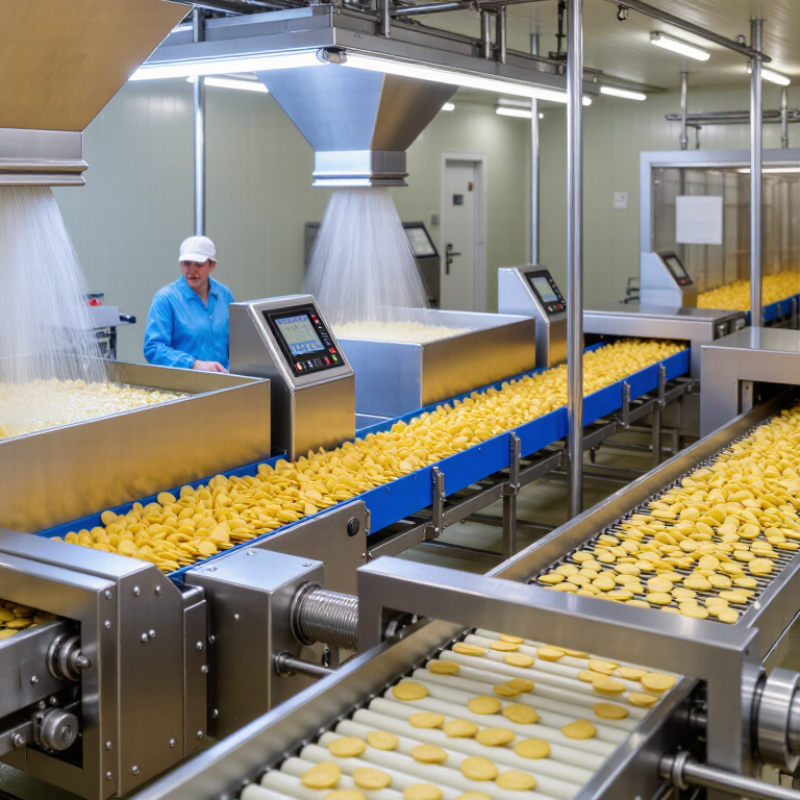
Definition and Purpose of a Potato Chips Production Line
A potato chips production line is a connected set of machines that turns raw potatoes into seasoned, packaged chips. Its purpose is to make production faster and more consistent while controlling food quality, waste, and handling. FAOSTAT’s Crops and Livestock Products database recorded about 374.8 million tonnes of potatoes worldwide in 2022. That is crop output, not chip output. The distinction matters.
A typical line washes and peels potatoes, slices them, then fries or otherwise cooks the slices. Equipment may also remove excess oil, apply seasoning, cool the chips, and fill sealed bags. Operators check slice thickness, cooking temperature, and moisture; a thin slice can crisp quickly, while a thicker one may stay soft. Exact steps vary with the product and process. No line runs itself.
Tips: Check the slicer and fryer settings at the start of each shift. Look for uneven slices and darkened chips on the inspection belt. Small defects can affect a whole batch. FAOSTAT figures describe the agricultural supply, not factory performance, so they cannot tell a processor how much finished product a line will yield.
What Is a Potato Chips Production Line? — Definition and Purpose
A potato chips production line is a sequence of connected food-processing steps that turns raw potatoes into packaged chips. This chart shows representative operating temperatures for selected steps; actual settings vary by product, equipment, and process.
The line’s purpose is to coordinate preparation, cooking, and finishing so chips are produced consistently and ready for packaging.
Raw Potato Selection and Preparation
What Is a Potato Chips Production Line?
Raw Potato Selection and Preparation
A dependable potato chips line starts with potatoes that suit the desired slice and frying process. Firm, mature tubers with consistent size are easier to feed and cut evenly. Variety matters too: dry matter and natural sugar levels can affect crispness, oil uptake, and finished color. Small details matter.
At receiving, workers can sample several sacks or bins rather than judging one potato. Look for rot, deep bruises, green patches, sprouting, and excess soil. These defects can lead to waste or uneven product. A quick visual check helps, but it can miss internal bruising; occasional cut samples provide a better view. Records of delivery conditions and storage time make quality changes easier to trace.
Preparation usually includes removing stones and soil, washing, and peeling when the product specification calls for it. Slicers work more consistently when potatoes are clean and reasonably uniform in size. After slicing, a controlled rinse can remove loose surface starch, while effective draining or drying limits excess water entering the fryer. Storage needs attention as well: overly cold conditions may encourage sugar buildup in some potatoes, darkening chips during frying. The ideal handling plan depends on the crop and processing schedule, so a fixed routine may need adjustment.
What Is a Potato Chips Production Line? - Raw Potato Selection and Preparation
| Process dimension | Typical selection or process guidance | Why it matters |
| Potato condition | Choose sound, firm potatoes without rot, green patches, deep cuts, or extensive bruising. | Defects can reduce usable yield and affect product appearance or safety. |
| Size and shape | Select reasonably uniform potatoes; round or oval tubers are commonly used for consistent slicing. | Uniform feedstock helps produce more even slices and supports steady line operation. |
| Dry matter | A relatively high dry-matter content is generally preferred; around 20–24% is a common processing range, depending on cultivar and product specification. | Higher dry matter can improve crispness and reduce the amount of water removed during frying. |
| Reducing sugars | Use potatoes with low reducing-sugar levels; processors commonly favor levels around or below 0.1% of fresh weight, subject to their product standards. | Excess reducing sugars can cause chips to brown too quickly during frying and may affect flavor. |
| Receiving and sorting | Remove stones, soil clods, plant material, damaged tubers, and other foreign matter before processing. | Pre-sorting protects equipment and prevents unsuitable material from entering the production line. |
| Washing | Wash with potable-quality water and use suitable agitation or spray action to remove soil; manage water quality and replacement according to plant procedures. | Cleaning reduces surface dirt before peeling and slicing. |
| Peeling | Use an appropriate peeling method, such as abrasive or steam peeling, and adjust it to limit flesh loss while removing the skin. | Peeling removes skin and surface defects while balancing product quality with raw-material yield. |
| Trimming and inspection | Inspect peeled potatoes and trim remaining eyes, bruises, green areas, or damaged sections before slicing. | This helps remove visible defects that may remain after mechanical peeling. |
| Slicing preparation | Feed clean, peeled potatoes evenly to the slicer; set slice thickness to the product specification and check it regularly. | Consistent slices help promote even cooking and a uniform finished product. |
| Post-slice rinsing | Where used, rinse slices with clean water to remove loose surface starch, then drain or dry them as required by the process. | Removing loose starch can help reduce slice sticking and surface buildup during frying. |
Values and practices are typical processing guidance; actual specifications depend on potato variety, storage history, equipment, and product requirements.
Slicing, Washing, Frying, and Seasoning
What Is a Potato Chips Production Line?
Slicing, Washing, Frying, and Seasoning
A potato chips production line moves potatoes through several controlled steps, but product quality depends on how well those steps work together. At the slicer, blades cut potatoes into thin pieces. Consistent thickness helps slices cook evenly; uneven cuts can leave some pale and others too dark. The exact setting depends on the desired chip style.
Washing removes loose starch from the cut slices. This can reduce sticking and help create a more even finish. The slices are then drained before frying, since excess water can affect cooking and oil use.
During frying, operators monitor oil temperature and cooking time, checking the chips’ color and crispness as well as the equipment readings. Small details matter. Seasoning is added while chips are warm, so salt and other dry ingredients can cling to the surface.
Too much seasoning may mask the potato flavor; too little can taste bland. Potato variety, slice thickness, and moisture change from batch to batch, so one fixed setting may not deliver identical results every time. A careful operator still needs to inspect the chips.
Core Equipment and Production Controls
A potato chips production line turns fresh potatoes into thin, crisp slices through linked processing steps. Washing removes soil, while peeling and sorting help keep damaged potatoes out. A slicer then cuts even rounds; uneven slices can fry at different rates. Some lines blanch slices before frying, while others skip this step. The right setup depends on the potato variety and the chip style.
Core equipment includes a washer, peeler, slicer, fryer, seasoning drum, cooler, and packaging machine. Operators monitor slice thickness, fryer temperature, belt speed, and finished-chip color. A small temperature change can affect crispness and oil absorption. They also check oil condition and remove excess surface moisture before frying. Controls help maintain consistency, but they cannot fix poor raw potatoes. That part is easy to underestimate.
Tips: Check a few slices from different parts of each batch, not just the first handful. Look for pale centers, dark edges, and excess oil. Record settings alongside results; a brief note can reveal a pattern across shifts. Even careful records are imperfect, so review them against the actual chips.