







What Is Vacuum Welding and How Does It Work?

Vacuum Welding is a precision joining method performed in a controlled, low-pressure chamber. The process removes most air before heat reaches the workpiece. This reduces oxidation, contamination, and unwanted reactions on sensitive metals.

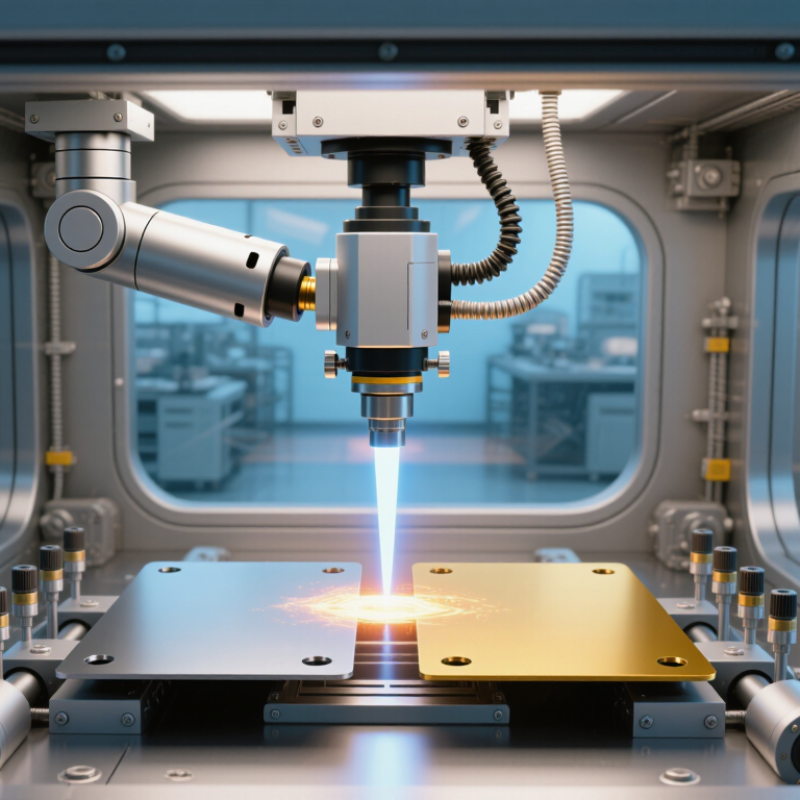
In electron beam welding, an electron gun accelerates electrons through the vacuum. Magnetic lenses focus the beam onto a narrow joint. The beam’s kinetic energy becomes intense, localized heat. Metal melts, fuses, and solidifies with limited distortion. Vacuum brazing follows a different route. It uses a filler metal, which flows between closely fitted surfaces. The terminology is not perfectly standardized. That distinction deserves attention.

Why does this matter now? The International Energy Agency’s Global EV Outlook 2024 reported nearly 14 million electric car sales worldwide in 2023. Battery trays, motor housings, and cooling components require clean, repeatable joints. Many designs also use aluminum, copper, titanium, or nickel alloys. These materials can react badly to oxygen or excessive heat. A controlled vacuum can help, but it cannot repair poor joint design.

Automation adds another reason to study the process. The International Federation of Robotics reported 541,302 industrial robots installed globally in 2023. Robotic loading, beam control, and inspection can improve consistency. Yet equipment calibration, chamber cleanliness, fit-up, and operator judgment remain decisive. Small leaks matter. So does surface preparation.

This guide explains what Vacuum Welding means, how the equipment works, and where engineers use it. It also examines penetration, heat input, defects, costs, and practical limitations. The method is powerful, not magical. Real results depend on materials, tolerances, process settings, and qualified procedures aligned with relevant AWS and ISO requirements.
What Is Vacuum Welding and How Does It Work?

Definition and Core Principles of Vacuum Welding

What Is Vacuum Welding and How Does It Work?

Vacuum welding is a joining process performed inside a chamber with most air removed. Its core purpose is controlling contamination, oxidation, and heat transfer during welding. In a clean vacuum, exposed metal surfaces are less likely to form new oxide layers. This allows atoms to interact more directly at the joint.

The process may use heat, pressure, an electron beam, or a combination of these methods. In diffusion welding, carefully prepared surfaces remain under pressure while heat encourages atoms to cross the interface. No large molten pool is required. In electron beam welding, a focused beam melts a narrow area and creates a deep, precise weld. Chamber pressure, surface finish, temperature, and holding time must match the material. Small scratches or trapped gases can weaken the joint. I have found that preparation often matters as much as the welding energy itself.

Tips: Clean both surfaces thoroughly. Remove oils, particles, and visible oxides before loading the chamber. Use stable fixtures to prevent movement during heating. Verify vacuum performance with calibrated instruments, then inspect the finished joint using suitable visual, dimensional, or non-destructive methods. A perfect-looking seam can still hide porosity. That detail is easy to underestimate.

Equipment and Materials Used in Vacuum Welding

Vacuum welding joins metal inside a controlled low-pressure chamber. Electron-beam welding uses an electron gun, focusing coils, and a movable worktable. Vacuum pumps remove air, moisture, and contaminants before the beam starts. Vacuum furnaces support diffusion bonding and high-temperature brazing. They require heating elements, thermocouples, shielding fixtures, and pressure monitoring. The U.S. Department of Energy’s Industrial Decarbonization Roadmap reports that process heating represents about 51% of manufacturing energy use. Efficient chamber insulation therefore matters.

Materials must match the process. Stainless steel, nickel alloys, titanium, and refractory metals often perform well. Their surfaces need machining, degreasing, and careful oxide removal. Filler metals may include silver-, nickel-, or copper-based alloys, depending on service temperature. ISO 17672 provides classification guidance for brazing filler metals. ASM Handbook, Volume 6A, also stresses joint clearance, surface preparation, and thermal expansion control. Small gaps matter. A poorly fitted joint can trap virtual leaks or produce uneven bonding. That risk is easy to underestimate.

Tips: Check chamber leakage before production. Record pressure, temperature, beam power, and cycle time for every batch. Use witness coupons when qualification evidence is limited. The International Energy Agency’s 2023 industrial analysis highlights the value of efficiency monitoring, yet vacuum systems still need practical verification. Clean parts can remain contaminated after handling. Gloves, sealed storage, and a repeatable loading method are not optional. A design review may still miss distortion, so inspect cross-sections instead of trusting appearance alone.

What Is Vacuum Welding and How Does It Work? — Equipment and Materials Used in Vacuum Welding
Category Item or Parameter Typical Data or Range Function in the Process Important Considerations
Process Principle Vacuum welding method Solid-state joining under high vacuum Joins clean, closely fitted surfaces without melting the parent materials. Common mechanisms include diffusion bonding, hot pressing, and electron beam welding.
Vacuum Environment Working pressure Approximately 10−2 to 10−6 mbar, depending on the process Reduces oxidation, contamination, and gas-related defects during heating or beam welding. Required pressure depends on joint design, material, temperature, and equipment type.
Vacuum Equipment Vacuum chamber Sealed metal chamber with water-cooled or thermally protected walls Contains the workpiece, tooling, heat source, and controlled atmosphere. Chamber size must accommodate the component, fixtures, thermal expansion, and line-of-sight requirements.
Vacuum Equipment Vacuum pumping system Roughing pump plus high-vacuum pump Removes air and vapor from the chamber before and during welding. Rotary-vane, dry-scroll, turbomolecular, diffusion, or cryogenic pumps may be selected according to cleanliness and pressure needs.
Vacuum Equipment Pressure measurement Rough-vacuum and high-vacuum gauges Monitors pump-down performance and maintains the required operating pressure. Gauge readings should be interpreted according to gas type, temperature, and gauge operating range.
Vacuum Equipment Heating system Resistance, induction, radiant, or electron-beam heating Raises the joint area to the required bonding or welding temperature. Heating must be uniform enough to limit distortion and prevent excessive grain growth.
Vacuum Equipment Temperature capability Commonly about 600–1,200 °C for diffusion bonding; higher ranges are possible Provides the thermal energy needed for atomic diffusion or localized fusion. The maximum temperature is limited by the base materials, fixtures, chamber design, and joining method.
Vacuum Equipment Force application system Hydraulic, pneumatic, mechanical, or dead-weight loading Maintains intimate contact between mating surfaces during diffusion bonding or hot pressing. Pressure should be applied evenly to avoid gaps, distortion, or non-uniform bonding.
Vacuum Equipment Process control and sensors Pressure, temperature, displacement, current, and force monitoring Records and controls the welding cycle for repeatable results. Data logging helps verify heating rate, holding time, cooling rate, and vacuum stability.
Joint Preparation Surface cleanliness Degreased, oxide-free, and particle-free surfaces Allows direct contact between the surfaces to be joined. Oil, fingerprints, oxides, moisture, and machining residue can reduce bond strength and increase outgassing.
Joint Preparation Surface roughness Typically controlled to approximately Ra 0.4–3.2 µm, depending on the application Improves real contact area while allowing practical machining and cleaning. Lower roughness generally reduces voids, but excessive polishing may affect surface activation and cost.
Base Materials Stainless steels Austenitic and precipitation-hardening grades Used for vacuum vessels, tooling, medical components, and corrosion-resistant assemblies. Oxide removal and control of chromium-rich surface films are important before bonding.
Base Materials Titanium and titanium alloys Commonly joined in aerospace, chemical, and medical applications Provide high specific strength and corrosion resistance. Strong affinity for oxygen and nitrogen makes vacuum quality and surface preparation especially important.
Base Materials Nickel-based alloys High-temperature and corrosion-resistant alloys Used in hot-section, chemical-processing, and high-performance engineering components. Bonding temperature and time must be controlled to limit undesirable microstructural changes.
Base Materials Aluminum and aluminum alloys Lightweight alloys with high thermal conductivity Used where low mass and good heat transfer are required. Persistent aluminum oxide makes cleaning, activation, or an appropriate interlayer important.
Base Materials Copper and copper alloys High-conductivity materials for thermal and electrical components Transfer heat or electrical current efficiently in compact assemblies. High thermal conductivity can require controlled heating rates and sufficient dwell time.
Base Materials Ceramics and refractory materials Alumina, zirconia, silicon carbide, and related materials Provide high-temperature stability, wear resistance, or electrical insulation. Differences in thermal expansion between ceramics and metals can create residual stress.
Interlayers Metal foil or coating Often tens to hundreds of micrometres thick Improves contact, promotes diffusion, or helps join dissimilar materials. Interlayer composition and thickness influence reaction phases, joint strength, and operating temperature.
Consumables Cleaning agents and preparation tools Solvent cleaners, lint-free wipes, abrasive finishing media, and controlled handling tools Removes oils, particles, and weak surface films before loading the chamber. Cleaning materials must leave minimal residue and should be compatible with vacuum service.
Process Cycle Typical sequence Load → evacuate → heat → apply force or beam → hold → cool → vent Creates a controlled thermal, mechanical, and vacuum environment for joining. Cooling under vacuum is often used to reduce oxidation and thermal shock.
Quality Control Common inspection methods Visual inspection, dimensional checks, leak testing, microscopy, and non-destructive testing Confirms joint integrity, alignment, cleanliness, and the absence of unacceptable defects. Ultrasonic, radiographic, dye-penetrant, or helium leak testing may be selected for the application.
Advantages Primary benefits Low oxidation, minimal filler use, clean joints, and suitability for dissimilar materials Supports high-integrity assemblies with limited post-weld finishing. Results depend strongly on surface preparation, fit-up, vacuum quality, temperature, pressure, and cycle time.
Limitations Key constraints High equipment cost, limited chamber size, long cycle times, and strict cleanliness requirements Defines when vacuum welding is technically and economically appropriate. Large or highly outgassing components may require special fixtures, longer pump-down times, or alternative joining methods.

Step-by-Step Process of Creating a Vacuum Weld

Vacuum welding joins clean metal surfaces inside a chamber with very little air. In practice, the term can describe several processes, including electron-beam welding and diffusion bonding. The exact method changes the heat source, pressure, and timing. The workflow remains controlled.

The process starts with inspection and cleaning. Technicians remove oil, oxide films, and tiny particles from the joint. Even a fingerprint can weaken contact. Parts are then aligned in a fixture, often with a measured gap or firm surface contact. Sensors check temperature and chamber pressure. The pump lowers pressure before welding begins. In electron-beam work, a focused beam melts a narrow joint. In diffusion bonding, heat and pressure hold surfaces together until atoms cross the interface. After welding, the assembly cools under vacuum or controlled gas. This limits oxidation and protects the joint. Small distortions still happen. The process is not effortless.

Tips: Keep surfaces clean, verify the chamber leak rate, and record pressure, temperature, and hold time. Use test coupons matching the production material. Inspect the weld with visual checks, dimensional measurements, and suitable non-destructive testing. A shiny surface does not prove a sound bond. That lesson is easy to miss.

Key Factors Affecting Weld Quality and Strength

What Is Vacuum Welding and How Does It Work?

Vacuum welding joins metals inside a controlled low-pressure chamber. The reduced atmosphere limits oxidation and contamination during heating. In electron beam welding, a focused electron beam melts the joint with deep, concentrated heat. Other vacuum processes may use pressure, diffusion, or controlled thermal cycles. The method suits precision parts, reactive alloys, and demanding aerospace or medical components.

Weld quality depends heavily on surface preparation. Oil, oxide films, and tiny particles can create pores or weak bonding. Joint fit-up also matters. Uneven gaps change heat flow and penetration. Vacuum level must remain stable throughout the cycle. Poor pressure control may increase contamination and unstable melting. Beam power, travel speed, focus, and working distance must match the material. Excessive heat can cause distortion or grain growth. Insufficient heat may leave incomplete fusion. Even experienced technicians can misjudge unfamiliar alloys. That deserves careful testing.

Tips: Clean both surfaces with a validated process, then handle them with clean gloves. Check chamber pressure before heating. Use test coupons that match the production material and thickness. Inspect cross-sections for pores, cracks, and incomplete penetration. Record every parameter, not just the final result. Small changes can matter. A fixture should hold alignment without restricting necessary thermal movement. When weld strength is critical, combine visual checks with non-destructive testing. Temperature monitoring can reveal problems that the weld surface hides.

Common Applications, Benefits, and Limitations of Vacuum Welding

What Is Vacuum Welding and How Does It Work?

Vacuum welding joins metals inside a sealed chamber after air and moisture are removed. Electron beam welding uses a focused beam to melt a narrow joint. Diffusion welding applies heat and pressure without melting the surfaces. Both methods reduce oxidation and contamination. The finished seam can look like a fine silver thread, with minimal distortion around it.

Common applications include aerospace parts, medical instruments, sensor housings, battery components, and high-temperature assemblies. Reactive metals, such as titanium, benefit from the protected atmosphere. Vacuum welding also suits small, precise joints that would be difficult to clean afterward. The International Energy Agency’s Energy Technology Perspectives 2024 reports that industry consumes about 37% of global final energy. This makes energy control important, although vacuum equipment is not automatically greener. Pump-down time, heating cycles, and chamber leakage can increase energy use. That assumption deserves checking.

Tips: Match the chamber size to the part. Oversized chambers waste cycle time. Clean both surfaces carefully. Oils and fingerprints can weaken the joint. Inspect welds using visual checks, leak testing, and appropriate non-destructive testing. Also measure total cycle cost, not only weld quality. Vacuum welding needs expensive chambers, skilled operators, careful fixtures, and strict maintenance. Large structures may not fit. Field repairs are usually impractical. The U.S. Department of Energy’s Industrial Decarbonization Roadmap highlights efficiency measurement as a key industrial priority, so record power use, pump-down duration, rework, and scrap during production. A perfect weld can still be a poor process.

Open chat
Scan the code
Bendet Sales Assistant
Hi There👋,
Thank you for visiting our website, How can I help you?