What Is a Chemical Blending Tank?
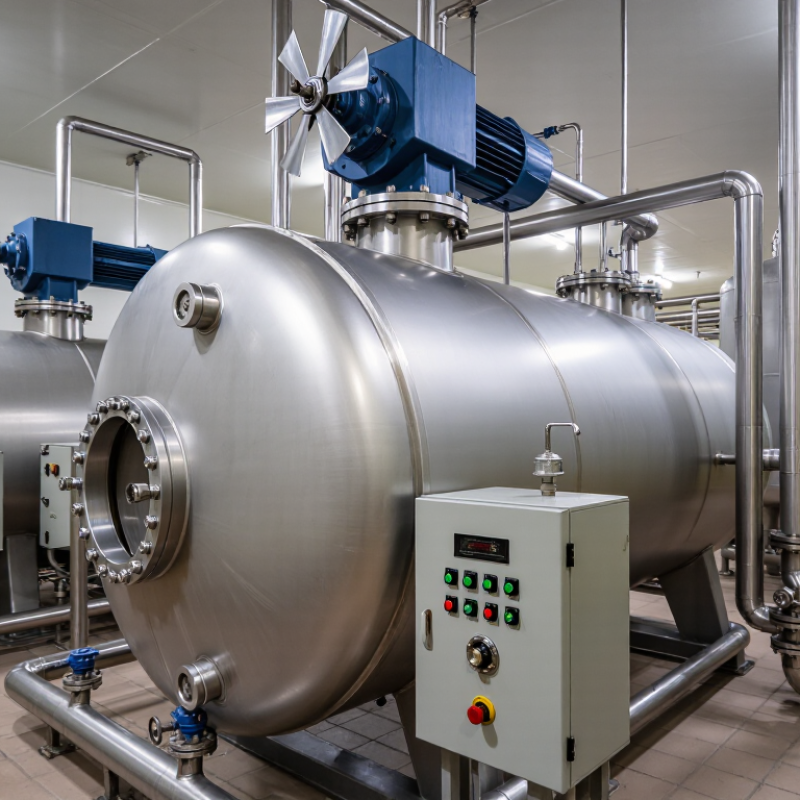
A Chemical Blending Tank is an industrial vessel designed to combine liquids, powders, or other compatible materials into a consistent mixture. It may include an agitator, heating or cooling jacket, sensors, baffles, and controlled discharge ports. The exact design depends on viscosity, batch size, temperature, and chemical compatibility.
The tank’s purpose is more than simple storage. Its mixing system helps distribute ingredients evenly, reduce settling, and maintain repeatable product quality. In a typical plant, operators monitor temperature, mixing speed, fill level, and processing time. Small changes can matter. A poorly selected impeller may create dead zones, excessive foam, or uneven blending. These problems are easy to underestimate.
Material selection is equally important. Stainless steel, lined steel, or specialized plastics may suit different formulations. Engineers should review corrosion resistance, pressure conditions, cleaning requirements, and applicable safety standards before approving a vessel. Reliable facilities also use documented operating procedures, inspection records, and validated cleaning methods. A qualified professional should confirm the final design.
No single Chemical Blending Tank fits every application. A tank that performs well for a thin liquid may struggle with a dense slurry or heat-sensitive mixture. Real-world testing can reveal issues that calculations miss. That is worth remembering. This article explains the tank’s main components, working principles, common configurations, and practical selection considerations. It also examines where design assumptions may fail, because dependable blending requires careful evaluation rather than attractive specifications alone.
Definition and Basic Function of a Chemical Blending Tank
What Is a Chemical Blending Tank?
Definition and Basic Function of a Chemical Blending Tank
A chemical blending tank is a vessel designed to combine two or more chemical ingredients evenly. It usually includes a tank body, agitator, inlet ports, outlet valves, and basic monitoring instruments. The tank keeps materials moving, helping reduce settling, separation, or uneven concentration. In practical use, operators may blend liquids, powders, or diluted solutions, depending on the tank design and process requirements. Temperature control may also be added when viscosity or reaction speed changes with heat. The correct mixing speed matters. Too little movement creates weak blending, while excessive agitation can cause foam or unwanted air intake.
Tips: Confirm chemical compatibility before selecting the tank material. Check the agitator shape, mixing time, operating temperature, and available cleaning method. Keep level and temperature readings visible during operation. Small testing batches can reveal problems before full production begins. Do not assume one tank design fits every formula.
A reliable blending system also depends on safe filling and controlled discharge. Operators should inspect seals, valves, connections, and emergency controls regularly. Written procedures should identify the material, target ratio, mixing duration, and acceptable appearance. Yet real processes are not always predictable. Some mixtures behave differently after storage or seasonal temperature changes. That is why practical trials, recorded observations, and periodic review remain important. A chemical blending tank is more than a container. It is a controlled workspace for producing a consistent mixture.
Chemical Blending Tank: Density of Common Liquid Ingredients
A chemical blending tank combines liquid ingredients and uses an agitator to distribute them evenly. Density is an important design factor because it influences pumping, mixing power, and tank operation.
Data note: Approximate liquid densities at 20°C, expressed in kilograms per cubic meter (kg/m³).
Main Components and Internal Mixing Mechanisms
What Is a Chemical Blending Tank?
Main Components and Internal Mixing Mechanisms
A chemical blending tank combines liquids, powders, or additives into a consistent mixture. Its design depends on viscosity, temperature, density, and chemical compatibility. In practice, engineers begin with the process, not the tank shape. A poorly matched design can create dead zones, uneven concentration, or excessive foaming.
The vessel usually includes a corrosion-resistant shell, support structure, access cover, inlet pipes, outlet valves, and inspection ports. A level sensor helps prevent overfilling. Temperature probes monitor heat changes during blending. Seals protect the drive assembly and reduce leakage risks. Material selection matters greatly. Stainless steel may suit some fluids, while lined surfaces may perform better with aggressive chemicals.
Inside the tank, an impeller transfers energy through the liquid. Axial-flow blades move material vertically, supporting circulation in taller vessels. Radial-flow blades push material outward and can improve dispersion. Baffles interrupt circular motion. They reduce swirling and direct more energy into mixing. Some applications use an anchor-style agitator for thick materials. Others combine high-speed and low-speed mixers.
Mixing speed must remain controlled. Excessive speed may damage sensitive ingredients or pull air into the batch. Insufficient speed leaves unmixed layers. This balance is not always obvious. Operators often confirm performance through sampling, visual checks, and timed tests. Even a well-designed tank can behave differently after viscosity changes, so routine observation remains essential.
Common Materials and Chemical Compatibility Considerations
What Is a Chemical Blending Tank?
A chemical blending tank combines liquids, powders, or suspensions under controlled mixing conditions. Its material is not a cosmetic choice. It determines service life, contamination risk, and operator safety. Common options include 316L stainless steel, high-density polyethylene, polypropylene, fiberglass-reinforced plastic, and glass-lined steel.
316L handles many aqueous chemicals, but concentrated chlorides can trigger pitting, especially at elevated temperatures. Polyethylene resists several acids and alkalis, yet some solvents cause swelling or permeation. Polypropylene performs well with selected corrosive liquids, although heat can reduce its mechanical strength. The tank wall is only one part of the system. Impellers, seals, gaskets, sight glasses, and transfer lines must match the same chemical exposure.
The NACE IMPACT study estimated global corrosion costs at about US$2.5 trillion annually, equal to 3.4% of global GDP. That figure shows why compatibility deserves engineering attention. Still, compatibility charts are not final answers. Concentration, temperature, mixing speed, pressure, cleaning chemicals, and residence time can change the result. A material that survives a cool batch may fail during hot cleaning. That detail is easy to miss.
Tips: Build a chemical compatibility matrix before purchasing the tank. Verify data with the material supplier and independent references, such as ASTM D543 testing. Request samples when uncertainty remains. Small tests are cheaper than a failed lining. Document every chemical, concentration, temperature, and exposure time. The process may feel excessive, but assumptions often cause the expensive mistakes.
Types of Chemical Blending Tanks and Their Applications
What Is a Chemical Blending Tank?
A chemical blending tank combines liquids, powders, or additives into a consistent mixture. Its agitator controls circulation, shear, and blending time. In practical operations, tank geometry often matters as much as motor power. Poor flow can leave concentration differences near the bottom outlet.
Types of Chemical Blending Tanks and Their Applications
Batch tanks suit variable recipes, coatings, fertilizers, water-treatment chemicals, and cleaning products. Operators can inspect each batch before transfer. Continuous blending tanks support stable, high-volume production, especially when ingredients require constant dosing. Jacketed tanks add heating or cooling for temperature-sensitive fluids. High-shear tanks disperse pigments, emulsions, and fine powders more effectively than standard propellers. Stainless steel suits many corrosive services, while lined steel or specialized polymers may improve chemical compatibility.
The Industrial Mixers Market report by MarketsandMarkets projects continued growth through 2029, driven partly by pharmaceutical, food, and chemical processing demand. Grand View Research also identifies automation and process consistency as major trends in industrial mixing equipment. These reports indicate a clear direction: tanks increasingly need sensors, automated dosing, and traceable batch records. Yet automation cannot correct an incorrect viscosity assumption. That remains an easy mistake.
Tips: Confirm density, viscosity, temperature, and corrosiveness before selecting a tank. Ask for mixing tests with the actual formulation. Check dead zones, cleaning access, seal materials, and emergency shutdowns. A larger impeller is not automatically better. Document every trial, including the failed ones.