



Why Choose Steel Casing Pipe for Global Projects?

Global projects demand materials that perform reliably across soil conditions, climates, and supply chains. Steel Casing Pipe remains a practical choice for road crossings, rail corridors, utility tunnels, water wells, and trenchless installations. Its high strength supports installation beneath heavy traffic and helps protect cables, pipelines, and communication networks. The World Steel Association’s World Steel in Figures 2024 reports approximately 1.89 billion tonnes of crude steel production in 2023. This large industrial base supports broad sourcing options and consistent manufacturing capacity. That matters when projects span several countries.

Standards also provide a measurable foundation. ASTM A252 addresses steel pipe piles, while ASTM A139 and EN 10219 may apply to specific welded pipe applications. Engineers must confirm the correct standard, wall thickness, weld quality, coating, and end preparation. A strong pipe is not enough. The Global Infrastructure Hub’s Global Infrastructure Outlook estimated that global infrastructure investment needs could reach about $94 trillion by 2040. Such demand increases pressure to select durable, maintainable materials rather than temporary solutions. Steel can be fabricated to project-specific diameters and transported in manageable sections. Field crews can weld, coat, inspect, and install it using established procedures.

Still, steel is not automatically the best answer. Corrosive groundwater, stray current, and poor coating practices can shorten service life. Designers should assess soil resistivity, operating loads, cathodic protection, and lifecycle costs before approval. In my experience, small specification gaps create expensive delays. Careful inspection matters. A qualified supplier, traceable mill certificates, dimensional checks, and non-destructive testing can turn Steel Casing Pipe from a basic component into dependable global infrastructure.
Why Choose Steel Casing Pipe for Global Projects?

What Is Steel Casing Pipe and Where Is It Used?

Steel casing pipe is a protective steel sleeve installed around pipelines, utilities, wells, and underground crossings.

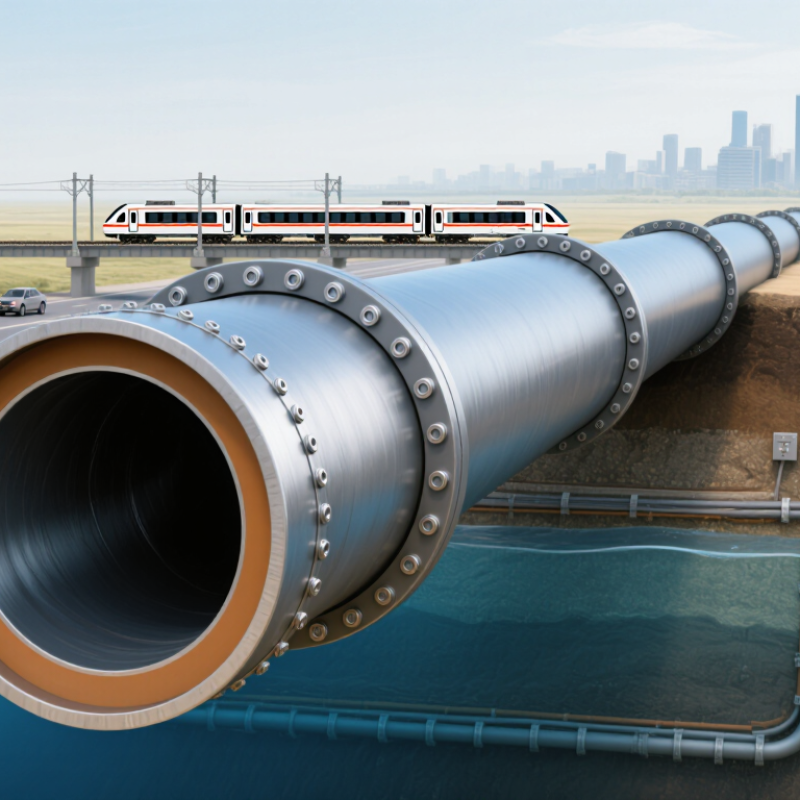
It creates a strong barrier between the working pipe and surrounding soil. In road or railway crossings, crews often push or bore the casing beneath the surface. The carrier pipe then passes through it, supported by spacers. This method reduces excavation, traffic disruption, and exposure to unstable ground.

Its uses vary by project. Water wells use casing to stabilize drilled formations and prevent wall collapse. Oil and gas wells use multiple casing strings to isolate pressure zones. Underground utility projects use casing beneath highways, railways, and rivers.

API Specification 5CT and ISO 11960 define important requirements for well casing and tubing.

For municipal planning, the U.S. Environmental Protection Agency estimated a 20-year drinking-water infrastructure need of approximately 625 billion dollars in its 2023 survey.

That figure shows why durable underground materials remain important.

Steel also offers high load resistance and predictable fabrication. The World Steel Association reported global crude steel production of about 1.89 billion tonnes in 2023. Supply is extensive, but availability does not guarantee suitability.

Wall thickness, coating, weld quality, soil chemistry, and installation loads still require engineering review. Steel casing is not always the cheapest choice. Poor corrosion planning can erase its expected service life.

That uncomfortable detail deserves attention.

How Steel Casing Pipe Supports Global Infrastructure Projects

Why Choose Steel Casing Pipe for Global Projects?

Steel casing pipe supports global infrastructure projects by protecting utilities beneath roads, railways, rivers, and airport runways. Its high strength helps resist soil pressure, traffic loads, and construction movement. Engineers can select different wall thicknesses and diameters for local ground conditions. This flexibility matters when projects cross varied climates and soil types.

During installation, the casing creates a stable passage for water lines, cables, and communication ducts. It can be installed by open excavation, boring, or jacking, depending on site restrictions. Proper alignment is critical. A small deviation may complicate utility placement and increase installation time. Field teams should verify weld quality, pipe dimensions, coatings, and end protection before placement.

Durability also depends on the surrounding environment. Moisture, salt, acidic soil, and stray electrical currents may accelerate corrosion. Engineers often assess these risks before choosing coatings or cathodic protection. In practice, inspection records support reliable decisions across multiple contractors and countries. However, steel casing is not maintenance-free. Poor bedding, damaged coating, or inadequate drainage can shorten its service life. That reality deserves more attention during early design reviews. Local standards, load calculations, and site testing should guide every specification.

Key Strengths of Steel Casing Pipe in Demanding Environments

Steel casing pipe earns attention where soil, traffic, and groundwater create serious installation risks. Its high compressive strength supports utility lines beneath roads, railways, and runways. Global Infrastructure Hub’s Global Infrastructure Outlook estimated that worldwide infrastructure needs could reach 94 trillion US dollars by 2040. It also projected a 15 trillion dollar investment gap. Durable casing helps protect these essential crossings from avoidable failures.

Demanding environments expose weak assumptions. Steel can resist impact, external pressure, and construction loads, but it is not automatically the cheapest choice. Wall thickness, weld quality, alignment, and corrosion protection determine actual service life. The NACE IMPACT study estimated global corrosion costs at 2.5 trillion dollars annually, equal to about 3.4% of global GDP. That figure is not casing-specific, yet it shows why corrosion planning cannot be an afterthought. A missed drainage detail can undo excellent pipe strength.

Tips: Confirm loading calculations before fabrication. Specify a corrosion allowance, suitable coating, and cathodic protection where conditions require them. Inspect field welds and check annular voids after installation. Keep records of soil resistivity and groundwater chemistry. Small details matter. One practical weakness remains: project teams sometimes select steel by diameter alone, then discover that buoyancy, ovalization, or jacking force changes the design. Independent review is worth the extra step.

Why Choose Steel Casing Pipe for Global Projects? — Key Strengths of Steel Casing Pipe in Demanding Environments
Performance Dimension Typical Engineering Characteristics Value in Demanding Environments Common Design or Protection Measures
Representative Data Applicable Considerations
Load-Bearing Capacity High resistance to axial compression, external pressure, bending, and installation loads Capacity depends on pipe diameter, wall thickness, steel grade, unsupported length, ovality, and boundary conditions. Suitable for road and railway crossings, utility sleeves, foundation piles, and other applications exposed to substantial mechanical loads. Wall-thickness verification, buckling checks, stiffeners where required, and engineered end supports.
Steel Strength Common structural steel yield-strength levels include approximately 235–355 MPa; oilfield casing grades may use higher specified minimum yield strengths. Actual values must be selected from the governing material specification and grade certificate. Provides a strong strength-to-size ratio while allowing designers to optimize wall thickness and overall weight. Use project-approved grades and verify yield strength, tensile strength, elongation, and impact requirements.
Dimensional Flexibility Available in a broad range of outside diameters, wall thicknesses, lengths, and connection configurations. Manufacturing limits and tolerances vary by product standard, forming method, and project specification. Supports customized designs for different soil profiles, clearance requirements, burial depths, and installation methods. Specify outside diameter, wall thickness, straightness, roundness, length tolerance, and end preparation.
Impact and Abrasion Resistance Tough steel sections can withstand handling, driving, backfilling, and localized contact better than many brittle materials. Performance is affected by steel grade, temperature, weld details, impact energy, and surrounding soil conditions. Useful in rocky ground, trenchless installations, heavy construction zones, and locations subject to construction traffic. Specify impact toughness when required, protect pipe ends, and control handling and lifting procedures.
Weldability and Fabrication Steel pipe can be cut, welded, beveled, coated, and fitted with fabricated supports or closures. Weldability depends on carbon equivalent, thickness, hydrogen control, preheating, and the approved welding procedure. Facilitates field adaptation, sectional assembly, alignment correction, and connection to steel structures. Use qualified welding procedures, approved consumables, inspection plans, and heat-input controls.
Installation Versatility Compatible with open-cut, jacking, boring, pipe-ramming, driven-pile, and other project-specific methods. Method selection depends on diameter, ground conditions, alignment, access, vibration limits, and local regulations. Enables use beneath roads, railways, waterways, and congested urban corridors with limited surface disruption. Evaluate soil investigation data, installation stresses, temporary loads, alignment tolerances, and constructability.
Corrosion Management Carbon steel requires a corrosion-control strategy when exposed to moisture, oxygen, salts, chemicals, or aggressive soils. Corrosion rate varies with soil resistivity, pH, chloride content, moisture, drainage, and electrical conditions. Long service life can be achieved when material selection and protection systems are matched to the exposure environment. External coatings Cathodic protection Corrosion allowance Sealing and drainage
Fire Performance Steel is non-combustible, although its strength and stiffness decrease at elevated temperatures. Fire resistance depends on temperature exposure, load level, restraint, section geometry, and protection system. Provides a non-combustible structural material for infrastructure where fire behavior is a design consideration. Use fire-resistant coatings, encasement, insulation, or verified fire-engineering calculations where necessary.
Quality Verification Manufacturing quality can be checked through dimensional inspection, chemical analysis, mechanical testing, and nondestructive examination. Inspection scope should follow the applicable standard and project quality plan. Traceable testing supports consistent performance across international procurement and construction programs. Review mill certificates, heat numbers, visual checks, ultrasonic or radiographic testing, and coating records.
Standards Compatibility Depending on application, specifications may reference structural pipe, piling pipe, line pipe, or oilfield casing standards. Standards are not interchangeable; the selected standard must match the pipe function and governing jurisdiction. Clear standard selection simplifies technical procurement, inspection, documentation, and regulatory review across markets. Define the required material standard, grade, manufacturing process, testing level, dimensions, and acceptance criteria before purchase.
Lifecycle Sustainability Steel is durable and widely recyclable at the end of its service life. Environmental performance also depends on production route, transport distance, coatings, maintenance, and service duration. Long service life and recoverability can support lifecycle-based infrastructure planning. Consider design life, repairability, recycled content declarations, coating longevity, and end-of-life recovery.
Project Economics Initial cost depends on steel grade, diameter, wall thickness, coating, fabrication, transport, and installation method. The lowest purchase price may not provide the lowest total installed or lifecycle cost. Standardized steel products and multiple installation options can improve procurement flexibility and construction planning. Compare total installed cost, inspection, corrosion protection, maintenance, replacement risk, and project schedule.

How to Select the Right Steel Casing Pipe for a Project

Why Choose Steel Casing Pipe for Global Projects?

How to Select the Right Steel Casing Pipe for a Project

Selecting steel casing pipe requires more than checking diameter and price. Start with the installation method, soil conditions, external loads, and service life. A pipe beneath a roadway may face heavy traffic, vibration, and uneven settlement. A coastal project may need stronger corrosion protection. These details can change the required wall thickness and steel grade.

Check the pipe’s outside diameter against the carrier pipe, spacers, and pulling equipment. Allow enough clearance for installation without creating unnecessary cost. Review yield strength, weld quality, dimensional tolerances, and inspection records. Project specifications should match recognized standards and local engineering requirements. Transport also matters. Long sections may need special handling, while remote sites may require practical lengths. Small planning errors become expensive quickly.

Tips: Ask for mill certificates, coating details, and hydrostatic or non-destructive test records. Confirm whether field welding is included. Inspect pipe ends before installation. A clean bevel saves time. It is tempting to choose the thickest wall for safety, but that may increase weight and handling risks without improving performance. We have seen better results when engineers compare loads, corrosion allowance, installation stress, and budget together. Soil reports can also be incomplete, so build a reasonable review point into the design. That step is easy to overlook.

Installation Standards, Maintenance, and Long-Term Performance

Global steel casing projects succeed when installation rules match the service environment. A casing under a highway faces different risks than one in an oilfield. Specify the duty before selecting a grade, wall thickness, and joint design. API Specification 5CT supports oil-well casing requirements, while ASTM A252 addresses structural pipe piles. ISO 3183 may apply to pipeline-grade pipe, not every casing application. That distinction matters.

Field crews should verify heat numbers, dimensions, bevels, and coating condition before lowering each section. Surveyors should record alignment and deflection, especially near crossings and shafts. Qualified welding procedures, controlled preheating, and visual inspection reduce avoidable joint defects. For buried systems, protect the annulus from water pathways and confirm grout placement. Installation records should include weld maps, inspection results, and as-built coordinates. Small omissions become expensive later.

Maintenance should follow a risk-based schedule, not a convenient calendar. Measure wall loss with ultrasonic testing at accessible points, joints, and splash zones. Check coating holidays, drainage, cathodic protection readings, and settlement after major weather events. The NACE IMPACT study estimated global corrosion costs at 2.5 trillion dollars annually, equal to 3.4% of global GDP, and reported potential savings of 15–35% through better corrosion control. Long service life is possible, but never automatic. Soil chemistry changes. Designs can be overconfident. That is worth admitting.

Open chat
Scan the code
Bendet Sales Assistant
Hi There👋,
Thank you for visiting our website, How can I help you?