






How to Choose the Best Outdoor Paint Booth from China?

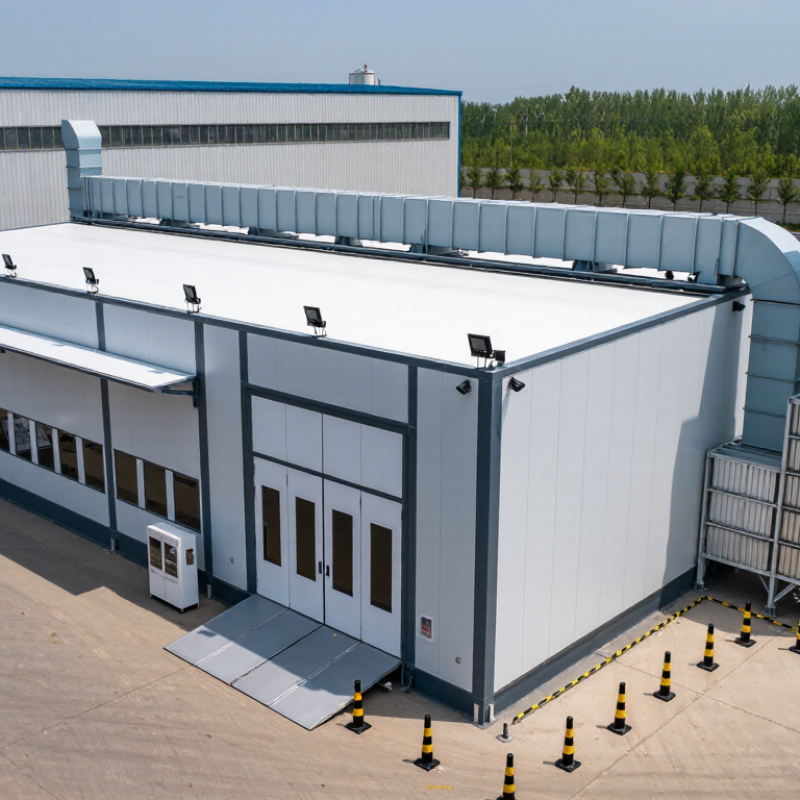
Choosing the best outdoor paint booth from China requires more than comparing prices and catalog photographs. The right decision depends on airflow performance, structural strength, filtration, weather resistance, and supplier reliability. An outdoor paint booth must protect painted surfaces from dust, moisture, and unstable conditions. It must also provide a controlled working environment for operators and nearby facilities.

A practical evaluation begins with booth dimensions, coating requirements, and daily production volume. Check the steel thickness, panel insulation, roof drainage, lighting protection, and fan capacity. Ask for airflow data, filter specifications, maintenance instructions, and detailed installation drawings. Reliable Chinese manufacturers should explain their testing methods clearly. They should also provide material certificates, quality records, reference projects, and responsive technical support. Factory videos are useful, but independent verification is better.

Do not chase the cheapest quotation.

A low price may hide weak panels, undersized fans, poor sealing, or expensive replacement filters. Freight, installation, electrical compatibility, and after-sales service can change the final cost significantly. Supplier audits, sample inspections, and staged payments can reduce avoidable risks. Still, no checklist is perfect. Even experienced buyers can overlook local weather patterns or future production changes. Reviewing the project with qualified ventilation and safety professionals remains sensible. This guide explains the main selection criteria, common purchasing mistakes, and practical questions to ask before ordering an outdoor paint booth from China.
How to Choose the Best Outdoor Paint Booth from China?

Define Booth Type and Size Using OSHA’s 100 fpm Minimum Face Velocity

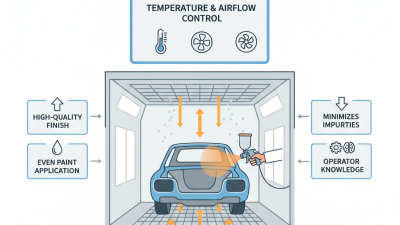
When choosing an outdoor paint booth from China, start with airflow, not appearance. OSHA 29 CFR 1910.107 specifies a minimum average face velocity of 100 feet per minute for many conventional open-face spray booths. This equals about 0.51 meters per second. The measurement applies across the usable booth opening, where overspray and vapors enter the exhaust path.

Measure the opening carefully. A booth measuring 3 meters wide by 2.5 meters high has 7.5 square meters of face area. At 0.51 meters per second, it requires roughly 3.8 cubic meters of air per second, before accounting for filter resistance, duct friction, and fan losses.

That is about 8,000 cubic feet per minute.
Size matters.

Use an anemometer during commissioning. Do not rely only on the supplier’s fan rating. NFPA 33 also emphasizes suitable ventilation, exhaust discharge, and fire protection for spray application areas. Ask the manufacturer for airflow test points, filter pressure-drop data, fan curves, and electrical classifications. A clean filter can produce acceptable readings, while a loaded filter may reduce velocity sharply. This detail is often missed.

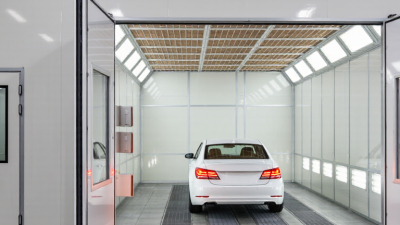
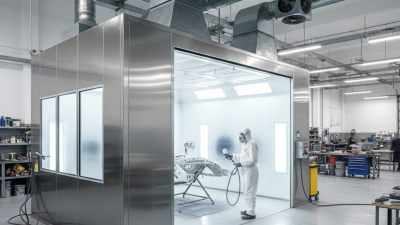
Choose an open-front booth for larger workpieces and flexible loading. Choose a crossdraft or enclosed design when better overspray control is needed. However, “enclosed” does not automatically mean safer. Real airflow measurements matter more than impressive specifications. Recheck the booth after installation, because local duct layout can change performance.
Match Airflow and Filters to ISO 16890 ePM Performance Ratings

How to Choose the Best Outdoor Paint Booth from China?

Match Airflow and Filters to ISO 16890 ePM Performance Ratings

Choosing an outdoor paint booth starts with airflow, not catalog size. For many manual spray operations, OSHA 1910.94(c) references a minimum face velocity of 100 feet per minute, or about 0.51 m/s. Measure the opening area, then calculate airflow from that real dimension. A larger door changes everything. Fan selection should also allow for dirty-filter pressure loss, which is often overlooked during purchasing.

ISO 16890 rates filters by their average removal efficiency for PM1, PM2.5, and PM10. A filter enters an ePM category only after reaching at least 50% efficiency for the tested particle range. For example, an ePM2.5 rating reflects fine-particle performance, not complete paint-overspray capture. Use a dedicated overspray arrestor before the final air filter. Otherwise, loading can rise quickly and airflow can fall below the design target.

WHO’s 2021 Air Quality Guidelines set annual PM2.5 exposure at 5 µg/m³ and the 24-hour level at 15 µg/m³. These values show why intake air quality deserves attention, especially near roads or industrial areas. However, a higher ePM rating is not automatically better. Verify pressure drop, replacement availability, sealing quality, and fan capacity in the supplier’s test documents. Ask for performance data at your actual airflow, not only nominal laboratory conditions. A small mistake here becomes expensive.

How to Choose the Best Outdoor Paint Booth from China? - Match Airflow and Filters to ISO 16890 ePM Performance Ratings

Booth Application Typical Open Face or Cross-Section Recommended Face Velocity Approximate Airflow Calculation Recommended Filtration Arrangement ISO 16890 Performance Target Selection Notes
Small manual spray booth 2.0 m wide × 2.0 m high open face Approximately 0.5 m/s
(about 100 ft/min)
Area: 4.0 m²
Airflow: 4.0 × 0.5 × 3,600 ≈ 7,200 m³/h
Stage 1: washable or disposable prefilter
Stage 2: replaceable paint-arrestor filter
Optional final particulate filter
Prefilter: ISO Coarse
Final filter: ePM10 ≥ 50% or ePM2.5 ≥ 50%, where compatible with the coating process
Use a dedicated overspray filter before any fine final filter. Do not use a fine HVAC filter as the first paint-arrestor stage.
Medium crossdraft booth 3.0 m wide × 2.5 m high open face Approximately 0.5 m/s
(about 100 ft/min)
Area: 7.5 m²
Airflow: 7.5 × 0.5 × 3,600 ≈ 13,500 m³/h
Stage 1: coarse prefilter
Stage 2: high-capacity paint-arrestor filter
Stage 3: ePM-rated final filter if required by the discharge design
Prefilter: ISO Coarse
Final filter: ePM2.5 ≥ 50% for improved fine-particle retention, subject to pressure-drop limits
Select the fan for the airflow at dirty-filter resistance, not only at clean-filter resistance.
Large vehicle or equipment booth 4.0 m wide × 3.0 m high open face Approximately 0.5 m/s
(about 100 ft/min)
Area: 12.0 m²
Airflow: 12.0 × 0.5 × 3,600 ≈ 21,600 m³/h
Multiple parallel paint-arrestor modules
Separate coarse prefilters
Optional ePM2.5 or ePM1 final filtration after overspray removal
Final filter: ePM2.5 ≥ 50% or ePM1 ≥ 50% when a higher fine-particle target is justified by the air-quality assessment Use balanced filter banks to avoid uneven airflow, dead zones, and excessive velocity through individual filter panels.
Down-draft or semi-down-draft booth Floor or ceiling supply area determined by booth design Use the engineered booth design value; commonly lower uniform air velocities are used across the working zone Airflow = effective filter or opening area × design velocity × 3,600 Supply-side prefilter and fine filter
Exhaust-side paint-arrestor filter
Final ePM-rated stage when required
Supply air: ePM10 ≥ 50% or ePM2.5 ≥ 50%
Exhaust air: paint-arrestor stage plus the specified final ePM class
Do not size the exhaust fan from the booth volume alone. Confirm the required air balance, filter loading, and make-up air capacity.
Water-based coating booth Based on the selected booth geometry Typically designed around the booth process and applicable local requirements; verify measured face velocity during commissioning Q = A × V × 3,600
where Q is m³/h, A is m², and V is m/s
Coarse prefilter plus moisture-resistant paint-arrestor media
Final ePM2.5 or ePM1 stage only if pressure drop and moisture resistance are suitable
ePM2.5 ≥ 50% is a practical fine-particle benchmark; ePM1 ≥ 50% provides a higher fine-particle target Confirm compatibility with water, surfactants, resin particles, and the expected wet loading before purchase.
Solvent-based or high-solids coating booth Based on the selected booth geometry Verify against the coating process, worker exposure controls, and applicable fire and ventilation requirements Use the greater of the process airflow requirement and the required face-velocity calculation High-capacity paint-arrestor stage first
Optional secondary particulate stage
Do not assume an ISO ePM filter removes solvent vapors
Particulate target: ePM10, ePM2.5, or ePM1 according to the exhaust assessment
Vapors require a separately designed gas-phase control system
ISO 16890 classifies particulate filtration performance; it does not rate solvent-vapor adsorption or explosion protection.
Important selection checks: ISO 16890 ePM classes describe the average removal efficiency of filters for defined particulate-size fractions. A filter is generally assigned an ePM1, ePM2.5, or ePM10 class only when it achieves at least 50% average efficiency for that fraction. ISO 16890 ratings do not replace paint-overspray capture requirements, local exhaust-ventilation rules, fire-safety requirements, or hazardous-area assessments. Always request the filter pressure-drop curve, test report, filter dimensions, replacement interval, and the manufacturer’s recommended final resistance before selecting the fan and filter bank.

Verify Explosion Protection Under NFPA 33 and ATEX 2014/34/EU

How to Choose the Best Outdoor Paint Booth from China?

Explosion protection should guide every specification. NFPA 33, 2024 edition, addresses spray application using flammable or combustible materials. It requires controlled ventilation, suitable electrical equipment, grounding, and interlocked safety systems. Outdoor installation does not remove the hazard. Wind can disturb airflow and carry vapor toward ignition sources.

ATEX 2014/34/EU applies to equipment intended for potentially explosive atmospheres. Ask the supplier for the EU Declaration of Conformity, equipment category, temperature class, and applicable test standards. Do not accept “ATEX-ready” as proof. Match each fan, motor, sensor, and control component to the zone classification. A certificate alone can mislead when the complete booth assembly has not been assessed.

Tips: Request a zone drawing, airflow calculations, explosion-relief details, and wiring diagrams before payment. Compare these documents with NFPA 33 and the local authority’s requirements. OSHA’s Census of Fatal Occupational Injuries recorded 5,283 workplace deaths in the United States during 2023. That broad figure is not booth-specific, but it shows why undocumented safety claims deserve scrutiny. Also check whether the booth maintains airflow during rain, cold weather, and filter loading. This point is often missed. A careful buyer should involve a qualified engineer or the authority having jurisdiction before installation.

Outdoor Paint Booth Explosion-Protection Classification Check

Compare the hazardous-location classification levels that should be reviewed when verifying a paint booth against NFPA 33 and ATEX 2014/34/EU.

ATEX identifies gas or vapor hazards through Zones 0, 1, and 2, and combustible-dust hazards through Zones 20, 21, and 22. NFPA 33 commonly uses Class I, Division 1 and 2 for flammable liquids, gases, or vapors, and Class II, Division 1 and 2 for combustible dust. These counts show classification levels only; they are not compliance scores. Final verification should include ventilation, electrical equipment, bonding and grounding, fire protection, documentation, and conformity assessment.

Check China Supplier Quality Against ISO 9001 and GB 14444 Requirements

How to Choose the Best Outdoor Paint Booth from China?

A reliable supplier should demonstrate more than attractive photos and low pricing. Ask for a valid ISO 9001 certificate, then check its certification scope, audit date, factory address, and covered production activities. ISO 9001 confirms a quality management system, not automatic booth safety. Request controlled drawings, material specifications, inspection records, and a clear process for handling defects.

GB 14444 should receive equal attention. Ask the supplier to explain how the booth design addresses ventilation, exhaust, fire prevention, grounding, electrical protection, and safe painting operations. Check airflow calculations, fan data, filter dimensions, emergency stops, and interlock tests. These details should match the supplied equipment, not a generic document. Ask for factory acceptance testing with measurable results.

Walk through the production area by video or in person. Examine weld consistency, panel sealing, cable routing, and filter access. Request serial-number traceability for motors, control components, and safety devices. In practice, a polished certificate can hide weak daily controls. That is easy to miss. An incomplete translation may also create confusion between Chinese requirements and your local rules. Have an independent engineer review the technical file before payment. I would also request one sample inspection report, although suppliers may resist sharing it. That resistance deserves attention, but it is not proof of poor quality. Ask better questions.

Compare Total Cost Through Energy Use, Filter Life, and Maintenance Data

Choosing an outdoor paint booth from China requires more than comparing the purchase price. I review energy demand, filter replacement, and maintenance access as one cost model. A booth using a 30 kW fan may consume 240 kWh during an eight-hour shift. At your local electricity rate, that figure quickly changes the investment decision. Ask for measured airflow, motor efficiency, and pressure data, not only catalog estimates.

Filter life matters just as much. In a dusty workshop, a pre-filter may need replacement every two to four weeks. A clogged filter increases resistance and forces the fan to work harder. Keep a simple log of spray hours, pressure readings, and filter changes. It reveals real operating costs. I once underestimated filter waste because the supplier quoted clean-room conditions. That assumption was wrong.

Maintenance details often decide uptime. Check whether technicians can reach belts, lamps, control panels, and exhaust ducts without dismantling the booth. Request prices for common filters, motors, seals, and sensors before ordering. Confirm ventilation, electrical, fire-control, and noise requirements with qualified local professionals. Factory test records are useful, but independent verification is better. Leave space for imperfect data. Actual coating volume, weather, and worker habits can change the results. A spreadsheet comparing five-year energy, consumables, labor, and downtime costs gives a clearer picture than the lowest quotation.

Open chat
Scan the code
Bendet Sales Assistant
Hi There👋,
Thank you for visiting our website, How can I help you?