







How to Source Spray Booth Filters and Supplies in 2026?
Sourcing spray booth filters and supply products in 2026 requires more than comparing unit prices. A filter may look inexpensive, yet create costly pressure loss, overspray buildup, or premature replacement. The better decision begins with booth dimensions, coating type, airflow requirements, and production volume.
“Buy for stable airflow, not just the lowest invoice,” says Mark Ellison, an industrial finishing equipment consultant with more than two decades of plant experience. His advice reflects a practical truth. A filter that loads quickly can make a clean booth feel like a blocked hallway. Fans work harder. Finishes become inconsistent. Energy bills quietly rise.
Reliable buyers should request technical data, including filtration efficiency, pressure-drop readings, filter-media composition, and recommended replacement intervals. They should also confirm whether the supplier maintains consistent dimensions between batches. Small size changes can leave gaps around the filter rack. That detail is easy to miss.
Supplier reliability matters just as much. Check delivery records, batch traceability, packaging quality, and technical support. Ask whether the company can provide samples before a larger purchase. Photographing the existing filter bank can prevent ordering mistakes.
There is no perfect sourcing formula. Booth conditions vary. A filter successful in an automotive plant may perform poorly in a wood-finishing workshop. My own caution is simple: never trust a specification sheet without testing the product in your actual airflow conditions. Measure before changing. Review after installation. Then adjust the purchasing plan when the evidence disagrees.
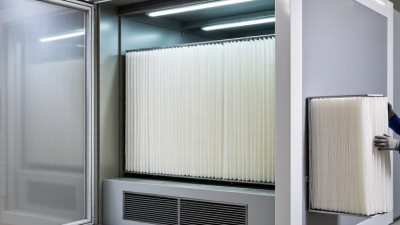
Before sourcing spray booth filters and supplies, define the booth’s actual working conditions. Record the booth length, width, height, airflow direction, and operating hours. Measure the filter frame, not the old filter alone. Small errors can create bypass gaps.
Identify the coating process and material load. Water-based coatings, solvent-based coatings, powders, and high-solid finishes produce different particles. Note paint viscosity, overspray volume, drying temperature, and cleaning frequency. These details guide the filter’s capture stage, media type, and pressure-drop range. A filter that looks efficient may restrict airflow too quickly. That can affect finish quality and worker visibility.
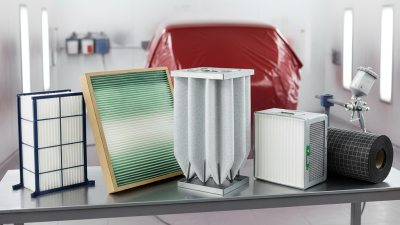
Build a written supply list. Include intake filters, exhaust filters, prefilters, holding frames, gaskets, clips, pressure gauges, and disposal bags. Specify dimensions, filtration ratings, airflow capacity, temperature limits, and replacement intervals. Keep spare filters in a dry, sealed area. Moisture can damage media before installation. Ask suppliers for test data, material safety information, and compatibility details. Check whether the product suits your booth configuration and local workplace requirements.
I once treated replacement frequency as a fixed schedule. That was too simple. Actual usage changed with color changes, production volume, and cleaning habits. Track pressure readings weekly, then compare them with finish defects and airflow observations. A handwritten log beside the booth often reveals patterns that memory misses. Review the specification after one month, because the first estimate may be wrong.
| Requirement Category | Recommended Supply or Filter | Typical Specification to Define | Typical Purchasing Range | Key Sourcing Checks | Replacement Trigger |
|---|---|---|---|---|---|
| Paint Overspray Capture | Exhaust paint-arrestor filter media | Fiberglass or synthetic media; progressive-density construction; roll or pad format; confirmed airflow direction | Common roll widths: approximately 0.75–2.0 m; thickness commonly 25–100 mm | Verify media thickness, retaining-grid compatibility, flame-resistance documentation, and disposal requirements | Visible loading, reduced booth airflow, coating defects, or elevated differential pressure |
| Supply-Air Protection | Intake panel or bag prefilter | ISO 16890 classification, usually ISO Coarse or ePM10; galvanized or polymer frame; correct face dimensions | Typical panel depths: 25–100 mm; common nominal sizes include 24 × 24 in and 20 × 25 in | Match the filter rack, gasket location, airflow rate, and pressure-drop limit | Pressure drop reaches the equipment limit or the filter becomes visibly contaminated |
| Final Exhaust Filtration | High-efficiency final filter, where required by booth design or regulation | Filter efficiency, airflow capacity, media area, frame sealing, and approved operating temperature | Usually specified by the original equipment design rather than selected by size alone | Request a performance test report, pressure-drop curve, gasket details, and installation orientation | Differential pressure, leakage, damaged media, or failure to meet required exhaust performance |
| Odor and VOC Control | Activated-carbon filter module, only when compatible with the process | Carbon type, carbon mass, bed depth, target contaminant, contact time, and humidity limits | Carbon modules are commonly custom-sized to airflow and contaminant concentration | Confirm that the media is suitable for the coating chemistry; carbon does not replace required particulate filtration | Odor breakthrough, measured contaminant breakthrough, moisture damage, or excessive pressure drop |
| Airflow Monitoring | Differential-pressure gauge or digital manometer | Measurement range suited to the filter bank; pressure ports upstream and downstream; readable scale or display | Common low-pressure ranges: 0–500 Pa or 0–1,000 Pa | Check calibration, tubing condition, zero setting, and compatibility with the booth control system | Instrument fails calibration, tubing leaks, or readings become unstable |
| Filter Retention | Filter frames, holding grids, clips, and sealing gaskets | Exact rack dimensions, corrosion-resistant material, compression method, and service access | Normally selected to match the existing booth housing and filter thickness | Measure the clear opening, not only the old filter label; confirm no bypass gaps after installation | Bent frame, damaged clips, hardened gasket, corrosion, or visible air bypass |
| Cleaning and Preparation | Low-lint wipes, booth-safe cleaner, and approved surface-preparation supplies | Low residue, compatibility with coated surfaces, low flammability where required, and sealed packaging | Pack sizes commonly range from 100 to 500 wipes; cleaner quantity depends on booth area | Review the safety data sheet, chemical compatibility, storage temperature, and disposal instructions | Supplies become contaminated, dry out, exceed shelf life, or leave residue |
| Booth Surface Protection | Peelable booth coating, masking film, paper, and floor protection | Adhesion to booth surfaces, drying time, removability, overspray resistance, and non-shedding performance | Film and paper are typically purchased in rolls; dimensions should cover doors, walls, lights, and floor areas | Test a small area first and confirm the material will not obstruct airflow or emergency equipment | Surface becomes loaded, damaged, difficult to clean, or affects lighting and airflow |
| Safety and Handling | Disposable gloves, protective eyewear, respirator consumables, and filter-handling bags | Material compatibility, assigned protection level, size range, shelf life, and disposal method | Maintain at least one planned maintenance cycle of critical personal protective equipment | Follow the coating safety data sheet and applicable workplace respiratory-protection program | Damage, contamination, expired components, or change in coating formulation |
| Inventory and Logistics | Standardized spare-filter and consumables inventory | Filter part description, actual dimensions, minimum stock, lead time, storage limits, and lot traceability | Keep a defined reserve based on consumption history and supplier lead time; avoid uncontrolled overstocking | Use a reorder point, inspect incoming packaging, and store filters clean, dry, and flat when required | Stock reaches the reorder point, packaging is damaged, or material exceeds its storage life |
Note: Actual filter selection must be verified against the spray booth design, airflow requirements, coating chemistry, applicable workplace regulations, and the equipment maintenance manual.