2026 Top Types of Paint Booth Filters for Global Buyers

As manufacturers upgrade finishing lines in 2026, paint booth filters remain a practical purchasing concern. Filter choice affects overspray control, airflow stability, worker protection, and maintenance costs. Global buyers need more than a product label or attractive price.

This guide examines common filter types used in spray booths, including fiberglass media, polyester filters, paper intake filters, pocket filters, exhaust arrestor pads, and high-efficiency options. Each type performs differently under solvent-based coatings, waterborne paints, powder applications, and heavy production schedules. Real-world results depend on booth design, paint volume, airflow speed, humidity, and replacement timing.

Small details matter. A filter may appear clean while airflow is already restricted. An unsuitable filter can increase fan energy and leave visible residue near exhaust areas. In field inspections, uneven loading often reveals poor installation or neglected pre-filtration. That evidence deserves attention.

There is no universal “best” filter. A reliable selection should match the booth’s airflow requirements, coating process, fire-safety design, and local environmental expectations. Buyers should request technical data, pressure-drop values, capture efficiency, temperature limits, and material traceability from qualified suppliers. Independent testing is useful, but it does not replace proper booth maintenance.

This overview also considers supplier credibility, replacement availability, and total operating cost across different regions. Some recommendations may change after closer review. That is normal. Paint booth filters should be evaluated as part of a complete ventilation system, not as isolated consumables.

2026 Top Types of Paint Booth Filters for Global Buyers

What Paint Booth Filters Are and Why They Matter in 2026

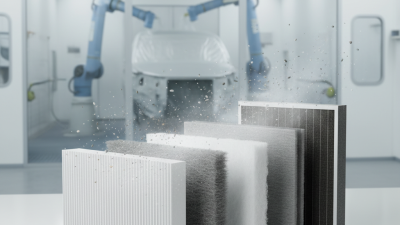
Paint booth filters are engineered layers that capture airborne paint droplets, dust, and fine particles before they spread through the booth. They are not simply pieces of fabric. Their fiber structure, thickness, airflow resistance, and capture efficiency affect daily booth performance. It matters.

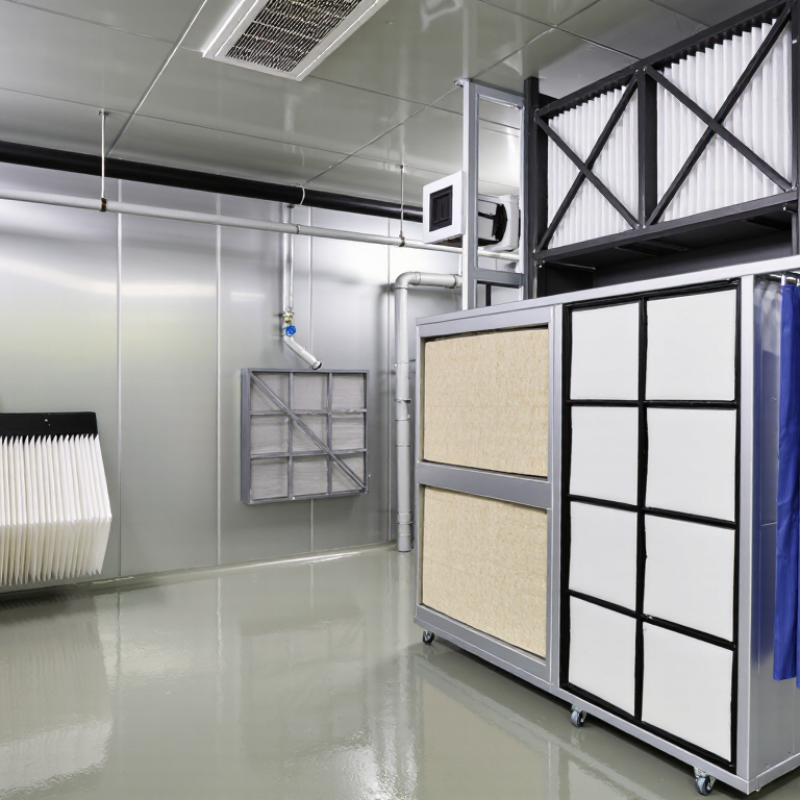
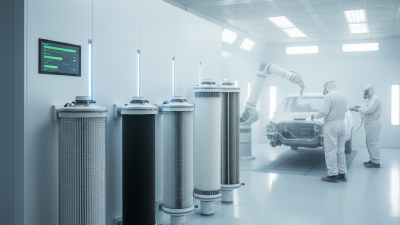
Common types include intake filters, exhaust panels, pocket filters, and rigid cartridge filters. Intake filters help keep dust away from wet coatings and freshly finished surfaces. Exhaust filters collect overspray before air reaches ductwork or downstream treatment equipment. Pocket filters provide a larger filtering area, while cartridge designs can support high-volume operations when correctly matched to airflow.

Filter selection matters more in 2026 because coating processes are becoming more controlled and energy-aware. A filter with excessive resistance can reduce airflow, increase fan demand, and create uneven spray patterns. A weak filter may allow overspray to pass, leaving residue inside ducts or on nearby equipment. In practical maintenance work, pressure readings and visual inspections should be checked together. One measurement is rarely enough. A filter can look clean while its fibers are already loaded internally.

Reliable teams record replacement dates, pressure changes, booth usage, and coating type. They also verify fit around frames and seals. Small gaps can undermine an otherwise suitable filter. Low-waste designs and recyclable filter materials are receiving more attention, but disposal requirements vary by region and paint chemistry. The cheaper option is not always the more responsible one. Sometimes, replacement timing still depends on judgment rather than a perfect number.

Key Types of Paint Booth Filters and Their Filtration Methods

2026 Top Types of Paint Booth Filters for Global Buyers

Paint booth filters control overspray, protect equipment, and support cleaner working air. Their design should match the booth layout, coating material, and airflow demand. Intake filters commonly use pleated synthetic media to trap dust before it reaches wet paint. Ceiling filters provide finer final-stage filtration and help maintain an even spray pattern.

Exhaust filters capture paint particles before air leaves the booth. Fiberglass pads, polyester pocket filters, and high-efficiency panel filters work through impaction and interception. Larger droplets strike the fibers, while smaller particles follow airflow and become trapped. Some systems add activated carbon media for odor or vapor control, but this requires careful selection and regular monitoring. Carbon is not a replacement for particle filtration.

Tips: Check pressure drop weekly. Replace filters when airflow weakens, surfaces become uneven, or gauges reach the supplier’s limit. Keep spare filters sealed and dry. Confirm frame dimensions before ordering; a small gap can reduce performance. Local ventilation rules also differ, so buyers should verify requirements with a qualified professional.

Filter selection is not always perfect. A finer filter may improve capture but increase fan load and energy use. A cheaper pad may lower initial cost, yet require more frequent replacement. One practical inspection lesson is simple: look at the filter surface, not only the pressure gauge. Uneven loading often reveals poor sealing, incorrect airflow, or a rushed installation.

2026 Top Types of Paint Booth Filters for Global Buyers - Key Types of Paint Booth Filters and Their Filtration Methods
Filter Type Primary Filtration Method Typical Filter Media Main Contaminants Captured Typical Efficiency or Rating Common Paint Booth Position Best-Fit Applications Key Advantages Important Limitations
Intake Panel Prefilter Depth filtration and inertial impaction. Larger particles are trapped as air passes through a progressively layered media structure. Synthetic nonwoven fiber, fiberglass, or pleated synthetic media. Dust, lint, insects, coarse shop debris, and larger airborne particles. Coarse to ISO Coarse
Often specified by dust-arrestance or coarse-particle performance rather than final-particle efficiency.
Fresh-air intake or air-handling-unit prefilter section. General-purpose spray booths, preparation rooms, and systems requiring protection of downstream filters. Low initial cost, simple replacement, and reduced loading of finer filters. Not designed for fine overspray capture or high-efficiency final filtration.
Pleated Intake Filter Extended-surface filtration using interception, inertial impaction, and limited diffusion. Pleated synthetic fiber or fiberglass media supported by a rigid frame. Fine dust and particles that can affect paint finish quality. MERV 8–13 commonly selected
Actual performance depends on media construction, airflow, and testing standard.
Supply-air intake, ceiling supply units, or air-handling equipment. Automotive refinishing, industrial finishing, furniture coating, and clean paint application areas. More media area than a flat panel, good dust-holding capacity, and comparatively stable airflow. Higher pressure drop than coarse prefilters; must be replaced before excessive loading restricts airflow.
Ceiling Diffusion Filter Depth loading and surface interception across a large, low-velocity filtration area. Progressively structured polyester or fiberglass media, commonly supplied in rolls or panels. Fine airborne dust and particles entering the clean air zone. Fine supply-air filtration
Performance varies by product; it is normally selected for uniform airflow and finish protection.
Full or partial ceiling plenum of a downdraft or semi-downdraft booth. High-quality coating, automotive refinishing, aircraft components, and large industrial workpieces. Helps distribute clean air uniformly and reduces visible dust defects on painted surfaces. Requires correct sealing and regular replacement; a loaded ceiling filter can reduce booth airflow.
Paint Arrestor Roll Media Deep-bed impaction and interception. Wet or semi-wet paint particles are retained within the depth of the media. Layered fiberglass or synthetic polyester media, often supplied as continuous roll stock. Liquid paint overspray, varnish, lacquer, adhesive, and coating solids. Overspray arrestor
Usually evaluated by paint-holding capacity, pressure drop, and particle capture rather than a single general-purpose efficiency value.
Exhaust plenum, exhaust wall, or rear filter bank of dry-filter booths. Solvent- or water-based coating operations with moderate to high overspray loading. Flexible sizing, high paint-holding capacity, and convenient cut-to-length replacement. Requires adequate media depth and timely changeout; saturated media can increase fire risk and exhaust resistance.
Pleated Paint Overspray Filter Increased surface-area filtration combining interception and impaction in folded media. Pleated fiberglass, polyester, or engineered synthetic media in a rigid frame. Paint droplets and overspray particles from spray application. Medium-to-high overspray capture
Capacity and efficiency vary with coating type, booth velocity, and media design.
Exhaust filter bank or side/rear exhaust wall. Industrial spray booths where space is limited and a compact filter footprint is useful. Greater media area than a flat panel and often longer service life at comparable face dimensions. More expensive than basic flat media; folds can become blocked quickly during heavy or poorly atomized spraying.
Cardboard or Paper Paint Arrestor Directional airflow, turbulent separation, and impaction inside a folded or labyrinth-style structure. Perforated or folded kraft paper and cardboard modules. Coarse liquid paint droplets and overspray solids. Coarse overspray separation
Designed primarily for paint loading and service capacity, not fine-particle polishing.
Exhaust wall or dry-filter booth exhaust chamber. Low-to-moderate production coating, woodworking, metal finishing, and general spray work. Lightweight, easy to install, and capable of holding substantial overspray when correctly sized. Can be damaged by moisture or high airflow; not suitable for fine particulate control or vapor removal.
Bag or Pocket Filter Depth filtration through multiple fabric pockets, with inertial impaction and interception. Synthetic microfiber or fiberglass pocket media mounted in a header frame. Fine dust, booth intake particles, and particulate contaminants upstream of final filters. MERV 8–15 commonly available
Exact classification depends on the tested filter construction.
Air-handling unit, makeup-air system, or supply-air filtration section. Large industrial booths, centralized ventilation systems, and applications needing higher dust-holding capacity. Large effective media area, good dust-holding capacity, and longer service life than many flat filters. Not normally used as the sole exhaust filter for wet paint overspray; requires correct airflow direction and support.
HEPA Filter Diffusion, interception, impaction, and particle capture at the most penetrating particle size. Fine glass-fiber media sealed in a rigid frame with a gasket or gel seal. Very fine particles, including submicron dust and aerosolized particulate matter. Typically at least 99.97% at 0.3 µm
This value applies to filters tested and classified as HEPA under the relevant standard.
Final supply-air stage, cleanroom-style ceiling, or specialized exhaust filtration system. Critical-finish coating, controlled environments, sensitive components, and applications requiring very clean air. High particle removal performance and improved protection against fine particulate contamination. High pressure drop, higher purchase cost, and rapid loading if prefiltration is inadequate; it does not remove solvent vapors.
Activated Carbon Adsorption Filter Adsorption of certain gaseous molecules onto the internal surface of activated carbon. Granular activated carbon, carbon-impregnated panels, or carbon honeycomb modules. Selected solvent vapors and odor-causing gases, depending on carbon type and contaminant concentration. Gas-phase treatment
Performance depends on carbon mass, contact time, humidity, temperature, and the specific solvent.
Exhaust treatment system, after particulate prefiltration, or dedicated vapor-control unit. Odor-sensitive locations and processes requiring supplementary control of certain volatile organic compounds. Targets gaseous contaminants that ordinary fibrous filters cannot capture effectively. Does not replace an overspray filter; adsorption capacity is finite, breakthrough monitoring is necessary, and it is not suitable for every solvent.
Coalescing Mist Filter Fine liquid droplets merge on fibrous media and drain under gravity or through a drainage path. Fine glass fiber, synthetic fiber, or specialized coalescing mesh. Liquid paint mist, oil mist, and fine aerosol droplets. Fine aerosol separation
Specified by droplet-size performance, pressure drop, and drainage behavior.
Exhaust duct, exhaust treatment module, or final mist-control stage. Processes producing fine atomized coatings or liquid aerosols where downstream duct and fan protection is required. Can reduce fine mist carryover and help protect exhaust equipment and surrounding areas. Must be compatible with the coating chemistry; loading, drainage, and combustible-material requirements need careful assessment.
Water-Wash Booth Scrubbing Stage Liquid scrubbing, impingement, and water turbulence capture paint particles before the exhaust stream leaves the booth. Water curtain, baffle system, spray manifold, and sludge-collection arrangement; some systems also use secondary dry filters. Paint overspray and particulate matter suspended in the exhaust air. Wet collection system
Performance depends on water flow, air velocity, baffle design, and maintenance condition.
Wet booth rear wall, water curtain, or integrated exhaust chamber. High-production industrial coating where continuous overspray collection is beneficial. Can handle substantial overspray loads and reduce the frequency of replacing dry exhaust media. Requires water management, sludge removal, corrosion control, wastewater handling, and regular system maintenance.

How to Match Paint Booth Filters to Coating and Booth Requirements

Choosing paint booth filters starts with the coating, not the catalog title. Solventborne enamel, waterborne paint, powder, and high-solids coatings release different overspray loads. EPA AP-42, Chapter 4.2, reports typical spray transfer efficiency around 25–40% for conventional air atomization, 40–65% for HVLP, and 60–90% for electrostatic application. Lower transfer efficiency usually demands stronger overspray capture.

For wet paint, use layered arrestor media with enough depth for sticky particles. A coarse intake filter protects the booth, while a final exhaust stage reduces carryover. Do not select by efficiency alone. ASHRAE Standard 52.2 rates MERV 13 at 50% to below 75% efficiency for 0.3–1 micrometer particles, but that rating does not measure paint loading or solvent resistance. That distinction matters. Check face velocity, pressure drop, media compatibility, and disposal conditions. EPA’s Surface Coating Control Techniques Guidelines also emphasize capture efficiency and operating conditions, not filter grade alone.

Practical audits often find filters changed too late. The booth looks clean. Airflow is already failing. A pressure gauge, coating usage log, and scheduled inspection provide better evidence than appearance. For powder booths, conductive and reclaim-compatible media may be necessary. For clear coats, finer final filtration can protect exhaust quality, but it may load quickly. Match the filter to the coating chemistry, spray method, booth airflow, and maintenance capacity. No universal filter exists. That is the part buyers often underestimate.

Global Standards for Evaluating Paint Booth Filter Performance

2026 Top Types of Paint Booth Filters for Global Buyers
Global Standards for Evaluating Paint Booth Filter Performance

Paint booth filter performance should be judged by evidence, not appearance. Buyers should request efficiency data, pressure-drop results, and dust-holding capacity from recognized test laboratories. ISO 16890 may help evaluate general ventilation filters, while ISO 29463 applies to high-efficiency filters. These standards do not replace local paint booth requirements.

Check the filter’s initial and final pressure drop. A filter that captures particles well but restricts airflow can disturb spray patterns and increase fan energy use. Airflow velocity should remain stable across the booth face. Measurement with a calibrated anemometer is practical. Small details matter. Inspectors should also review particle-size performance, media construction, fire behavior, and sealing quality.

Field conditions can change the result. Humidity, overspray load, coating chemistry, and poor filter installation may reduce service life. Some buyers focus too heavily on efficiency percentages. That can be misleading. A lower-rated prefilter may protect a finer second stage and reduce total operating costs. Carbon media requires separate evidence for vapor adsorption, not only particle filtration.

Reliable evaluation combines factory reports, independent testing, and operating records from similar booths. Keep replacement dates, pressure readings, and visible loading photographs. The process is not perfect. Test methods differ between regions, and published values may not match real production. Buyers should compare equivalent conditions and confirm compliance with applicable national safety and environmental rules.

How to Compare Costs, Maintenance, and Sustainability Before Buying

For global buyers, filter cost should mean total operating cost, not purchase price. Fiberglass pads are inexpensive and easy to cut, but they may load quickly during heavy spraying. Pleated paper or polyester filters often provide more surface area and longer service intervals. Activated-carbon filters address certain vapors, while HEPA filters suit fine-particle control, not every paint-booth application. Check the safety data sheet and the booth’s airflow design first. The wrong filter can increase fan energy and reduce capture performance.

Maintenance data matters. Record pressure drop, replacement hours, labor time, and disposal weight for at least three months. A filter that costs 40% more may still reduce shutdowns and labor. I would not trust catalogue pressure-drop claims alone. Field readings are messier, but more useful. The U.S. Environmental Protection Agency’s AP-42 guidance shows that coating emissions depend heavily on application and control conditions, so filter selection should match the process. Energy use also deserves attention. The International Energy Agency reported that buildings consumed about 30% of global final energy in 2022, highlighting the cost of inefficient air movement. Sustainability is not only recycled content. The World Bank projects global waste could reach 3.4 billion tonnes annually by 2050. Choose longer-life media, recyclable components, and verified disposal routes. Then compare cost per operating hour, not cost per box.

2026 Top Types of Paint Booth Filters for Global Buyers

Typical midpoint comparison of purchase cost, annual replacement cost, and service interval. Values are representative industry ranges for dry paint booths and vary with airflow, coating load, operating hours, and local disposal requirements.

Fiberglass roll media usually has the lowest entry cost but requires frequent replacement and creates more recurring waste. Synthetic pleated and pocket filters generally provide longer service life. Cartridge filters typically have the highest purchase cost, but their longer replacement interval can reduce maintenance interruptions. Sustainability should be evaluated together with filter life, material weight, recycled content, and local disposal or recycling options.

Open chat
Scan the code
Bendet Sales Assistant
Hi There👋,
Thank you for visiting our website, How can I help you?