

China Top 10 Car Paint Booth Manufacturers

China’s car paint booth industry serves collision repair shops, vehicle plants, and industrial coating facilities. Buyers compare more than price. Airflow, temperature control, filtration, energy use, and service access affect daily results. Small details matter. A poorly placed filter or uneven airflow can leave dust on a freshly coated panel.

Grand View Research’s Automotive Refinish Coatings Market report estimated the global market at about USD 9.1 billion in 2023, with projected growth through 2030. That figure describes coatings, not paint booths, so it should not be treated as a booth-market estimate. Still, it signals sustained activity in vehicle refinishing. The U.S. Environmental Protection Agency’s materials on spray operations also highlight the importance of controlling overspray and emissions. Requirements vary by location, and equipment specifications alone do not prove compliance.

This guide profiles ten Chinese manufacturers of car paint booth systems. It compares product range, booth configuration, airflow design, filtration, customization, and after-sales support. These are practical factors, not a universal ranking. A factory’s brochure may show a clean booth and impressive airflow figures, but buyers should verify test methods, installation references, and spare-parts availability. Some information can be difficult to compare. That deserves scrutiny. Use the shortlist as a starting point, then match each supplier’s documented capabilities to your facility, workload, and local requirements.
China Top 10 Car Paint Booth Manufacturers

Understanding Car Paint Booths and Their Role in Automotive Refinishing

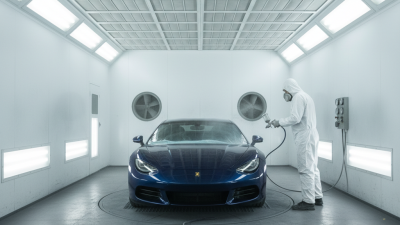
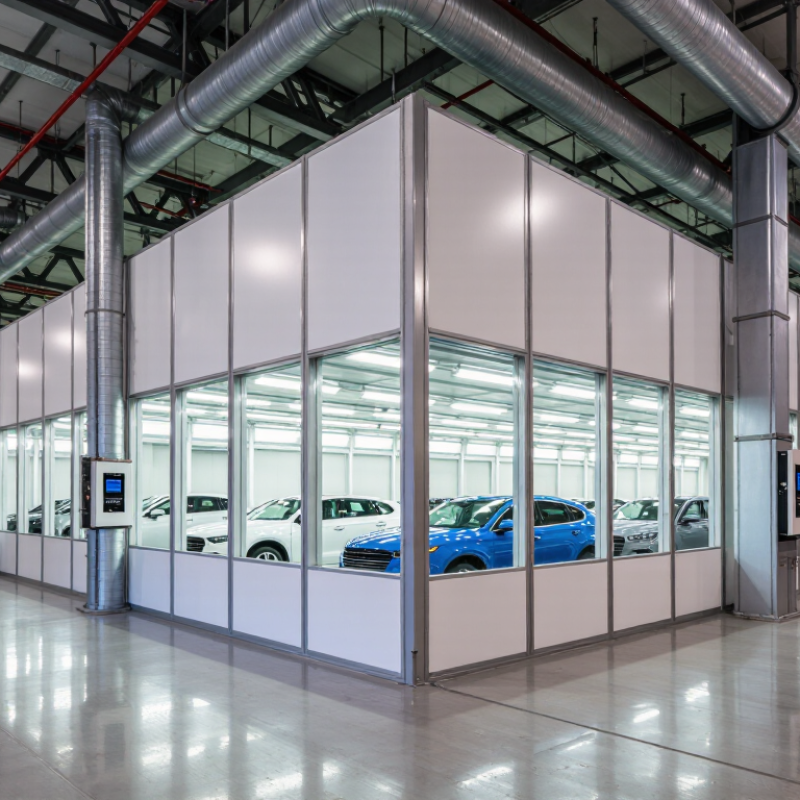
A car paint booth is a controlled workspace, not merely a room with fans. It manages airflow, filtration, temperature, and overspray while technicians apply coatings. Clean incoming air helps keep dust from settling on wet panels. Exhaust systems carry airborne paint particles away from the work area. Airflow matters. If filters clog or doors remain open, finish quality can suffer, even when the painter’s technique is sound.

The market context is substantial: Grand View Research estimated the global automotive refinish coatings market at about US$9.3 billion in 2023. That figure concerns coatings, not booth sales, but it signals the scale of repair and refinishing work that booths support. The U.S. Environmental Protection Agency’s 2017 National Emissions Inventory tracks volatile organic compound emissions across source categories, including solvent-related activity. This makes capture and ventilation practical concerns, not cosmetic extras. A well-maintained booth can help control overspray and reduce airborne dust, but it cannot fix rushed surface preparation. That part is easy to overlook. Technicians should check filter condition, airflow, and booth cleanliness routinely, then record problems rather than trust a quick glance. Good equipment still needs careful use.
Understanding Car Paint Booth Airflow

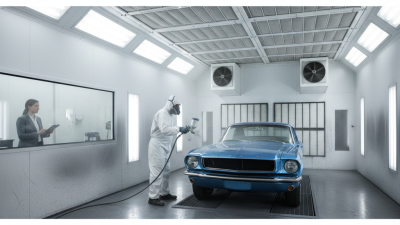
OSHA minimum airflow velocities vary with spray booth cross-sectional area.

OSHA specifies a minimum air velocity of 100 linear feet per minute (about 0.50 m/s) for booths with a cross-sectional area of 100 square feet or less, and 50 linear feet per minute (about 0.25 m/s) for larger booths. These requirements do not apply to booths equipped with a closed system. Source: OSHA 29 CFR 1910.107(b)(5)(i).

How China’s Car Paint Booth Manufacturing Industry Is Organized

China’s car paint booth industry is organized around several layers, not a single type of manufacturer. Large production plants need complete coating lines, while repair shops often need compact booths or upgrades. The China Association of Automobile Manufacturers reported 31.28 million vehicles produced in 2024. That scale supports demand across factory and service markets. The IEA’s Global EV Outlook 2024 also reported that China accounted for more than 60% of global electric car sales in 2023. This shift raises the value of flexible production capacity, though it does not directly measure booth demand.

At the supply end, firms may make booth panels, doors, filters, lighting, or air-handling equipment. Some assemble full booths; others integrate ventilation, temperature control, and installation. Distributors and service contractors connect these manufacturers with vehicle plants, body shops, and regional buyers. Capacity matters. A booth can look adequate on paper but struggle when airflow, heat, or maintenance needs change. This map is tidy on paper; real supplier boundaries often blur. Buyers should check airflow records, filter access, installation scope, and after-sales response—not just listed dimensions. One detail is easy to miss: a low purchase price may leave costly site work outside the quote.

Criteria for Evaluating Chinese Car Paint Booth Manufacturers

When evaluating Chinese car paint booth manufacturers, request measured airflow uniformity, temperature stability, and filter pressure-drop data—not brochure values alone. Ask for test results from a booth at operating speed, with doors closed and extraction running. Inspect the plenum, floor grates, seals, and filter access; these details affect dust control and maintenance. Small details matter. The IEA’s Energy Efficiency 2023 report estimates that industry used about 37% of global final energy in 2022. For a booth, compare fan power and heating demand across a complete spray-and-bake cycle, not just motor ratings. Paper specifications can still flatter.

Check how suppliers document VOC management, thermal performance, and routine servicing. The European Commission Joint Research Centre’s 2020 Surface Treatment Using Organic Solvents reference document discusses emissions and process controls across coating operations, offering useful context beyond a single filter-efficiency claim. Request commissioning records, calibration methods, and independent test reports where available. Also compare warranty exclusions, replacement-filter lead times, and technician response plans. A low purchase price may not reflect downtime or energy costs. I would verify these claims in person when possible; factory demonstrations rarely reproduce a busy workshop’s dust, humidity, and changing workloads. Ask for references from installations with similar vehicle sizes and daily production volumes.

Profiles of 10 Leading Car Paint Booth Manufacturers in China

China Top 10 Car Paint Booth Manufacturers

China’s car paint booth suppliers serve a large, evolving vehicle industry. The China Association of Automobile Manufacturers reported 31.28 million vehicles produced in 2024, up 3.7% year over year. That scale creates varied needs, from compact repair bays to high-throughput factory lines. The ten profiles below compare manufacturer capabilities, not a verified ranking. No single booth design fits every workshop.

Profile 1: Full-line manufacturers supply spray booths, preparation bays, and installation support. Profile 2: Energy-focused makers emphasize heat recovery and insulated panels. Profile 3: Modular specialists adapt booth dimensions to limited floor space. Profile 4: Automation-oriented suppliers design systems for repeatable production cycles. Profile 5: Custom fabricators handle oversized vehicle bodies. Their drawings matter; so does a real site survey.

Profile 6: Compact-system makers target independent repair shops. Profile 7: Filtration specialists focus on airflow balance and accessible filter changes. Profile 8: Curing-system suppliers prioritize stable temperature control. Profile 9: Retrofit providers upgrade existing booths, though old ductwork can limit results. Profile 10: Export-focused manufacturers offer installation guidance and spare-parts planning. Ask each supplier for airflow test records, energy-use assumptions, and service response times. A glossy brochure is not proof of consistent spray conditions; even experienced buyers can miss that detail.

China Top 10 Car Paint Booth Manufacturers - Profiles of 10 Leading Car Paint Booth Manufacturers in China

The profiles below describe common car paint booth product configurations available from manufacturers in China. They are anonymous, non-ranked market archetypes—not verified specifications for individual companies. Dimensions and performance figures are indicative ranges; actual designs depend on the vehicle, site, local regulations, and project requirements.

Profile Typical Product Focus Booth Configuration Typical Internal Size (L × W × H) Airflow Arrangement Typical Air Speed Heating and Bake Range Common Application
Profile 1 Standard automotive refinishing booths Enclosed, heated spray-and-bake booth 6.9–7.2 × 3.9–4.0 × 2.65–2.75 m Downdraft or semi-downdraft About 0.20–0.30 m/s, depending on layout Typically gas or diesel heating; bake settings commonly around 60–80°C Passenger-car body repair and repainting
Profile 2 Economy and compact workshop booths Compact enclosed booth with combined spray-and-bake operation 6.0–6.8 × 3.5–3.9 × 2.5–2.7 m Crossdraft or semi-downdraft Usually designed around 0.20–0.30 m/s in the working zone Electric, gas, or diesel options; bake temperatures vary by coating process Independent repair shops and facilities with limited floor space
Profile 3 Heavy-vehicle paint booths Extended-length booth with higher-capacity ventilation 12–18 × 5–6 × 4.5–5.5 m Downdraft, semi-downdraft, or engineered side-draft Project-specific; airflow is sized for booth cross-section and exhaust design Typically indirect-fired or other project-specified heating; temperature set to coating requirements Buses, trucks, trailers, and commercial-vehicle bodywork
Profile 4 Industrial and large-component spray booths Custom-built booth sized to workpiece and process Often 8–20+ m long; width and height are project-specific Side-draft, crossdraft, or engineered downdraft Specified by ventilation calculations and process requirements Heating and curing systems selected for the coating and component Large vehicle parts, machinery, and industrial components
Profile 5 Modular booth systems Panel-based construction with configurable equipment sections Commonly configured for passenger vehicles; dimensions vary by module plan Crossdraft, semi-downdraft, or downdraft options Typically designed to meet the selected airflow layout and applicable requirements Heating packages selected to suit site utilities and production needs Workshops needing configurable installation or future expansion
Profile 6 Energy-conscious booth packages Heated booth with optional heat-recovery or energy-control features Passenger-car sizes commonly fall near 6.5–7.2 × 3.8–4.0 × 2.6–2.8 m Usually downdraft or semi-downdraft Set by booth design; actual performance depends on filters and system balance May include staged heating, programmable controls, or heat recovery Facilities seeking to manage fuel or electricity use
Profile 7 Electric-heated paint booths Booth using electric heating equipment instead of a fuel-fired burner Typically configured to the vehicle and available electrical capacity Crossdraft, semi-downdraft, or downdraft Determined by the ventilation design, not the heating source Electric bake settings are process-dependent; power demand must be engineered for the site Sites where electric heating is preferred or fuel supply is constrained
Profile 8 Prep-station and booth combinations Separate preparation area paired with a spray-and-bake booth Booth dimensions are vehicle-specific; prep area is planned separately Booth airflow varies; prep stations commonly use filtered supply and extraction Specified separately for the booth and preparation area Heated booth; prep station may be unheated or separately conditioned Repair operations that separate sanding and preparation from painting
Profile 9 Refinish booths with upgraded filtration Multi-stage filtered supply and exhaust arrangement Commonly passenger-car format; final dimensions depend on vehicle clearance Typically downdraft or semi-downdraft Maintained through appropriate fan sizing and filter replacement Heating and curing settings depend on the paint system used Shops prioritizing overspray capture and a clean finishing environment
Profile 10 Custom turnkey booth projects Engineered package covering booth, ventilation, heating, controls, and installation planning Project-specific, based on vehicle envelope and building constraints Selected by process, room layout, and exhaust-discharge design Calculated for the selected booth dimensions and operating conditions Heating source and bake cycle specified for the customer’s process New-build facilities, fleet centers, and customized workshop projects

Note: Airflow velocity, booth size, temperature, and equipment selection should be confirmed against the supplier’s technical drawings, applicable safety and environmental rules, site utilities, and the coating manufacturer’s process data. Values shown are general reference ranges, not product guarantees.

Comparing Product Features, Certifications, and After-Sales Support

China Top 10 Car Paint Booth Manufacturers

Comparing Product Features, Certifications, and After-Sales Support

When comparing car paint booth manufacturers, look beyond booth size and quoted price. Check airflow design, filter layout, temperature controls, lighting, and door seals. These details affect how evenly air moves and how reliably the booth maintains working conditions. Ask for measured airflow data and a clear description of filter replacement intervals.

Small details matter. A bright inspection light is useful, but it cannot compensate for uneven airflow or poorly sealed doors.

Certifications can help assess quality systems, but check the certificate’s issuer, validity, and covered products. A factory-level quality certificate may not verify every booth model or installation. Requirements also differ by destination and project, so confirm applicable standards with a qualified local professional.

After-sales support deserves equal attention. Request written warranty terms, spare-parts lead times, remote troubleshooting arrangements, and technician availability. A fast reply is helpful; access to the correct replacement part is better. Be cautious when comparing promises without service records. Even a well-designed booth can face delays if support is vague.

Tips: Ask for a sample maintenance schedule and a parts list before ordering. Compare response times in writing. If a specification is unclear, ask again; it is better to pause than assume.

Open chat
Scan the code
Bendet Sales Assistant
Hi There👋,
Thank you for visiting our website, How can I help you?