


Top Used Spray Booths for Sale Worldwide

Across the global market, a used spray booth for sale can offer a practical route to expanded finishing capacity without the cost of new equipment. Listings may range from compact booths for small parts to full-size units designed for vehicle work. The right choice depends on more than the asking price. Measure the available floor space, check door clearance, and confirm that the booth’s power requirements suit the intended site.

Details matter. Ask for the model number, manufacture date, service records, and clear photographs of the interior, fan assembly, and control panel. Inspect the filter frames for bent metal and look for overspray buildup around seams. These clues can reveal wear, but they cannot confirm performance. Request operating records where available, and arrange an inspection by a qualified technician before committing. A clean exterior proves little.

This guide compares used spray booths offered in different regions, with attention to condition, configuration, and buyer questions. Shipping distance, installation needs, replacement-filter availability, and local technical requirements can change the real cost substantially. A low listed price may not stay low. Sellers may also describe equipment differently, so compare dimensions and specifications rather than relying on labels alone. Some information will remain uncertain until the booth is inspected in person. Treat that uncertainty as part of the decision, not a detail to ignore.
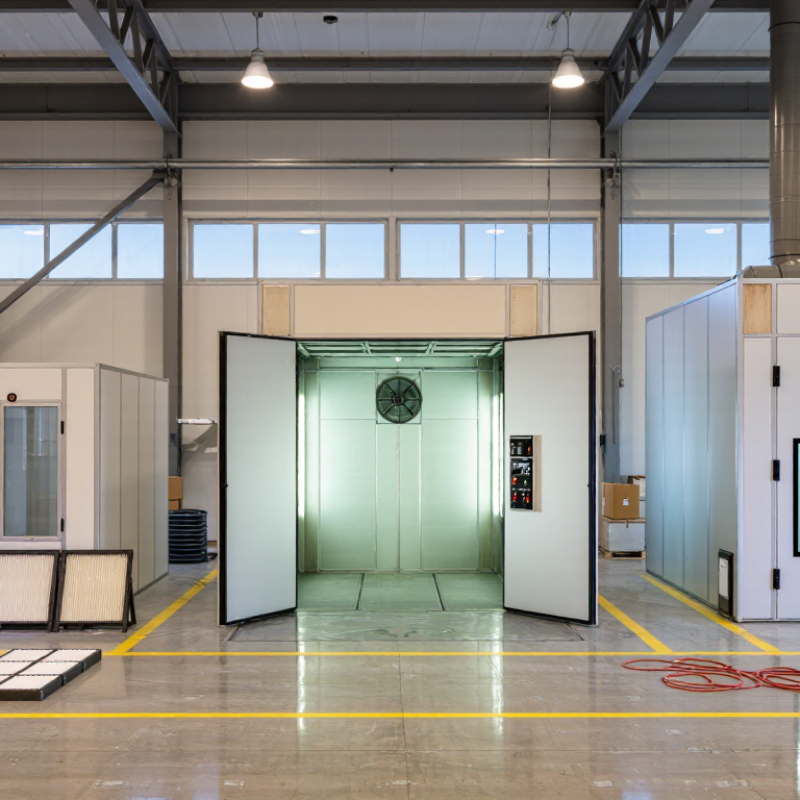
Top Used Spray Booths for Sale Worldwide

Used Spray Booth Types: Crossdraft, Downdraft, and Semi-Downdraft

Used spray booths for sale worldwide vary widely in airflow design, condition, and installation needs. Crossdraft booths pull air across the work area, often from filtered doors toward exhaust filters. Their straightforward layout can suit smaller workshops or tighter budgets. However, airflow may carry overspray along a vehicle’s sides. Inspect filter condition, fan operation, door seals, and moisture marks before buying. Airflow matters.

Downdraft booths move filtered air from the ceiling toward floor-level exhaust channels. This vertical flow can help control overspray around the vehicle. Results depend on a sound floor pit and effective extraction. Used downdraft models may require substantial groundwork, so verify pit dimensions, floor capacity, and site compatibility. Ask for recent airflow readings. Missing records are not unusual, but they make a professional inspection more important.

Semi-downdraft booths combine ceiling air supply with rear or side extraction, creating a diagonal airflow path. They can be a practical middle ground when a full downdraft pit is unsuitable. Performance still depends on duct layout, booth size, and filter condition. Check lighting, controls, filter frames, and replacement-part availability. Old paperwork can be incomplete. Before arranging shipping or installation, have a qualified technician assess the booth; photographs rarely show hidden corrosion or weak extraction.
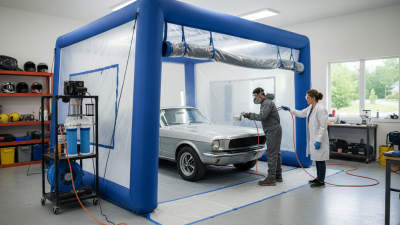
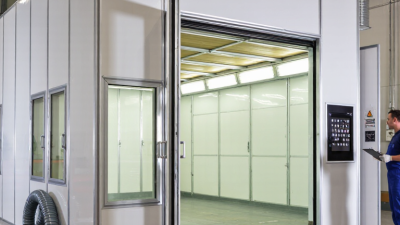
Core Specs: Airflow, Filter Area, Heating, and Booth Dimensions

When comparing used spray booths for sale worldwide, start with the work the booth must handle. A booth sized for small panels may feel cramped around a full vehicle. Check the internal working dimensions, not just the outside measurements. Allow space for doors, lights, and safe movement around the object. Measure your tallest item in its normal setup. Measure twice.

Airflow figures need context. Ask whether the stated volume was measured at the booth or taken from a fan specification. Request details about fan condition, ducting, and filter pressure drop. A large filter area can help reduce resistance and extend service intervals, but only if the filters fit properly and air passes evenly. Uneven flow can leave overspray settling on surfaces. That is easy to overlook in a sales listing.

Heating capacity should match the booth volume, climate, and intended coating process. Confirm the heat source, controls, and operating records, then compare them with your facility’s requirements. Do not assume a working heater is efficient simply because it starts. I would also inspect seals, panels, wiring, and filter frames in person when possible. Photographs can hide worn edges. Keep some budget for repairs; used equipment rarely arrives perfectly adjusted. Before purchase, verify that the booth can be installed and operated safely at its destination.

Top Used Spray Booth Configurations: Core Specifications

Representative planning figures for common booth sizes—not live listings or specifications for particular models. Actual airflow, filter area, heating capacity, and dimensions vary by design.

Compare airflow (m³/h), filter area (m²), and heating capacity (kW) across booth sizes. Dimensions are shown in each category label; separate axes are used because the measurements have different units and scales.

OSHA 1910.107: Keep Flammable Vapors Below 25% of the LEL

When comparing used spray booths for sale worldwide, treat vapor control as a measurable safety condition, not a feature claimed in an advertisement. OSHA 1910.107(b)(5)(i) limits flammable vapor concentration in exhaust air to 25% of the lower flammable limit (LEL). That threshold is not a target for routine operation; ventilation and monitoring should keep conditions safely below it. NFPA 33, Standard for Spray Application Using Flammable or Combustible Materials, is another technical reference for assessing spray-application systems.

Ask for ventilation test records, alarm and interlock checks, and maintenance history. During inspection, look closely at the exhaust fan, duct joints, filter loading, and airflow indicators. A blocked filter can change airflow; a polished booth exterior proves little. OSHA’s rule also ties spray operations to exhaust ventilation, making functional controls important—not just included components. Keep it practical.

For a used unit, verify that any gas-monitoring equipment is suitable, calibrated, and positioned for the actual booth layout. Confirm the fan starts before spraying and that loss of airflow triggers the intended response. These checks do not replace a qualified site assessment. Requirements differ by location, and an older booth may need upgrades before installation. Imperfect records are a warning, not proof of failure. Ask for measured airflow and documented test dates, then have a competent ventilation professional review the setup against applicable requirements and NFPA 33 guidance.

EPA 6H Shops: Verify the 98% Overspray-Filter Capture Benchmark

When evaluating used spray booths, EPA 6H shops should verify the 98% overspray-filter capture benchmark with records, not appearance. Ask for filter test data that identifies the media and its capture efficiency. Check that the documentation matches the filters currently installed. A clean-looking booth proves very little. Look for gaps around filter frames, damaged seals, and overspray buildup near the exhaust plenum. These details can undermine performance, even when the booth shell appears sound.

Inspect the airflow path under operating conditions. Note the pressure gauge reading, fan condition, and any uneven pull across the filter bank. Request maintenance logs and replacement dates; missing paperwork deserves a closer look. It may be tempting to treat a seller’s “98%” claim as settled, but test conditions and filter configuration matter. Verify that the booth’s setup aligns with the requirements applicable to your shop, and have a qualified technician assess uncertain readings. Used equipment can be a good fit. Still, the filter system may need work before it is ready. A brief inspection is not enough.

Top Used Spray Booths for Sale Worldwide - EPA 6H Shops: Verify the 98% Overspray-Filter Capture Benchmark

Compare common used-booth configurations by airflow design, typical application, and key inspection points. The 98% benchmark below refers to filter capture efficiency where applicable; it is not a guarantee of total booth or facility emissions performance.

Used Booth Configuration Airflow and Overspray Control Typical Application EPA 6H Filter Check Used-Unit Inspection Priorities Information to Confirm Before Purchase
Crossdraft dry-filter booth Air generally moves horizontally from the intake side toward exhaust filters at the opposite end. Common choice for general refinishing and coating work where the shop layout supports end-to-end airflow. For applicable 6H operations using filters, obtain documentation showing at least 98% overspray capture efficiency for the filter system. Inspect filter frames and seals, exhaust plenum condition, fan operation, corrosion, and evidence of air bypass around filters. Booth dimensions, required clearances, fan and motor details, filter specifications, electrical requirements, and included controls.
Semi-downdraft dry-filter booth Air is introduced from above and directed toward exhaust points positioned partly along the lower or rear section of the booth. Refinishing and coating jobs where a full downdraft pit is impractical and the existing building layout suits the airflow design. Check the documentation for the exact filter arrangement supplied with the booth. Do not assume a replacement filter has the same capture rating. Check ceiling intake distribution, exhaust transitions, filter access, fan condition, and whether the installation has been altered. Airflow design, exhaust location, duct route, building-height requirements, and the availability of compatible replacement filters.
Side-downdraft dry-filter booth Air is supplied from above and drawn toward exhaust filters located along one or both side areas. Shops seeking a downdraft-style airflow path without relying on a conventional floor pit. Verify that the documented 98% capture efficiency applies to the installed filter type and configuration. Inspect side exhaust plenums, filter fit, floor-level obstructions, fan performance, and signs of uneven airflow or leakage. Exhaust arrangement, available floor space, booth opening size, filter dimensions, and installation or relocation requirements.
Downdraft dry-filter booth Air typically moves from ceiling supply toward floor-level exhaust, using a pit or a designed floor-level exhaust arrangement. Production coating and refinishing work where the building can accommodate the booth’s air and exhaust layout. Request filter-maker documentation for the exact filters installed or specified. Confirm that the booth has not been fitted with unverified substitutes. Check pit or floor-exhaust condition, grating, structural support, drainage where applicable, ceiling filters, and exhaust balance. Foundation or pit requirements, floor loading, ceiling height, exhaust ducting, utilities, and dismantling and transport costs.
Water-wash spray booth Uses a water-based overspray collection system rather than relying solely on dry overspray filters. Coating operations designed around water-wash collection and the shop’s water-treatment and waste-management arrangements. Do not treat a dry-filter 98% rating as the applicable water-wash performance evidence. Confirm the booth configuration and regulatory requirements with the relevant authority. Inspect pumps, water circulation, collection surfaces, sludge removal access, corrosion, and the condition of water-treatment components. Water supply and discharge needs, waste handling, pump capacity, maintenance records, and local permitting requirements.
Open-face or partial-enclosure spray area Air is drawn toward a filtered exhaust wall or other collection point; the work area is not fully enclosed like many booth designs. Limited applications where the equipment design, work process, and applicable rules permit this type of arrangement. Do not assume that a filtered exhaust wall alone meets 6H requirements. Verify whether the operation and enclosure qualify under the applicable rule. Check the full work-area configuration, exhaust path, filter installation, airflow direction, and whether the unit has been modified. Regulatory applicability, permitted processes, enclosure requirements, ventilation design, and written acceptance from the responsible authority when needed.

Regulatory and purchasing note: EPA 6H refers to 40 CFR Part 63, Subpart HHHHHH, which applies to certain area-source paint stripping and surface-coating operations, subject to the rule’s scope and exemptions. For an applicable operation using dry filters, verify manufacturer documentation for the required capture-efficiency benchmark and confirm that the documented filter matches the installed system. Before buying any used booth, independently verify dimensions, condition, ventilation design, permits, and local requirements; the configurations above are comparison categories, not specific equipment listings.

Global Buying Checks: Condition, Compliance, Freight, and Installation

A used spray booth can look clean in photographs and still hide costly wear. Ask for its age, operating history, and maintenance records. Inspect fan blades, motor bearings, filter frames, seals, and control panels for damage or corrosion. Request a live video showing the booth running, including airflow and control functions. Photos can mislead. If possible, arrange an independent inspection before payment.

Compliance depends on the destination and the booth’s intended use. Confirm local requirements for ventilation, electrical supply, fire protection, emissions, and worker safety with qualified local professionals. Ask the seller for equipment specifications and available test records, but do not treat old documents as proof of current suitability. A missing drawing may not be a deal-breaker, though it can slow approval and installation.

Freight costs depend on dimensions, weight, dismantling, packing, and the route. Get a written estimate that identifies who handles loading, crating, customs paperwork, and unloading. Check that doorways and site access can accommodate the largest sections. Before purchase, confirm power voltage, floor capacity, exhaust routing, and required clearances with your installer. Include commissioning time and replacement filters in the budget. Some gaps only appear on site. That is an avoidable, but common, surprise.

Open chat
Scan the code
Bendet Sales Assistant
Hi There👋,
Thank you for visiting our website, How can I help you?