





A conveyor machine can change the rhythm of a workplace. Instead of carrying cartons by hand, staff can guide them along a steady path, past packing benches, scanners, or loading points. The benefit is practical: smoother material flow, less repetitive handling, and more predictable production. Yet a conveyor is not automatically the right answer. A poorly matched system can create bottlenecks, consume floor space, or make maintenance harder than expected.
Conveyor systems specialist R. Todd Swinderman has emphasized a useful principle: “Design the system around the material and the operation, not capacity alone.” This is an editorial paraphrase, not a verified direct quotation. It captures an important planning question: what must move, how often, and under what conditions? A light package line has different needs from a dusty bulk-material route. Belt width, speed, incline, controls, guarding, and access for cleaning all affect daily performance.
The details matter. A few centimeters of clearance can determine whether operators can reach a jam safely. A speed setting can affect how neatly products arrive at the next station. Good planning begins with observing the real workflow, including its awkward pauses. That takes time. It can also reveal assumptions that need rethinking. This guide explores why businesses choose a conveyor machine, what benefits to expect, and which trade-offs deserve careful review before purchase.
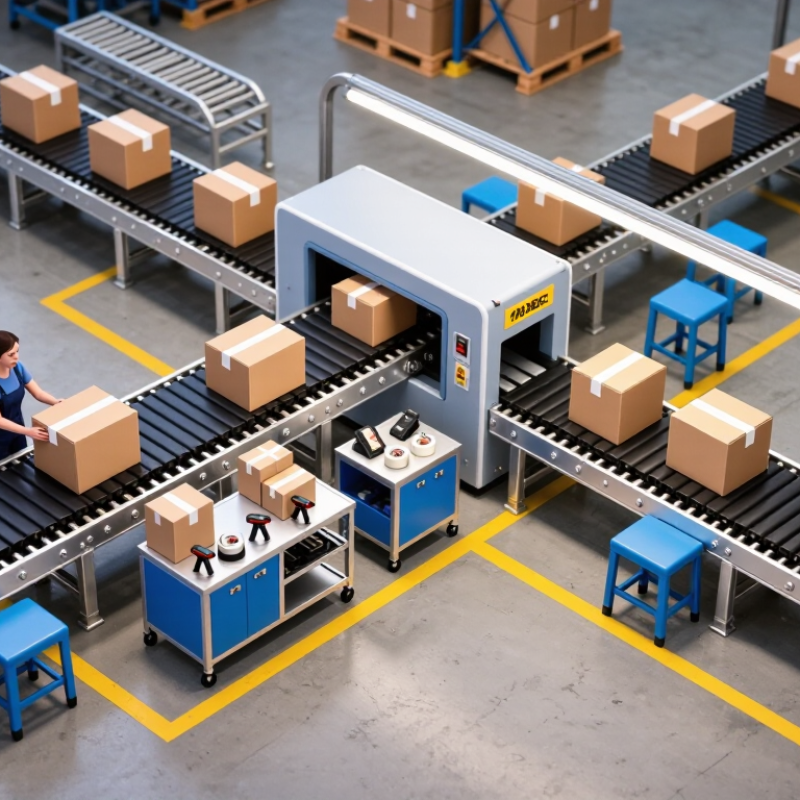
A conveyor machine is a mechanical system that moves materials from one point to another. It commonly uses a motor, drive pulley, belt, rollers, and a control system. The motor turns the drive pulley, while friction moves the belt and its load. Sensors can detect product position, speed, or unexpected gaps.
The belt keeps moving. Small details matter.
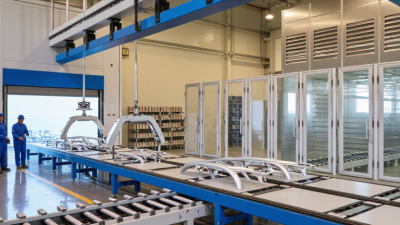
In a warehouse, workers place cartons on the moving surface. The machine carries them toward packing, inspection, or storage areas. Roller conveyors suit firm boxes, while belt conveyors handle smaller or uneven items more steadily. Adjustable speed helps reduce product damage and unnecessary waiting. In practical operations, correct belt tension often affects performance more than people expect.
Choosing a conveyor machine can reduce repeated lifting and create a clearer material flow. It may also support consistent production records because movement becomes easier to measure. However, the machine is not a perfect answer. Poor layout, overloaded belts, or weak maintenance can create delays instead of preventing them. Operators should check emergency stops, guards, alignment, and load limits regularly. Dust around rollers can increase friction, while a loose belt may drift sideways.
A careful site assessment should examine product weight, dimensions, travel distance, floor space, and cleaning needs. Controls must be understandable to trained workers. Reliable installation matters as much as the machine itself. That point is easy to underestimate.
Conveyor machines support business operations by creating a steady, visible flow of materials. Workers can move cartons from receiving to storage, picking, and dispatch with fewer manual transfers. The system also reduces walking across busy floors. That matters during peak hours. According to Grand View Research, the global conveyor system market was valued at about USD 11.67 billion in 2022. The report projects a 5.1% compound annual growth rate from 2023 to 2030.
A conveyor can improve consistency, but only when its layout matches the workflow. Speed controls help teams handle changing order volumes. Sensors can detect gaps, jams, and misplaced items before delays spread. MHI’s 2024 Annual Industry Report found that 55% of supply chain leaders planned to increase investment in technology and innovation. This trend reflects a practical need for measurable productivity, not automation for its own sake. A well-designed line can also support safer material handling by limiting repetitive lifting and carrying.
The details decide the result. A poorly positioned transfer point creates noise, congestion, and extra labor. Maintenance access is often underestimated. So is operator training. Conveyor machines require inspections, cleaning, guarding, and emergency procedures. They are not magic fixes. Businesses should measure travel distance, cycle time, stoppages, and energy use before selecting equipment. Small pilot tests can reveal uncomfortable truths. Sometimes a simpler layout performs better.
Conveyor machines offer steady, predictable movement between receiving, packing, and dispatch. Instead of carrying cartons across a busy floor, workers can guide them along a fixed route, reducing repeated handling and awkward reaches. A 2024 MHI Annual Industry Report found that 55% of surveyed supply chain leaders planned to increase investment in technology and innovation. That figure does not prove a conveyor will suit every operation, but it shows why businesses are examining material-flow systems. A roller line may work well for sturdy boxes; lightweight pouches may need a belt with side guides.
The practical benefits are easier-to-see workflow, more consistent throughput, and less time spent walking products between stations. For example, a short conveyor linking a label printer to a packing bench can keep parcels moving without adding another carrying step. Still, installation alone will not fix poor layout or uneven staffing. A line can simply move a bottleneck downstream. Measure parcel sizes, peak-hour volume, cleaning needs, and available floor space before choosing equipment. Leave room for maintenance access, too.
Tips: Test the route with real loads during a busy shift. Watch where items bunch up, and ask operators what slows them down. Keep one manual fallback; systems can stop. A small trial may reveal a flaw that a polished layout drawing misses.
Why Choose a Conveyor Machine for Your Business?
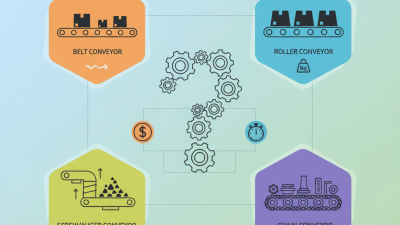
Choosing the right conveyor starts with the product, not the machine catalogue. Belt conveyors suit packaged goods, food containers, and lightweight items that need steady movement. They offer a smooth surface and can handle inclines with cleats. Roller conveyors work well for cartons, bins, and rigid packages. Gravity models can reduce energy use, but they need accurate floor leveling.
Small details matter.
For washing areas or damp production rooms, plastic modular belt conveyors are often practical. Their open design can improve drainage and cleaning access. Businesses moving heavy loads may prefer chain-driven rollers, especially when boxes must stop, accumulate, or transfer between workstations. Screw conveyors can move powders or granular materials through enclosed routes, although they require careful sizing to prevent blockages and uneven flow.
The operating environment should guide the final choice. Measure product weight, dimensions, daily volume, line speed, and available space. Include maintenance access. A conveyor that fits perfectly on paper may become difficult to clean or repair. I have seen teams focus on maximum speed and overlook loading height, causing repeated handling problems. That choice needs reconsideration. Safety guards, emergency stops, noise levels, and operator reach also deserve professional review. A short test run with real products often reveals more than a specification sheet.
| Conveyor Type | Best Suited Business Needs | Typical Materials or Products | Typical Speed Range | Main Advantages | Important Considerations | Common Applications |
|---|---|---|---|---|---|---|
| Belt Conveyor | General material handling, continuous transport, and production-line movement | Cartons, parcels, packaged goods, bags, boxes, and bulk materials | Approximately 0.3–3.0 m/s | Versatile, relatively quiet, suitable for long distances, and available with inclines or declines | Belts require routine tracking, tensioning, cleaning, and replacement | Warehousing, packaging, food processing, manufacturing, and distribution |
| Roller Conveyor | Moving rigid, flat-bottomed loads and supporting accumulation zones | Pallets, totes, cartons, containers, and rigid packages | Approximately 0.1–1.5 m/s | Durable, modular, easy to integrate, and suitable for gravity or powered operation | Small or irregular products may become trapped between rollers | Distribution centers, assembly lines, pallet handling, and shipping areas |
| Chain Conveyor | Heavy-duty transport and controlled movement of large or demanding loads | Pallets, metal components, crates, fixtures, and industrial containers | Approximately 0.1–0.8 m/s | High load capacity, positive drive, and good resistance to harsh operating conditions | Usually noisier than belt systems and requires chain lubrication and maintenance | Automotive production, heavy manufacturing, pallet transfer, and industrial processing |
| Screw Conveyor | Enclosed movement, metering, mixing, or elevating of bulk materials | Powders, granules, grains, cement, sludge, and food ingredients | Approximately 0.1–1.0 m/s | Compact design, enclosed conveying path, and effective control of flow rate | Can cause product degradation or increased power use with abrasive materials and long runs | Agriculture, chemical processing, wastewater treatment, food production, and construction materials |
| Slat Conveyor | Handling rigid products that need stable positioning or precise indexing | Bottles, cans, jars, trays, and assembled products | Approximately 0.1–1.0 m/s | Stable product support, accurate positioning, and easy integration with workstations | More components and higher cleaning requirements than a simple belt conveyor | Beverage filling, packaging, assembly, labeling, and inspection lines |
| Flexible Conveyor | Temporary, changing, or space-constrained material handling operations | Cartons, parcels, sacks, totes, and light packages | Approximately 0.2–0.6 m/s | Portable, extendable, easy to reposition, and useful for loading or unloading | Generally has lower capacity and less precise control than fixed conveyor systems | Parcel handling, truck loading, order fulfillment, and temporary warehouse operations |
| Cleated Conveyor | Inclined or declined transport where products must be prevented from sliding | Boxes, bags, bulk materials, food products, and loose components | Approximately 0.2–2.0 m/s | Improves elevation changes, product separation, and controlled discharge | Cleats may limit product orientation and require inspection for wear or damage | Packaging, agricultural processing, recycling, food handling, and parts transfer |
| Overhead Conveyor | Saving floor space and transporting products through multiple processing stages | Garments, painted parts, components, tools, and suspended loads | Approximately 0.1–1.0 m/s | Uses vertical space, keeps floor areas clear, and supports routing around obstacles | Requires suitable building structure, careful guarding, and controlled load suspension | Garment production, paint finishing, automotive assembly, and parts storage |
Note: Speed ranges are typical design ranges for general industrial systems. Actual performance depends on conveyor length, load characteristics, incline, belt or chain design, motor selection, safety requirements, and operating conditions.
Choosing a conveyor machine starts with the product, not the catalog. Product size, weight, surface, and fragility determine the right belt, rollers, and speed. A warm metal part may need heat-resistant components. A loose powder may require enclosed transfer points. Small errors matter.
Measure the available floor space carefully. Record loading height, discharge height, turning points, and nearby work areas. Operators need safe access for cleaning and maintenance. A narrow passage can slow production and create avoidable risks. Noise matters too. In one production review, a fast conveyor looked efficient but caused frequent product jams near a sharp transfer. A slower line with better alignment performed more reliably.
Businesses should also examine capacity, energy use, controls, guarding, and emergency stops. Ask how easily workers can replace wear parts and inspect moving sections. Maintenance records often reveal more than sales figures. Check the supplier’s technical documentation, testing process, installation support, and response time. A machine that fits today may limit tomorrow’s expansion, so modular sections can be valuable. However, added flexibility may increase cost and cleaning time. This trade-off deserves honest calculations, not optimistic guesses. Run a practical trial with real products, real containers, and normal operating staff. Watch what happens during start-up, stoppage, and changeover. Perfect conditions hide weaknesses.
Hein Minnie
Cell nr: +27 (0) 82 564 6501
Email: sale@thecirclemachine.com
Hein Minnie Jnr
Cell nr: +27 (0) 84 284 7234
Email: sale@thecirclemachine.com
Address:
10 Apsey Street,
Heidelberg,
Gauteng,
1441
Bendet Engineering Services (PTY) LTD was established in 1987. Our team of engineers and draughtsman are ready to deliver a complete turnkey solution, from the design phase to commissioning. A dedicated team that consists of electrical, mechanical and industrial engineers, we are able to offer a comprehensive service to our clients.