What Is a Small Paint Booth and How Does It Work?
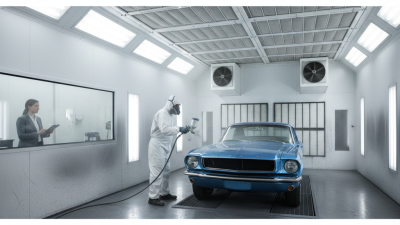
A small paint booth is an enclosed or partially enclosed workspace designed to control paint mist, airflow, and overspray. It may serve a repair shop, workshop, or compact production line. The word “small” is less precise than it sounds: dimensions and capacity vary by manufacturer and application. A booth that fits a motorcycle part may not handle a full vehicle panel.
Its basic operation is straightforward. A fan draws air through an intake, carries airborne paint particles away from the work, and moves them toward exhaust filters. The operator sees the difference at the spray gun: a steady airflow helps limit drifting mist, while clogged filters can reduce performance. The U.S. Environmental Protection Agency’s 2008 Control Techniques Guidelines for Miscellaneous Metal and Plastic Parts Coatings discusses emissions from coating application and drying. That context matters. A booth manages overspray, but it does not eliminate paint-related emissions.
A well-chosen small paint booth balances usable space, airflow, filtration, lighting, and the coating process. OSHA’s spray-finishing requirements also provide an important safety reference for ventilation and equipment design. Check the manufacturer’s specifications, filter replacement guidance, and installation instructions before use. Details count. A booth can look suitable on a sales page yet prove awkward when a part, spray gun, and operator must fit together. That judgment deserves a pause. This guide explains what a small paint booth is, how air and filters work, and which practical features to evaluate before choosing one.
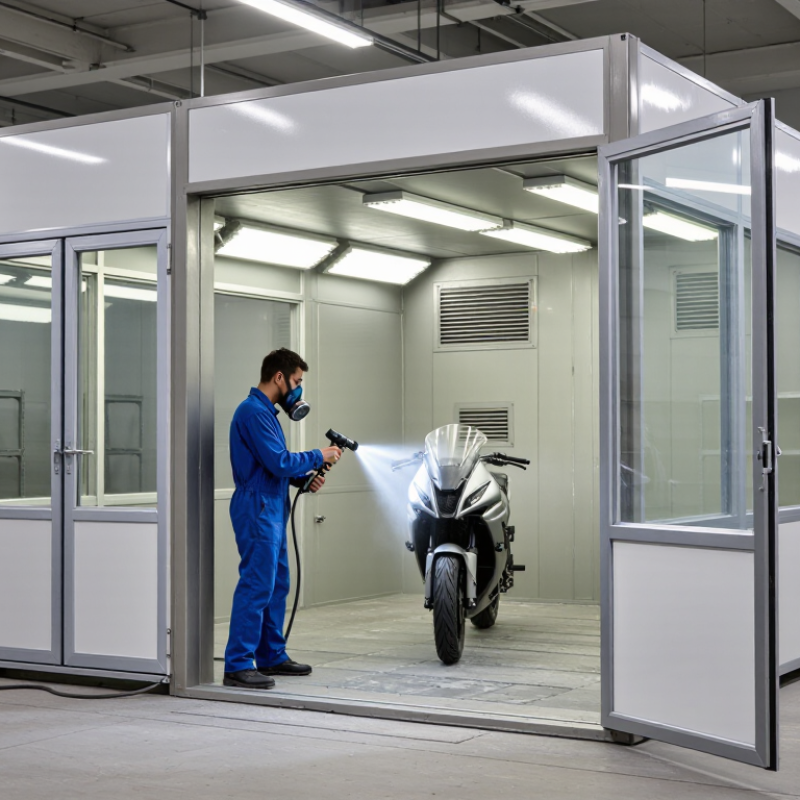
Defining a Small Paint Booth: Enclosure, Workpiece Size, and Use
What Is a Small Paint Booth and How Does It Work?
Defining a Small Paint Booth: Enclosure, Workpiece Size, and Use
A small paint booth is an enclosed or partially enclosed workspace designed to control overspray and guide contaminated air away from the painting area. “Small” has no single universal measurement. It usually describes a booth sized for compact parts, limited production, or a dedicated task. A tabletop enclosure might suit a metal bracket, while a walk-in booth can still be considered small for a workshop. The boundary can be fuzzy.
The workpiece sets practical limits. Measure its width, height, and depth, then allow room for supports, spray-gun movement, and safe handling. A part that barely fits may block airflow or make even coating difficult. Most booths use an exhaust fan and filters to capture overspray, while fresh air enters through designated openings. Lighting helps reveal missed spots and uneven coverage. Setup details matter.
Tips: Test the fit with the largest item you expect to paint. Check that air can move around it, and follow the booth and coating instructions for ventilation, filtration, and protective equipment. Keep filters clean and replace them as directed. A booth can reduce mess, but it does not remove every exposure risk; that is easy to underestimate.
What Is a Small Paint Booth and How Does It Work? - Defining a Small Paint Booth: Enclosure, Workpiece Size, and Use
| Dimension |
Typical Small-Booth Characteristics |
What It Means in Practice |
| Definition |
A compact, enclosed or partially enclosed workspace designed to contain overspray and manage paint fumes during finishing. |
“Small” is a practical description, not a universal booth size. Required dimensions depend on the workpiece, coating process, and applicable safety rules. |
| Enclosure size |
Illustrative formats include a tabletop enclosure around 3 × 3 × 3 ft (0.9 × 0.9 × 0.9 m) and a compact walk-in enclosure around 4 × 4 × 7 ft (1.2 × 1.2 × 2.1 m). |
These are planning examples, not standard sizes. Check usable interior dimensions and allow room for fixtures, spray movement, and airflow. |
| Workpiece size |
Commonly suited to small parts, components, crafts, sample panels, and individual items that fit comfortably inside the usable enclosure. |
Measure the item with its rack or turntable, then confirm there is enough clearance to coat all sides without blocking the booth’s air path. |
| Air movement |
A fan or exhaust system draws air through the work area and toward an exhaust outlet; the exact airflow design varies by booth type. |
Airflow helps carry airborne overspray away from the operator and workpiece. Follow the booth manufacturer’s airflow requirements and local regulations. |
| Filtration |
Many designs use intake and/or exhaust filters to capture dust or paint particles. Filter type and placement depend on the system and coating. |
Inspect and replace filters as specified. A clogged or unsuitable filter can reduce airflow and affect finish quality. |
| Typical uses |
Touch-ups, small-batch finishing, hobby projects, prototypes, and coating small manufactured parts. |
Choose a booth based on coating material, frequency of use, item dimensions, and whether the process requires a specific exhaust or fire-safety design. |
| Safety and installation |
Requirements can depend on the paint, solvent, booth construction, electrical equipment, and installation location. |
Use suitable ventilation and protective equipment. Check product safety data sheets and local fire, building, and workplace rules before operation. |
Main Components: Booth, Spray Equipment, Exhaust Fan, and Filters
A small paint booth is a controlled enclosure that keeps spray contained and directs contaminated air toward an exhaust point. Its walls and roof help limit dust and overspray, while the work opening allows parts to enter and air to flow through. The booth should be sized for the object, spray pattern, and operator movement. Too little clearance can disrupt airflow. A practical check is whether a worker can reach around the part without blocking the opening.
Spray equipment atomizes paint into droplets; the gun, hose, and pressure controls affect how evenly they land. The exhaust fan pulls air through the booth and filters, then discharges it safely outdoors. Filters capture paint particles, but they do not remove every solvent vapor. OSHA’s spray-finishing standard specifies an average face velocity of 100 feet per minute for conventional dry booths (29 CFR 1910.94(c)(6)(ii)); this figure is not a universal setting for every booth design. Measure airflow with the filters installed, and replace them when loading reduces performance. That detail is easy to miss. OSHA’s rule is a useful reference, but airflow readings alone do not prove that a setup is safe; filter condition, fan operation, and suitable respiratory protection also matter.
Airflow Across a Small Paint Booth Opening
In this illustrative example, airflow is measured at five points across the booth opening. The exhaust fan pulls air through the booth and filters, while the spray equipment applies paint. Actual airflow depends on booth design, filter condition, and applicable requirements.
Airflow in Operation: OSHA’s 100-ft/min Minimum for Open-Face Booths
A small paint booth controls overspray by drawing air through the work area and toward an exhaust opening. In an open-face booth, that opening is also the operator’s main view of the airflow. OSHA’s 100-ft/min minimum is a key benchmark for open-face booth airflow. The air should move steadily inward, carrying airborne paint away from the painter and work surface.
Measure airflow across the booth opening with a calibrated anemometer, checking several points rather than relying on one reading. A strong spot near the center can hide weak airflow at the edges. Watch the readings over time. Loaded filters, blocked intake grilles, or open doors can change airflow and reduce capture. Even a small booth can have uneven currents.
The number is not a guarantee of safe operation. Booth design, coating materials, and applicable requirements matter, so check the relevant standard and equipment specifications. Keep the exhaust path clear, replace filters as directed, and record measurements after maintenance. A simple log can reveal gradual changes before they become obvious. It is easy to assume a fan sounds normal, but sound alone tells you little.
Overspray Control: How Exhaust Filters Capture Airborne Paint Particles
In a small paint booth, overspray is the fine mist that misses the workpiece. An exhaust fan draws it toward filters fitted across the booth’s exhaust path. As air passes through the filter media, droplets collide with fibers and stick. The filter captures particles, not solvent vapors, so it cannot replace appropriate ventilation or vapor controls. Small details matter.
The U.S. Environmental Protection Agency’s AP-42 surface-coating guidance reports particulate-control efficiencies around 90–99% for dry-filter systems. Actual performance depends on the coating, filter design, and operating conditions. That range is not a promise for every booth. As paint builds up, airflow resistance can rise, weakening capture and leaving a visible haze near the work area.
Tips: Check the filter’s fit and condition before spraying. Replace it according to its rated loading or the booth maker’s instructions, rather than waiting for paint to escape. Check the seal. A gap around the filter can let dirty air bypass the media. A simple pressure gauge can also help spot rising resistance, though it takes regular attention. EPA AP-42, Chapter 4.2.2.3, provides background on surface-coating emissions and particulate controls.
Safe Installation: OSHA’s 3-ft Minimum Separation Requirements
A small paint booth is a ventilated enclosure that keeps overspray contained while directing contaminated air toward an exhaust system. Filters capture paint droplets, but they do not make poor ventilation safe. Airflow matters. Before installation, check the booth’s exhaust path, nearby doors, and the space needed for routine filter changes.
OSHA’s spray-finishing standard, 29 CFR 1910.107(b)(8), sets a minimum separation of 3 feet between a spray booth and other operations. It allows an alternative: construction with at least a one-hour fire-resistance rating. These are specific figures, not a general guarantee that any three-foot gap makes an installation safe. Measure from the booth to nearby work areas, and check applicable fire and building codes before choosing a location.
Measure twice. A shelving unit, heater, or busy walkway can change the practical risk, even when the floor plan appears compliant. Keep access clear, and have a qualified ventilation professional verify airflow and exhaust placement. Paint-booth layouts can look straightforward on paper; real rooms are less forgiving.