




China Top 10 Portable Spray Booth Manufacturers in 2026

Portable spray booth demand is rising alongside the wider need for controlled, flexible coating workspaces. Grand View Research valued the global paints and coatings market at about USD 190.1 billion in 2023, projecting a 4.3% compound annual growth rate through 2030. This broad market figure does not measure portable booths directly. It does, however, show the scale of the industries that depend on consistent finishing.

For workshops, repair facilities, and manufacturers, a portable spray booth can bring extraction, filtration, lighting, and enclosure closer to the job. The details matter. A frame that assembles quickly may save floor space, while a weak filter arrangement can undermine the whole setup. Buyers should compare airflow specifications, filter access, fabric durability, dimensions, and replacement-part support—not just price or advertised setup time.

China’s supplier base includes manufacturers with different specializations, production capacities, and export experience. This guide to the China Top 10 Portable Spray Booth Manufacturers in 2026 offers a starting point for comparing them. It considers product design, customization, documented specifications, and after-sales responsiveness. Claims should still be checked against technical documents and sample testing. A polished catalogue is not proof of reliable performance. That distinction is easy to miss. Market reports provide useful context, but they cannot verify an individual booth’s airflow or workmanship. The shortlist is a practical reference, not a substitute for due diligence.
China Top 10 Portable Spray Booth Manufacturers in 2026

Portable Spray Booths in China: Types, Applications, and 2026 Scope

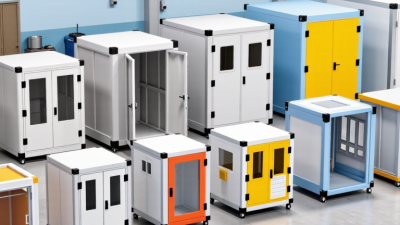
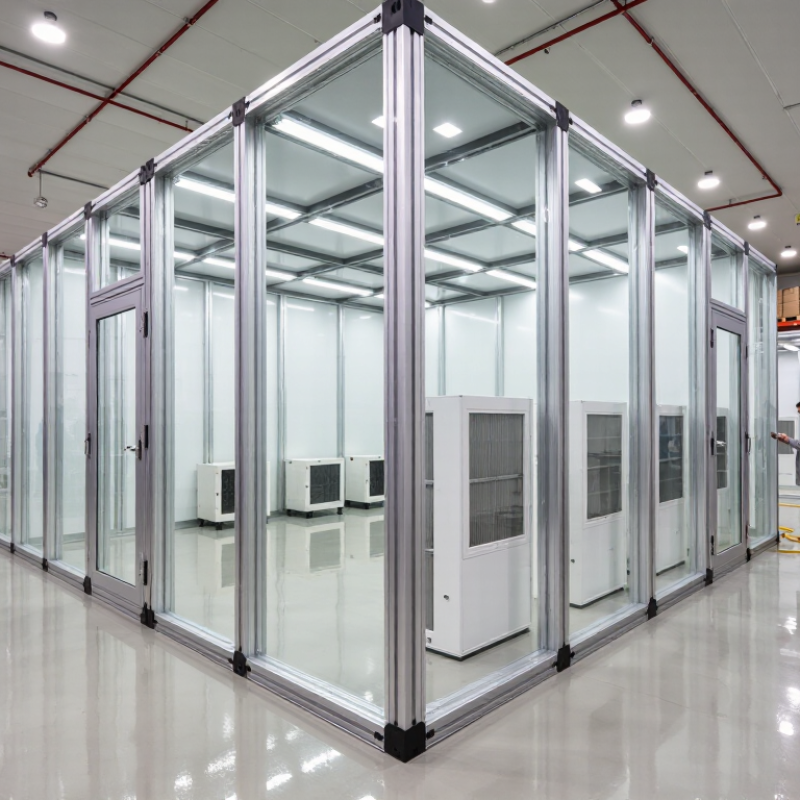
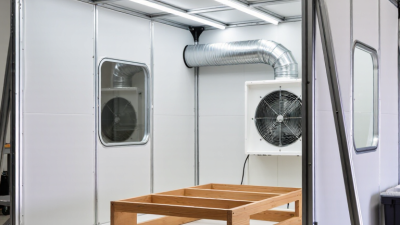
Portable spray booths in China vary from lightweight curtain enclosures to rigid, modular panel systems. Soft-wall designs pack down quickly and suit workshops with limited floor space. Panel booths offer a more stable enclosure for repeated coating work. Some portable units use inflatable structures, though setup conditions and airflow need careful checking. Setup matters.

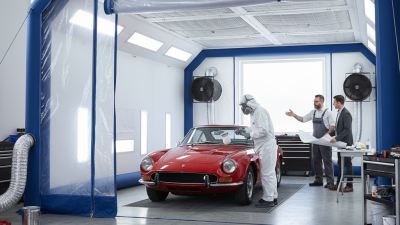
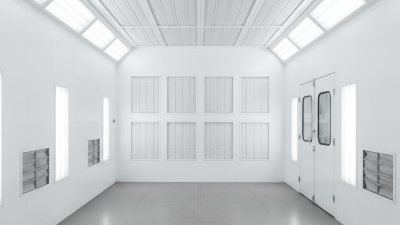
Typical applications include vehicle refinishing, furniture finishing, and coating small metal components. In a repair shop, a booth may separate wet coating work from sanding and assembly areas. That separation helps limit dust settling on fresh finishes. Operators should assess airflow direction, filter access, lighting, and the space needed for safe movement before choosing a unit. A portable label alone does not guarantee convenient relocation.

For 2026, buyers are likely to compare modularity, extraction performance, maintenance needs, and compatibility with their worksite. Ask suppliers for airflow data and filter replacement guidance, then verify those details against the actual booth configuration. These checks are more useful than relying on broad capacity claims. Not every site fits. Temporary work areas can have uneven floors, changing power access, or restricted exhaust routes, and those details are easy to underestimate.
How to Evaluate China’s Top 10 Manufacturers: Capacity, Compliance, and Service

For a 2026 shortlist, compare verified output with the booth configuration you actually need. Ask each manufacturer for monthly capacity, lead time, and production records for comparable portable units. The IEA’s Global EV Outlook 2024 reports nearly 14 million electric cars were sold in 2023, about 18% of global car sales. That shift adds varied vehicle materials to repair work, making adjustable airflow and clear operating instructions practical evaluation points. A large factory alone proves little.

Request test reports for airflow, filtration, lighting, and electrical components, with test conditions and model numbers shown. Check whether the documents match the offered booth, not just a similar product. The ISO Survey 2023 records more than 1.2 million ISO 9001 certificates worldwide; certification can indicate a quality-management system, but it does not certify booth performance. Compliance requirements vary by destination, so ask suppliers to identify applicable standards and provide traceable evidence. A certificate without matching test data is weak evidence.

Service deserves equal scrutiny. Ask for spare-filter availability, installation guidance, warranty terms, and a named response channel. Request a video walkthrough of a completed unit and inspect seams, door closures, and cable routing. Then compare quotations line by line. Some suppliers may hesitate to disclose realistic lead times; that hesitation matters. A polished catalogue is not proof of dependable support, and a sample inspection can still miss problems that appear after repeated assembly.

How to read this framework: These suggested weights prioritize production capacity and compliance, followed by service and product range. They are evaluation criteria—not verified scores or rankings of specific manufacturers.

Airflow Safety Benchmarks: OSHA’s 100 ft/min Criterion for Open-Face Booths

For buyers comparing portable spray booths in 2026, airflow at the open face matters more than a fan’s advertised capacity. OSHA’s 29 CFR 1910.94(c)(6)(ii) sets a benchmark of at least 100 feet per minute for average booth airflow. That is about 0.51 metres per second. Numbers matter.

The opening size changes the airflow demand. An 8-by-10-foot face has 80 square feet of area; at 100 feet per minute, it requires about 8,000 cubic feet per minute of airflow.

Measure across a grid, not at one convenient spot. A handheld anemometer can reveal slow corners or uneven flow. Measure again after filters load, because resistance can reduce delivered airflow.

A catalogue fan rating can look reassuring; it does not prove performance at the booth opening. Check the installed setup, including filters, ducting, and make-up air, against the OSHA benchmark and the booth’s operating instructions. The 100-feet-per-minute figure is a useful reference, not a substitute for evaluating the specific process and installation.

I would not treat one measurement as the whole safety picture. airflow can vary during real work.

Comparing Portable Booths by Size, Exhaust Design, Filtration, and Setup

When comparing portable spray booths in 2026, look beyond the advertised footprint. Measure the largest item you expect to coat, then allow room for your hands, spray gun, and safe movement. A compact booth can suit small parts, but tight walls may disrupt your working angle. Larger models offer more clearance and take more floor space. Check door widths and packed dimensions, too.

Exhaust design affects how air moves through the booth. Compare the fan location, duct connection, and stated airflow; a poorly matched duct can restrict performance. Filtration also matters. Look for clearly described intake and exhaust filters, plus instructions for checking or replacing them. A pressure gauge or filter-change indicator can help, though neither replaces regular inspection. Details vary.

Tips: Before setup, measure the room and confirm a suitable exhaust route. Assemble the frame on a level surface, secure the duct, and check that filters sit flat without visible gaps. Follow the supplier’s operating guidance for airflow and filter maintenance. Keep a simple inspection log. It takes minutes, and it may reveal a setup problem you initially missed.

China Top 10 Portable Spray Booth Manufacturers in 2026 - Comparing Portable Booths by Size, Exhaust Design, Filtration, and Setup

The entries below are anonymized comparison profiles, not verified company rankings or manufacturer-specific specifications. Dimensions and features are representative configurable options; actual specifications vary by model, application, and local safety requirements. Confirm airflow, filtration, electrical, and installation details with the supplier before purchase.

Profile Typical booth size (W × D × H) Exhaust design Typical airflow range Filtration arrangement Setup characteristics Best suited to
Profile 1 — Compact enclosure Approx. 1.2 × 1.2 × 1.8 m Rear or side exhaust connection; ducted to a suitable discharge point Specified by fan and duct configuration; verify at the booth opening Replaceable intake pre-filter and exhaust paint-arrestor media Light frame and fabric panels; manual assembly Small parts, touch-ups, and occasional low-volume work
Profile 2 — Bench-size booth Approx. 1.5 × 1.5 × 2.0 m Back-draft exhaust panel with flexible duct outlet Depends on opening area and selected fan; confirm design airflow with the supplier Intake pre-filter plus replaceable exhaust arrestor Modular frame, zippered access, and tool-light assembly Small components and workshop finishing
Profile 3 — Single-operator booth Approx. 2.0 × 2.0 × 2.0 m Rear-wall exhaust with external fan and duct Application- and fan-dependent; airflow should be assessed for the complete system Intake pre-filter and exhaust paint-arrestor filter Freestanding, collapsible frame; typically requires a clear assembly area Furniture parts, panels, and intermittent spraying
Profile 4 — Extended workpiece booth Approx. 3.0 × 2.0 × 2.2 m Full-width rear exhaust wall; duct routing must suit the site Calculated from booth face area and required capture conditions Large-area exhaust arrestor with accessible filter panels; optional intake pre-filtration Sectional frame and panels; more assembly time than compact models Long panels, doors, and medium-sized workpieces
Profile 5 — Walk-in modular booth Approx. 3.0 × 3.0 × 2.4 m Rear or end-wall exhaust; fan and ductwork selected for the installation Project-specific; verify uniform airflow across the working area Replaceable intake and exhaust stages, selected for the coating process Modular panels and larger frame; may need multiple installers Walk-in access and larger batch work
Profile 6 — Open-front work zone Approx. 2.4 × 2.4 × 2.2 m Back-draft exhaust; open face makes capture design especially important Must be designed for the opening and task; do not infer performance from fan rating alone Exhaust arrestor, with optional filtered make-up air Fast access and comparatively simple loading; requires suitable room ventilation Large items loaded from the front
Profile 7 — Portable ducted enclosure Approx. 2.0 × 2.0 × 2.0 m Flexible exhaust duct connected to a compatible extraction system Limited by fan capacity, duct length, bends, and filter loading Replaceable exhaust media; intake filtration depends on configuration Lightweight and relocatable; needs a planned duct path and safe discharge location Temporary or changing work areas
Profile 8 — Filter-wall configuration Approx. 3.0 × 2.4 × 2.4 m Distributed rear filter wall connected to an exhaust fan and duct Determine from filter-face area, system resistance, and process requirements Broad-area replaceable arrestor media; optional pre-filter stage Panel-based assembly; filter access and replacement clearance should be planned Applications needing a larger exhaust-filter area
Profile 9 — Height-extended enclosure Approx. 2.4 × 2.4 × 2.7 m Rear or side exhaust; layout depends on workpiece and duct routing System-specific; verify air distribution at operating height Replaceable exhaust arrestor; intake stage configurable Taller frame may require extra assembly clearance and anchoring review Tall parts and work requiring added overhead clearance
Profile 10 — Custom modular system Configured to site and workpiece; dimensions are project-specific Rear, side, or multi-point exhaust, subject to engineered layout Set through system design and commissioning measurements Filter stages selected for coating, overspray load, and maintenance plan Site-specific assembly; confirm utilities, access, and installation scope Non-standard spaces or specialized production needs

Selection note: “Portable” describes a relocatable or modular enclosure, not necessarily a complete compliant spray facility. Confirm applicable fire, electrical, ventilation, emissions, and occupational-safety requirements for the coating materials and installation location.

2026 Buyer Checks: NFPA 33, Fire Protection, VOC Control, and Warranty

When comparing portable spray booth manufacturers in 2026, ask how each booth addresses the applicable NFPA 33 requirements.

Do not rely on a general claim of compliance. Request the booth’s technical documents, installation instructions, and details about intended coatings and operating conditions. Check clearances, electrical components, airflow, and how the unit connects to the work area. A portable booth still needs a safe, site-specific setup. Small details matter.

Fire protection deserves a separate review. Confirm what suppression or detection equipment is included, what must be supplied on site, and who verifies the finished arrangement with the relevant authority.

For VOC control, ask for airflow figures, filter specifications, replacement intervals, and any stated emissions limits. Filtration can reduce overspray, but it does not automatically prove emissions compliance. That distinction is easy to miss.

Read warranty terms closely: identify coverage for fans, filters, frames, and controls, plus exclusions for transport, installation, and routine wear. Get response times and parts availability in writing.

A polished checklist helps, but it cannot replace checking the actual site conditions; that part is often less tidy than the paperwork suggests.

Open chat
Scan the code
Bendet Sales Assistant
Hi There👋,
Thank you for visiting our website, How can I help you?